National Dish South Korea: Gamja Jorim (Recipe)
In this article
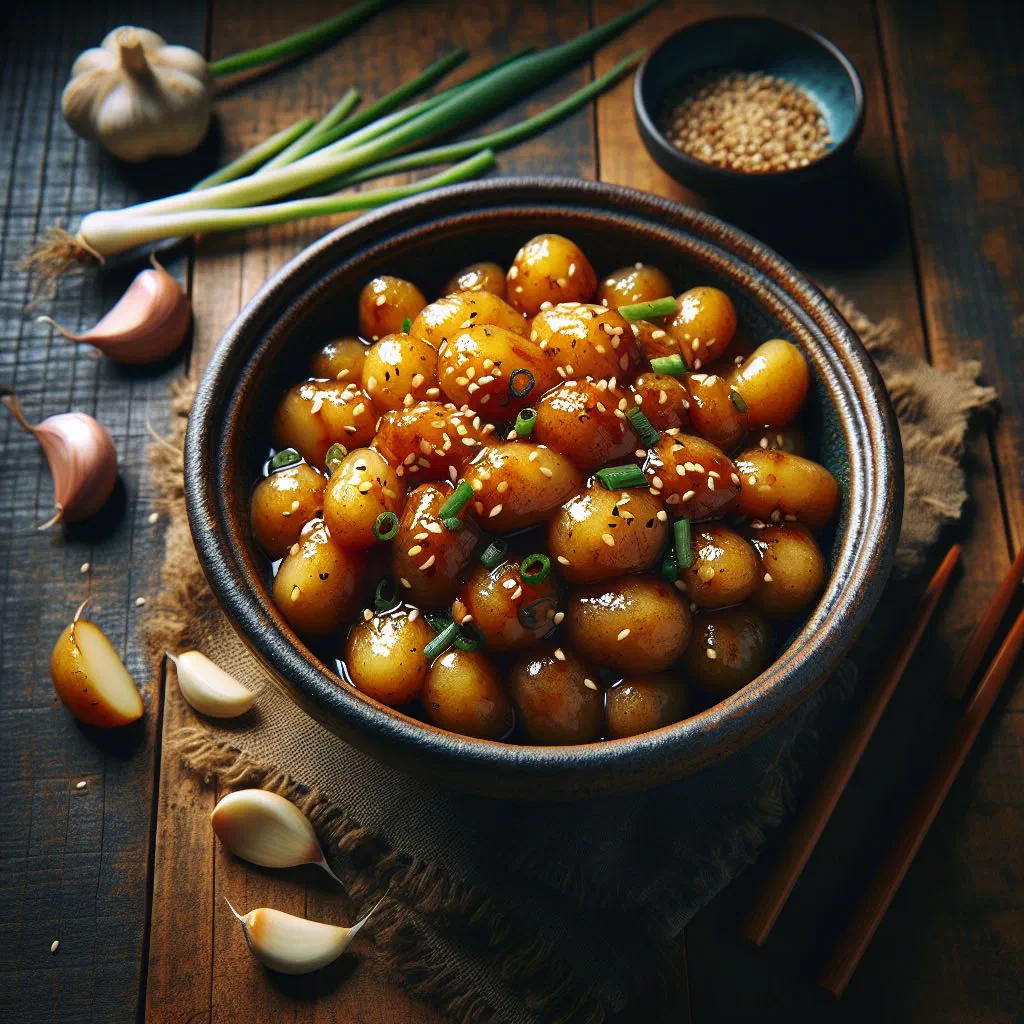
Say hello to Gamja Jorim, a comforting Korean classic of tender potatoes glazed in a glossy soy-and-garlic sauce. Sweet, savoury and just a little sticky, these braised potatoes are a staple of the Korean table, equally at home as a humble weeknight side or as part of a generous spread of banchan. Best of all, they are wonderfully simple to make with a handful of everyday ingredients.
About Gamja Jorim
Gamja Jorim is a classic Korean dish of tender potatoes braised in a delicious blend of soy sauce, sugar and garlic. It is far more than a side. It is genuine comfort food, popular both as a snack and as a banchan to round out a meal. The interplay of sweet and savoury flavours, with the gentlest hint of heat, gives the dish its distinctive character. Easy to prepare and endlessly reliable, it is a wonderful choice for family meals or gatherings with friends.
Ingredients (serves 1–2)
- 200 g potatoes
- 2 tablespoons soy sauce
- 1 tablespoon sugar
- 1–2 cloves of garlic
- 1 teaspoon sesame oil
- 1 teaspoon sesame seeds (optional)
- Water, as needed
Shopping for the ingredients
The ingredients for gamja jorim are easy to find in most supermarkets or Asian grocery shops. When choosing your potatoes, look for ones that are fresh and firm so they hold their shape and give the best texture. Soy sauce comes in many varieties, so pick a good-quality bottle to bring real depth to the dish. Sugar and garlic are everyday store-cupboard staples that round out the authentic flavour and are sure to be close at hand.
Preparing the dish
The key is to cut the potatoes evenly so they cook through at the same rate, so peel them if you like and chop them into bite-sized pieces. It helps to soak the cut potatoes in cold water beforehand to draw out excess starch and improve the texture. While they soak, get the rest of your ingredients ready by finely chopping the garlic and mixing together the soy sauce and sugar.
Step-by-step instructions
- Bring the potatoes to the boil in a pan of water and blanch for 5–10 minutes until just slightly softened.
- Drain off the water and set the potatoes aside.
- Heat the sesame oil in a wok or deep frying pan and briefly fry the chopped garlic.
- Add the blanched potatoes and fry for a few minutes.
- Pour over the soy sauce and sugar and stir well to coat.
- Add a little water to create a sauce, then cover and simmer gently over low heat for about 15–20 minutes.
- Just before serving, scatter over the sesame seeds if using.
Gluten-free / lactose-free version
Gamja jorim is easily made gluten-free by using a gluten-free soy sauce, such as tamari. Many Asian grocery shops stock these alternatives, and they taste every bit as good as the original. No special swaps are needed for a lactose-free version, as the traditional ingredients contain no lactose at all. Even so, do double-check the labels on everything you use if you need to be completely sure.
Tips for vegans and vegetarians
Gamja jorim is naturally vegan and vegetarian, since every ingredient is plant-based. For extra depth of flavour, you can add more vegetables such as carrots or courgette, which is exactly the sort of vegetable-forward thinking you will also find in Kongnamul Muchim. Add them at the same time as the potatoes so everything braises evenly. Just check that your chosen soy sauce is free from any animal products to keep the dish fully vegan.
More tips and tricks
One of the most important tips for gamja jorim is choosing the right variety of potato. Waxy types such as Yukon Gold or red potatoes work best, as they keep their shape during cooking. Try to use fresh garlic and good-quality sesame oil to intensify the flavour. You can adjust the cooking time depending on how soft you like your potatoes, and feel free to experiment with extra spices or herbs to add your own personal touch.
Adapting the recipe to your taste
Gamja jorim is easy to adapt to your own preferences. If you like a spicy version, stir in a little chilli oil or chilli paste to give the dish an extra kick, much like the heat that defines Ojingeo Bokkeum. For a sweeter note, increase the sugar or use honey as a natural sweetener. You might also add a mix of vegetables to boost both the nutrition and the flavour.
Ingredient substitutions
If you do not have certain ingredients to hand, there are plenty of alternatives for gamja jorim. Coconut sugar, for instance, can stand in for ordinary sugar to lend a slightly different flavour. In place of sesame oil, you could use olive oil or another vegetable oil, though this will change the traditional taste. For a gluten-free version, gluten-free soy sauce is an excellent swap, as mentioned above. Substitutions like these help make the dish even more accessible.
Drink pairing ideas
To round off gamja jorim perfectly, Korean drinks are a great choice. Green tea is refreshing and pairs beautifully with the savoury character of the dish. Alternatively, consider soju or Korean beer, both of which heighten the flavours, the same lively pairings that suit a spread of Pajeon. For a non-alcoholic option, freshly pressed peach juice offers a lovely sweet contrast.
Serving and presentation ideas
Presentation plays an important part in enjoying gamja jorim. Serve the potatoes in an attractive bowl and garnish with fresh herbs, such as spring onions or a sprinkling of sesame seeds, to add colour and texture. For a more creative approach, arrange the potatoes on a bed of leafy greens to provide a striking contrast. Choosing handsome tableware also lifts the overall look and creates a welcoming atmosphere at the table.
A bit of history
Gamja jorim has a long history in Korean cuisine and is regarded as a classic of home cooking. Braising potatoes in a sweet and savoury sauce reflects the Korean love of harmonious flavour combinations. Potatoes grew in popularity in Korea during the Japanese occupation and remain a staple ingredient to this day. The many regional variations of gamja jorim showcase the cultural diversity and creativity that run throughout South Korean cuisine.
More recipe ideas
Summary: Gamja Jorim
Gamja jorim is an indispensable part of Korean cuisine, winning hearts with its simple preparation and delicious flavour. The combination of potatoes, soy sauce, sugar and garlic creates a taste experience all its own. Ideal as a side or a snack, gamja jorim is a flavourful way to enjoy Korean food culture. With the right tips and a few variations, you can tailor this dish exactly to your taste and make it suitable for any occasion.