National Dish South Korea: Ganjang Bibim Guksu (Recipe)
In this article
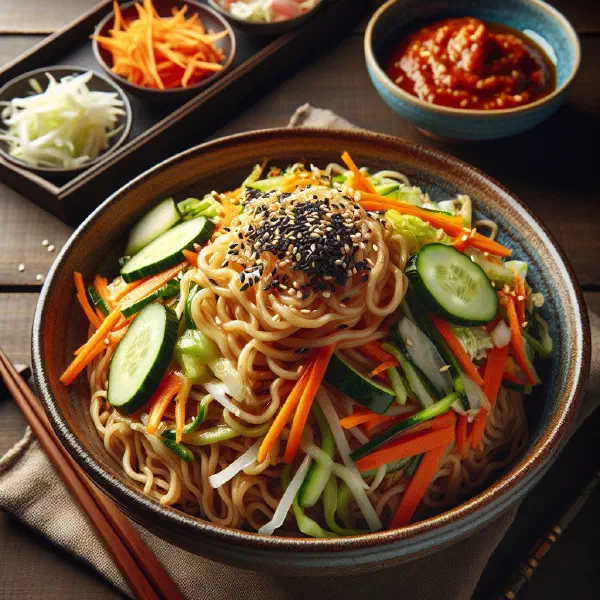
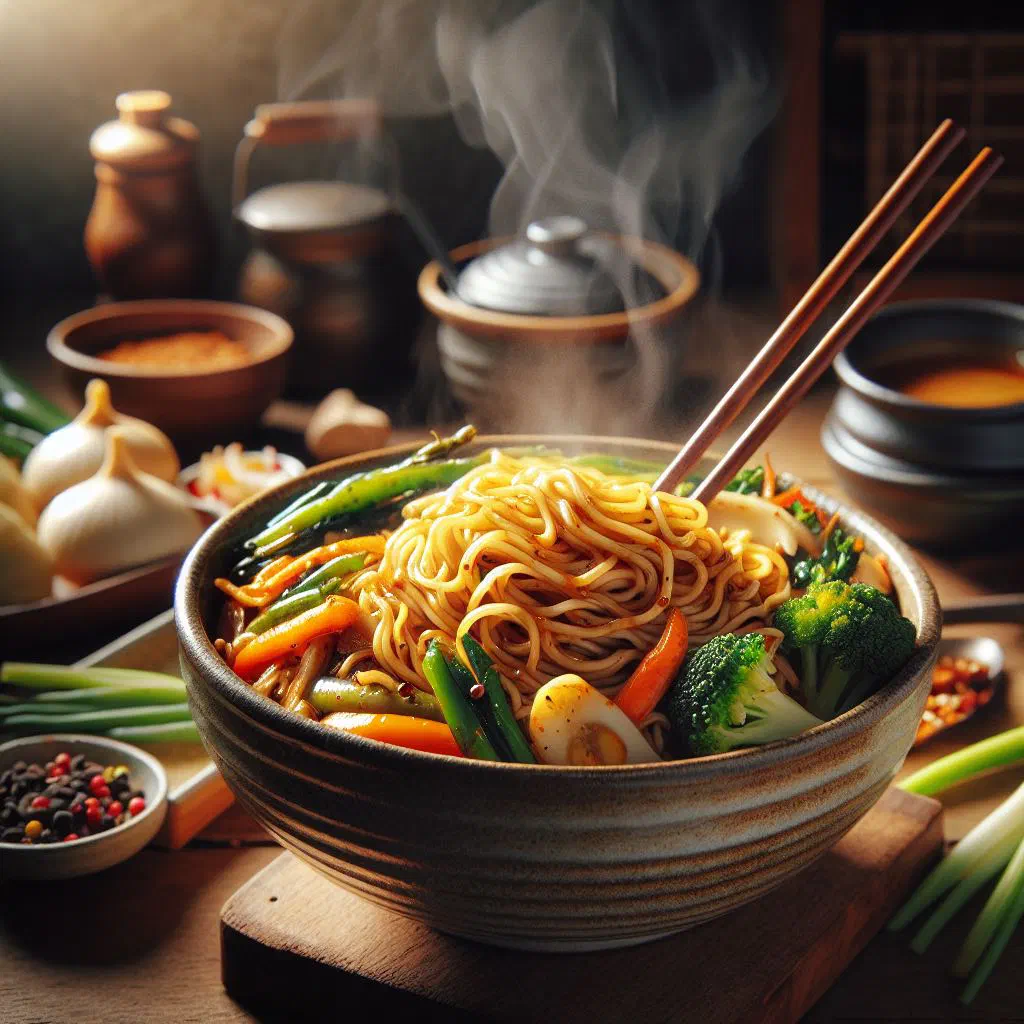
Meet Ganjang Bibim Guksu, one of South Korea’s most refreshing summer favourites. This chilled noodle dish brings together springy wheat noodles, a rainbow of crisp vegetables and a savoury, sesame-laced soy dressing. Light yet deeply satisfying, it is the kind of meal you reach for when the weather turns warm and a steaming bowl feels like too much. Quick to assemble and endlessly adaptable, it puts a little slice of Korean kitchen culture on your plate in minutes.
About Ganjang Bibim Guksu
Ganjang Bibim Guksu is one of the most popular and refreshing national dishes of South Korea. It is a cold noodle dish that comes into its own on hot days, pairing wheat noodles with a colourful selection of fresh vegetables and a savoury soy sauce dressing that gives the whole thing its distinctive character. The contrast of crunchy textures and bold, umami-rich flavours makes Ganjang Bibim Guksu an indispensable part of Korean cuisine, and it is just as at home as a light lunch as it is alongside other dishes.
Ingredients (serves 1–2)
- 200 g wheat noodles
- 1 carrot, finely grated
- 1 small cucumber, cut into thin strips
- 100 g daikon radish, thinly sliced
- 2 tablespoons soy sauce
- 1 tablespoon sesame oil
- 1 teaspoon hot chilli sauce (optional)
- 2 spring onions, chopped
- Sesame seeds, to garnish
Shopping for the ingredients
When shopping for Ganjang Bibim Guksu, choosing the freshest ingredients you can find makes all the difference to the final flavour. The wheat noodles are easy to source from an Asian grocery or a supermarket with a good international range. The vegetables should be as fresh and crisp as possible, since they play a central role in this dish. Both the soy sauce and the sesame oil are key to the character of the recipe, so pick good-quality versions to get the very best result.
Preparing the dish
Preparing Ganjang Bibim Guksu could hardly be simpler and takes only a handful of steps. Start by cooking the wheat noodles in a pan of boiling water until they are just tender. While the noodles cook, wash, peel and slice the vegetables. It is worth mixing the dressing during this prep time so the flavours have a chance to meld together. Have a large bowl ready in which you will later bring all the ingredients together.
Step-by-step instructions
- Cook the wheat noodles in boiling water for about 5–7 minutes, then drain and rinse under cold water.
- Prepare the vegetables (carrot, cucumber, radish) and cut them into bite-sized pieces.
- In a small bowl, combine the soy sauce, sesame oil and, if using, the chilli sauce.
- Add the cooled noodles to the large bowl along with the prepared vegetables.
- Pour the soy dressing over the noodles and toss everything together thoroughly.
- Garnish the dish with chopped spring onions and sesame seeds.
- Chill briefly in the fridge before serving for an extra-refreshing finish.
Gluten-free / lactose-free version
For a gluten-free version of Ganjang Bibim Guksu, swap the wheat noodles for rice or buckwheat noodles, both of which work beautifully as alternatives. Check the soy sauce too, and choose a gluten-free product or tamari. The remaining ingredients, especially the fresh vegetables, are naturally gluten-free. The dish is also effortlessly lactose-free, as it contains no dairy at all, so no adjustment is needed on that front.
Tips for vegans and vegetarians
Ganjang Bibim Guksu is already a vegan dish, as long as no animal products are added along the way. To deepen its nutty notes, you could toss in some toasted almonds or walnuts with the other ingredients. Just take care that your soy sauce contains no hidden animal-derived ingredients. Noodle dishes like this are a wonderful way to pack in plenty of vegetables and enjoy a good range of nutrients in one bowl.
More tips and tricks
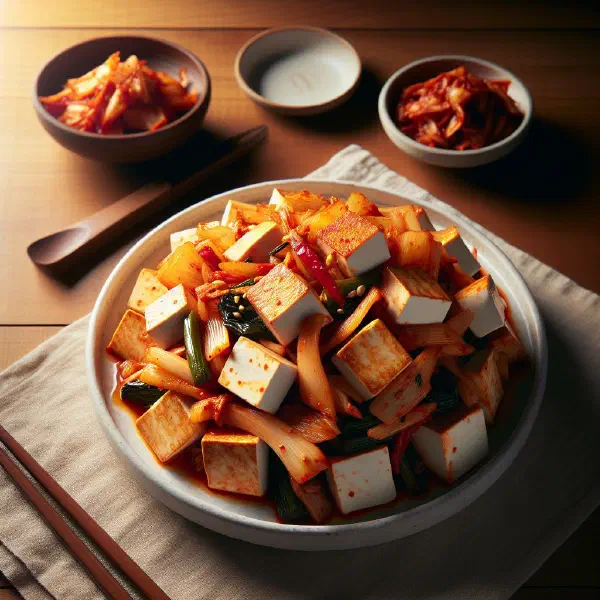
To intensify the aroma of Ganjang Bibim Guksu, try adding fresh herbs such as coriander or mint. Experiment with different vegetables, peppers or beansprouts, for instance, to keep things varied. The dish can also be served with a wedge of lime, which lends a fresh citrus lift. Another tasty twist is to add pan-fried tofu cubes as a protein boost, much as you might in a hearty bowl of Dubu Kimchi.
Adapting the recipe to your taste
Ganjang Bibim Guksu is incredibly versatile and easy to tailor to personal preference. If you like it spicier, simply add more chilli sauce or some fresh red chillies. Alternatively, reduce the amount of soy sauce if you would rather the umami note were less dominant. Try different vegetable combinations depending on the season or your mood to give the dish a fresh feel every time you make it.
Ingredient substitutions
If you have no wheat noodles to hand, rice noodles or courgette noodles make excellent stand-ins for the traditional choice. In place of soy sauce, you can use tamari for a gluten-free option. For an extra healthy touch, you might work in superfood ingredients such as spirulina powder or chia seeds. These variations preserve the character of the dish while adding new and exciting flavours, in the same spirit of clever swaps you would use for Kongnamul Muchim.
Drink pairing ideas
A range of drinks pairs beautifully with a dish like Ganjang Bibim Guksu. A cold Asian beer or a fresh cup of green tea are popular options that harmonise well. If you are after a non-alcoholic alternative, a Korean lemonade or a fruity iced tea makes a lovely surprise.
Serving and presentation ideas
The presentation of Ganjang Bibim Guksu can be lifted with a few thoughtful touches. Serve the noodles in a large, attractive bowl and garnish with colourful strips of vegetable and chopped spring onion. A special flourish comes from scattering over freshly chopped coriander or edible flowers. Aim for bright, appealing colours to make the whole eating experience that much more inviting.
A bit of history
Ganjang Bibim Guksu looks back on a long tradition within Korean cuisine. Cold noodle dishes of this kind arose in particular as an answer to Korea’s hot summers, where light, refreshing meals are highly valued. The addition of soy sauce brings the flavours to the fore and is a fine example of the simplicity and tasty variety of South Korean cuisine. Today the dish is hugely popular not only in South Korea but has also made a name for itself internationally.
More recipe ideas
Summary: Ganjang Bibim Guksu
Ganjang Bibim Guksu is a tasty and refreshing noodle dish that is ideal for warm days. With its perfect combination of wheat noodles, fresh vegetables and a savoury dressing, it appeals to both the palate and the eye. Its many adaptation options and its straightforward preparation make it a fantastic choice for any cook. Give this dish a try and enjoy a piece of Korean culture right there on your plate.