National Dish South Korea: Jangjorim (Recipe)
In this article
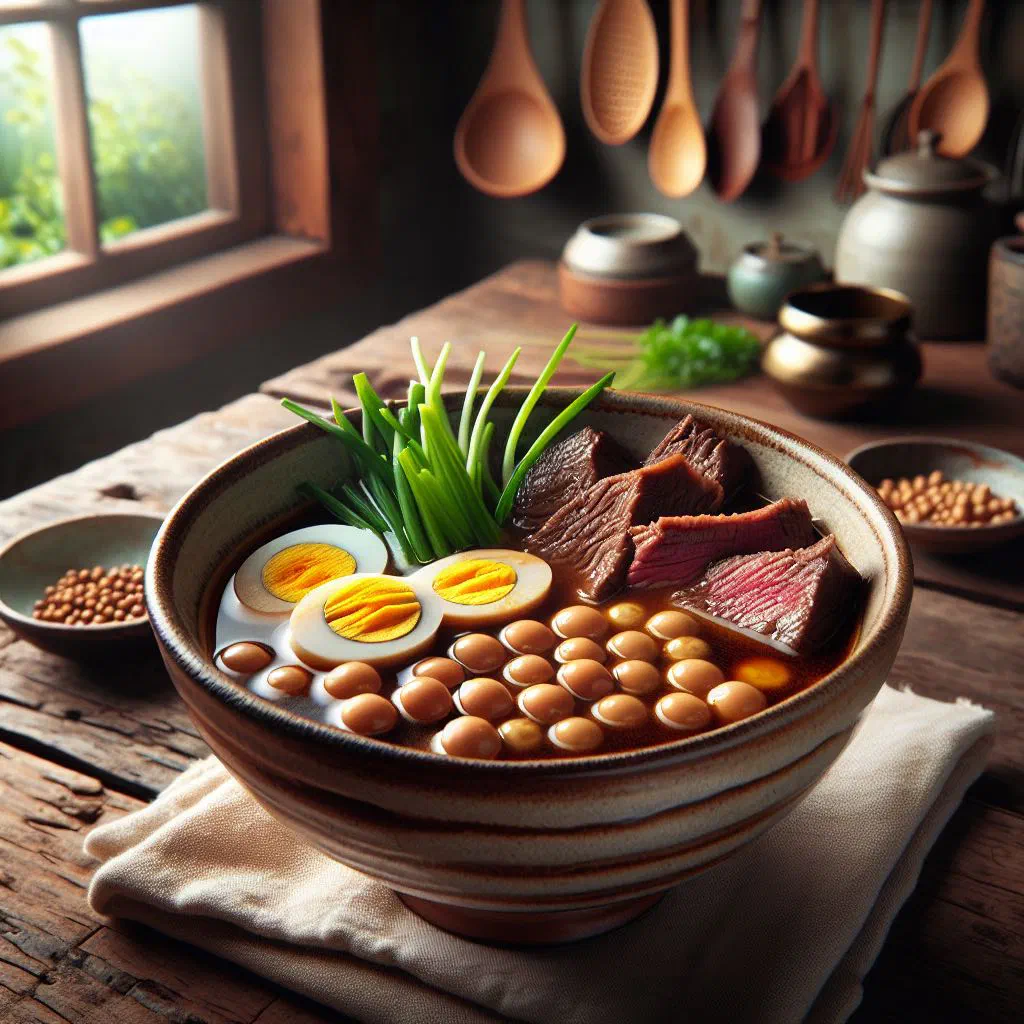
Meet Jangjorim, the soy-braised beef that quietly anchors so many Korean meals. Tender strands of meat and glossy boiled eggs simmer in a sweet-savoury soy sauce until they soak up every last drop of flavour. Traditionally served as part of a spread of small side dishes, it is just as happy alongside a steaming bowl of rice on a busy weeknight. Simple to make and deeply satisfying, it brings a taste of Korean home cooking straight to your table.
About Jangjorim
Jangjorim is a traditional South Korean dish in which beef is gently braised in an aromatic soy sauce. It is prized for its tender texture and its intense flavour, drawn out by the marriage of soy sauce, garlic and ginger. Most often it appears as a side dish, yet it also pairs beautifully with a portion of freshly cooked rice. Many people love it for its taste and for how easy it is to prepare, making it a reliable favourite in Korean kitchens.
Ingredients (serves 1–2)
- 200 g beef (such as brisket)
- 50 ml soy sauce
- 1 tablespoon sugar
- 2 cloves garlic, chopped
- 1/2 teaspoon grated ginger
- 1–2 spring onions, sliced into rings
- 3–4 hard-boiled eggs
- Sesame oil, to taste
- Water
Shopping for the ingredients
To make Jangjorim you will need a handful of fresh, good-quality ingredients. Visit your local supermarket or a dedicated Asian grocery to track down the best produce. When choosing the beef, look for a well-marbled cut, as this gives the finished dish a better texture. The remaining ingredients are generally easy to find and offer a lovely way to dip into South Korean cooking.
Preparing the dish
Cut the beef into small, even pieces so it cooks at a uniform pace. Chop the garlic and grate the ginger to bring out their aromas at their best. These small steps make a real difference to the overall quality of the dish and ensure that every bite tastes delicious.
Step-by-step instructions
- Bring the beef to the boil in a pan with enough water to cover, and cook for around 10 minutes.
- Drain the meat and return it to the same pan.
- Add the soy sauce, sugar, garlic, ginger and spring onions.
- Simmer over low heat for 30–40 minutes, until the meat is tender.
- Add the hard-boiled eggs during the final 10 minutes of cooking.
- Just before serving, finish with a little sesame oil to taste.
Gluten-free / lactose-free version
For a gluten-free take on Jangjorim, use tamari in place of regular soy sauce, as it is a gluten-free option. The dish is naturally lactose-free, so you need not change anything else in the ingredient list. Whenever you cook it, do check the labels to make sure every product is gluten-free. These small adjustments turn the dish into a diet-friendly option without sacrificing any of the flavour.
Tips for vegans and vegetarians
Jangjorim is easy to adapt for vegans and vegetarians by swapping the beef for tofu or seitan. These alternatives soak up the soy sauce and aromatics beautifully and offer a similar texture. To round things out, you can also add vegetables such as carrots or mushrooms for extra nutrients and flavour. With these simple tweaks, everyone can enjoy the delicious flavours of Jangjorim.
More tips and tricks
To get the most out of your Jangjorim, keep a few extra pointers in mind. Use fresh ingredients to deepen the flavours and make the dish even tastier. Experiment with additional seasonings to find your own personal twist and give the dish something unique. Finally, you can make it ahead and keep it in the fridge, ready to enjoy the next day for an easy lunch or supper.
Adapting the recipe to your taste
Jangjorim invites plenty of variations to suit personal preference. Like it spicier? Add a little chilli or a splash of hot soy sauce. Prefer it sweeter? Increase the amount of sugar to bring out a richer sweetness. This flexibility makes it easy to tailor the dish to your own taste or to a special occasion, so every bite is a treat. The same easygoing approach works just as well with a savoury Bossam.
Ingredient substitutions
If you do not have everything to hand, there are some handy alternatives to the classic ingredients. In place of fresh ginger, you can use ground ginger, though the flavour will differ slightly. For the sugar, honey or another sweetener works just as well. Swaps like these are often easy to manage and mean you can still cook the dish even when an ingredient is missing or not to your liking, much as you might improvise when making Dubu Kimchi.
Drink pairing ideas
Plenty of drinks pair nicely with Jangjorim and complement its flavours. A light, refreshing green tea is excellent for balancing the savoury notes and softening any heat. Alternatively, a crisp Asian lager harmonises wonderfully with the hearty, soy-rich taste. These pairings enrich the eating experience and make the whole meal that bit more enjoyable.
Serving and presentation ideas
A thoughtful presentation can heighten the pleasure of Jangjorim. Serve it in a traditional Korean bowl and garnish with toasted sesame seeds and fresh herbs. Pair it with a neat portion of rice on a separate plate for an appealing contrast on the table. This little touch in the plating helps turn the meal into something of a celebration.
A bit of history
Jangjorim has its roots in South Korean tradition, where it is often served as part of banchan, the array of small side dishes that accompany a meal. It was originally made as a way to preserve meat for longer, but today it is a much-loved dish in countless households. Its aromatic preparation and its versatility as either a main or a side make Jangjorim an indispensable part of South Korean cuisine and an easily recognised symbol of the country’s culinary culture.
More recipe ideas
Summary: Jangjorim
In short, Jangjorim is a simple yet flavourful dish that offers a window into South Korea’s diverse food culture. It is easy to prepare and full of scope for adapting to your own preferences. Jangjorim enriches any meal and brings a piece of South Korean tradition straight to your table. Let this delicious dish work its magic and treat yourself to an authentic taste of Korean cooking.