National Dish South Korea: Japchae (Recipe)
In this article
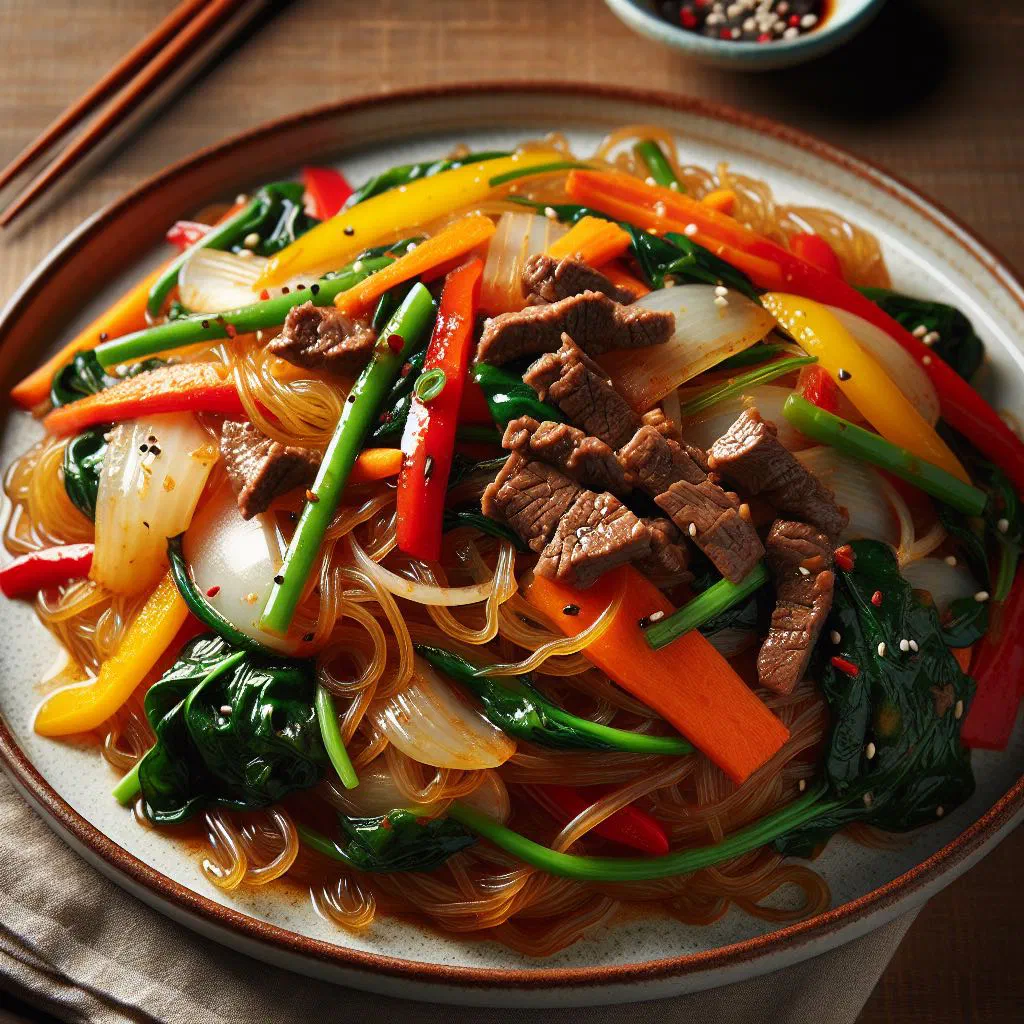
Discover Japchae, one of South Korea’s most cherished celebration dishes. Silky sweet potato glass noodles are stir-fried with a rainbow of crisp vegetables and tender strips of beef, then brought together with fragrant sesame oil and soy. Equally at home on a festive table or as a comforting family supper, this colourful classic offers a wonderful balance of textures and gentle savoury-sweet flavour. Bring a taste of Korean hospitality straight to your own kitchen.
About Japchae
Japchae, sometimes known as “vegetable glass noodles”, has a long and distinguished history in Korean cuisine. Originally prepared for the royal court, it has since become a genuine national favourite enjoyed across the country. The star ingredient is the glass noodle, made from sweet potato starch, which gives the dish its uniquely springy, translucent texture so prized in Korean cooking. Japchae is delicious and nourishing, enriched with a generous variety of colourful vegetables and a little tender beef.
Ingredients (serves 1–2)
- 100g glass noodles made from sweet potato starch
- 150g beef (or tofu for the vegetarian version)
- 1 small carrot
- 1 courgette
- ½ onion
- 2 spring onions
- 2 cloves of garlic
- 3 tablespoons soy sauce
- 1 tablespoon sesame oil
- Sesame seeds, to sprinkle
Shopping for the ingredients
When shopping for the ingredients for Japchae, look for the freshest vegetables you can find to guarantee the best flavour. Most items are readily available at Asian grocery shops or well-stocked supermarkets. The glass noodles made from sweet potato starch are a particularly important element, as they form the very foundation of the dish. Pay attention to the quality of your soy sauce too, since it has a significant influence on the overall aroma of Japchae.
Preparing the dish
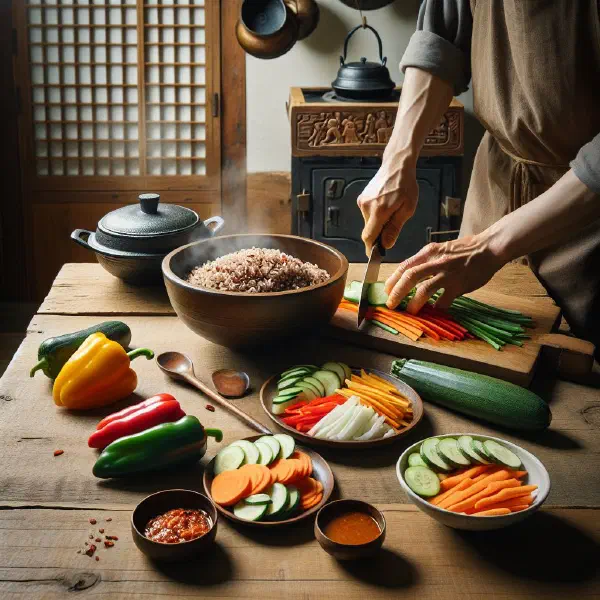
Before you begin cooking, all the ingredients should be prepared with care. Cut the vegetables into thin strips or slices so they cook evenly in the same amount of time. The beef can be sliced into fine strips, while for a vegetarian version the tofu should be prepared in the same way. Remember to finely chop the garlic as well, as it lends the dish an extra burst of flavour.
Step-by-step instructions
- Soak the glass noodles in hot water for about 20 minutes, until soft.
- Heat the sesame oil in a pan and sauté the onion together with the garlic.
- Add the beef and fry until cooked through.
- Add the prepared vegetables to the pan and stir-fry briefly.
- Add the soaked noodles and toss everything together thoroughly.
- Season with soy sauce and finish with a sprinkle of sesame seeds.
Gluten-free / lactose-free version
Japchae is easy to prepare gluten-free simply by using a gluten-free soy sauce. The glass noodles are naturally free from gluten, so there is no need to worry about a gluten intolerance. As for lactose, the dish can just as easily be kept lactose-free, since no dairy products are involved. By choosing the right ingredients, Japchae becomes an excellent option for anyone with special dietary needs.
Tips for vegans and vegetarians
For a vegan version of Japchae, you can simply swap the beef for tofu or tempeh. A range of vegetables such as peppers or broccoli also work beautifully to make the dish even more colourful and varied. Marinate the tofu in soy sauce and a little sesame oil to give it more flavour. Prepared this way, Japchae becomes a nourishing and well-balanced dish suited to everyone. It pairs naturally with other plant-forward favourites such as Sigeumchi Namul.
More tips and tricks
An important tip when making Japchae is to get the cooking time of the ingredients just right. Improperly cooked vegetables can spoil the flavour of the finished dish. Take care to keep the vegetables crisp to ensure a pleasing texture. Preparing all of your ingredients in advance also helps to simplify the cooking process and makes the whole experience far more enjoyable.
Adapting the recipe to your taste
The beauty of Japchae lies in just how adaptable the recipe is. You can easily adjust the dish to suit your own palate by adding different vegetables, sauces or proteins. Experiment with flavours such as chilli or ginger for an extra kick. In this way you can rediscover Japchae time and again and create your own signature combinations.
Ingredient substitutions
If you do not have every ingredient to hand, there are plenty of alternatives. Courgette, for example, can be replaced with cucumber, and there are many different varieties of soy sauce to choose from. For a spicier note, you might also add a splash of gochujang or another hot sauce, much as you would in a fiery Tteokbokki. The possibilities are endless, and it is precisely this flexibility that makes Japchae so versatile and interesting.
Drink pairing ideas
To round off your Japchae meal, there are several drinks worth considering. Green tea is a traditional choice that pairs well with Asian dishes and never overpowers the flavours. Alternatively, a lightly chilled sweet drink or a Korea-specific tipple such as Makgeolli (rice wine) complements the flavours beautifully. These combinations make the meal even more enjoyable.
Serving and presentation ideas
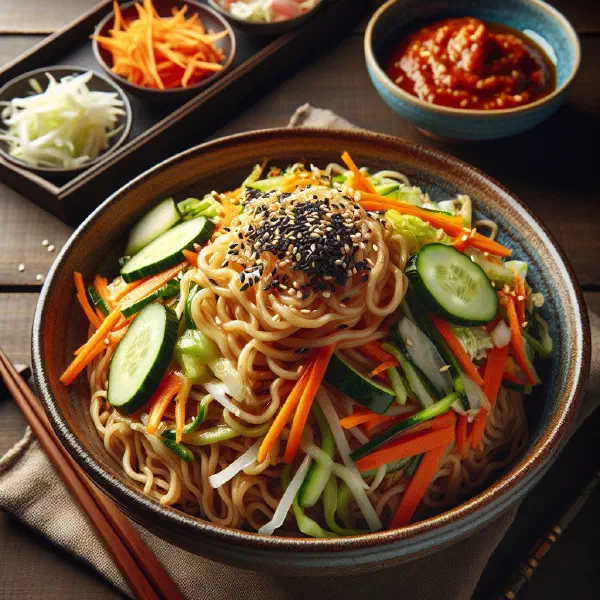
Presentation plays a big part in how a dish is perceived. Serve Japchae in an attractive bowl and garnish it with spring onions and sesame seeds for a lovely visual effect. Colourful strips of vegetable can be scattered on top to make the dish even more inviting. A carefully composed plate can win over your guests and heighten their anticipation for the meal ahead.
A bit of history
Japchae has its origins in the 17th century and was originally prepared for royal feasts. In earlier times it was a dish that helped to strengthen the bonds between different regions of Korea. Over the years, Japchae has developed into a dish that is much loved at all manner of celebrations as well as in everyday life. The cultural significance of this dish reflects the values of Korean cuisine and showcases the wonderful variety of its ingredients.
More recipe ideas
Summary: Japchae
In summary, Japchae is a varied and delicious dish that is perfectly suited to any occasion. With its combination of tender glass noodles, fresh vegetables and various sources of protein, it is both nourishing and wonderfully appealing in flavour. Give it a try and let the flavours of Korean cuisine win you over.