National Dish South Korea: Kalguksu (Recipe)
In this article
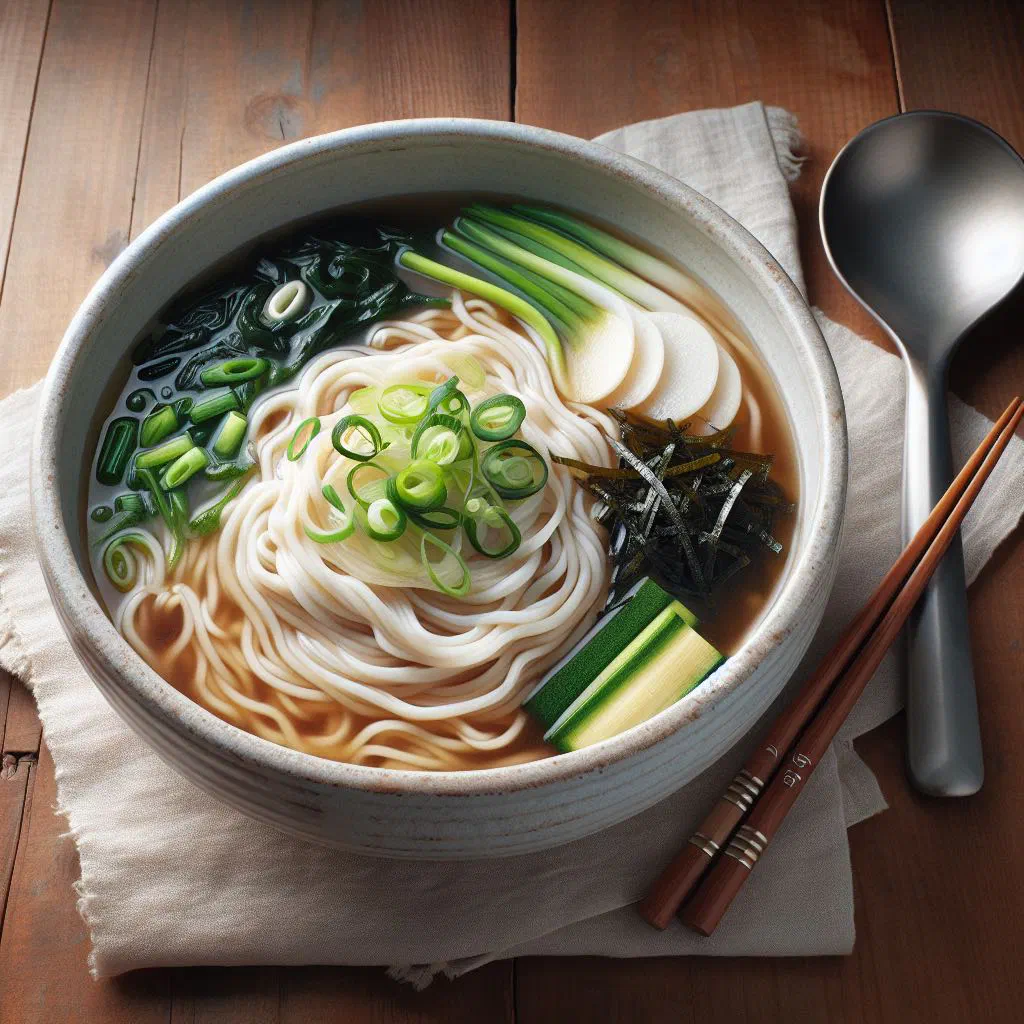
Warm up with Kalguksu, the soul-soothing Korean noodle soup that comes into its own on a cold day. Soft, hand-cut noodles swim in a fragrant, savoury broth alongside fresh vegetables and tender chicken or tofu. The name itself means “knife-cut noodles”, a nod to the way the dough is rolled and sliced into ribbons by hand. Comforting, nourishing and easy to make your own, it captures the homely heart of Korean cooking in a single bowl.
About Kalguksu
Kalguksu is a traditional Korean noodle dish known for its soft, hand-made noodles and an aromatic, deeply savoury broth. It is most often served with fresh vegetables and chicken or beef, and is especially popular during the colder months. The name “Kalguksu” translates literally as “knife-cut noodles”, a reference to the way the dough is rolled out and sliced into fine ribbons. The dish is filling and offers a truly authentic taste, bringing together the flavours of Korean cuisine in perfect harmony.
Ingredients (serves 1–2)
- 200 g kalguksu noodles (or other wide noodles)
- 1.5 litres chicken or vegetable stock
- 150 g chicken breast or tofu (for a vegetarian version)
- 2 carrots, sliced
- 1 courgette, sliced
- 1 onion, cut into rings
- 2 spring onions, sliced into rings
- 2 cloves garlic, finely chopped
- 2 tablespoons soy sauce
- 1 tablespoon sesame oil
- Salt and pepper to taste
Shopping for the ingredients
To make kalguksu, it is worth tracking down all the ingredients in the best quality you can find. Many of them are readily available in Asian grocery shops. Pay particular attention to the fresh noodles, as they give the dish its authentic character. Seasonal vegetables can be chosen according to what is available, helping you bring more variety to the recipe each time you cook it.
Preparing the dish
Preparing kalguksu takes only a few simple steps to make sure every flavour shines through. Begin by washing the vegetables and prepping them accordingly so they cook in an even amount of time. The chicken or tofu can be cut into cubes to soak up a quick marinade more readily. A marinade of soy sauce, sesame oil, salt and pepper can be left to sit for a few minutes, giving the protein an extra depth of flavour.
Step-by-step instructions
- Bring the stock to the boil in a large pan and cook the chicken or tofu in it for about 10 minutes.
- Add the sliced vegetables and the garlic, and let everything simmer together for a further 5 minutes.
- Drop the kalguksu noodles into the broth and cook for 5–7 minutes, until al dente.
- Garnish with spring onions and adjust the seasoning to taste with extra soy sauce, salt or pepper.
Gluten-free / lactose-free version
To make kalguksu gluten-free, you can swap in gluten-free noodles such as rice noodles or buckwheat noodles. Be sure to choose a gluten-free stock too, which is the case with many Asian broths. If you want to avoid lactose, no special adjustments are needed, as kalguksu traditionally contains no dairy at all. This makes the dish naturally well suited to anyone who is lactose intolerant.
Tips for vegans and vegetarians
For a vegan version of kalguksu, the chicken can simply be replaced with tofu or tempeh. Vegetables such as courgette, carrots and spinach provide valuable nutrients and plenty of flavour. A vegetable stock free from animal products works perfectly as the base. Herbs and spices like ginger and chilli can be added to make the dish even more exciting.
More tips and tricks
An important tip when making kalguksu is to taste the broth thoroughly before adding the noodles. Getting the right balance of salt, umami and sweetness makes a huge difference to the flavour of the whole dish. To cook the noodles evenly, the broth should be at a rolling boil before they go in. This is what gives kalguksu its signature soft, silky texture.
Adapting the recipe to your taste
The wonderful thing about kalguksu is just how flexible the recipe is. Different vegetables and proteins can be used depending on your preference. Broccoli, peppers or mushrooms, for example, all make great additions for extra variety. Experiment with different flavours and aromas to create your own personal version of kalguksu, much as you might tweak a bowl of Kongnamul Guk to suit your mood.
Ingredient substitutions
If you are allergic or intolerant to certain ingredients, such as soy, you can easily replace the soy sauce with coconut aminos or a homemade broth. Vegetable stock makes an equally tasty stand-in for chicken stock. You can also use frozen or even dried vegetables in place of fresh ones when they are not in season. This means you can enjoy the dish all year round, whatever the time of year.
Drink pairing ideas
A hearty dish like kalguksu pairs beautifully with a range of drinks. For an authentic experience, try the Korean rice wine makgeolli or a glass of soju. Alternatively, a light green tea goes splendidly with the soup and aids digestion. For alcohol-free options, homemade lemonade or sparkling water with a squeeze of lemon nicely rounds out the meal.
Serving and presentation ideas
To present kalguksu attractively, serve it in deep bowls and garnish with fresh herbs. A colourful arrangement of the vegetables in the bowl makes for an appetising sight. You can also scatter toasted sesame seeds over the top, which look decorative and add an extra layer of flavour. Be sure to serve the broth piping hot, as this is key to enjoying the dish at its best, just as you would a steaming bowl of Yukgaejang.
A bit of history
Kalguksu has a long history in Korean cooking and is often associated with warm family traditions. Originally a simple dish made from leftovers, kalguksu evolved over time into a much-loved staple in many households. In rural areas in particular, it is frequently served at celebrations and special occasions. Its popularity has also given rise to many famous kalguksu restaurants right across Korea, a hallmark of homely South Korean cuisine.
More recipe ideas
Summary: Kalguksu
Kalguksu is a delicious, hearty Korean noodle dish that is perfect for cold days. With fresh ingredients, easy-to-follow steps and a high degree of adaptability, it is ideal for family meals or special occasions. The combination of hand-made noodles and an aromatic broth delivers a truly unique taste experience. Try out different variations to discover your own personal favourite version of kalguksu.