National Dish South Korea: Kimbap (Recipe)
In this article
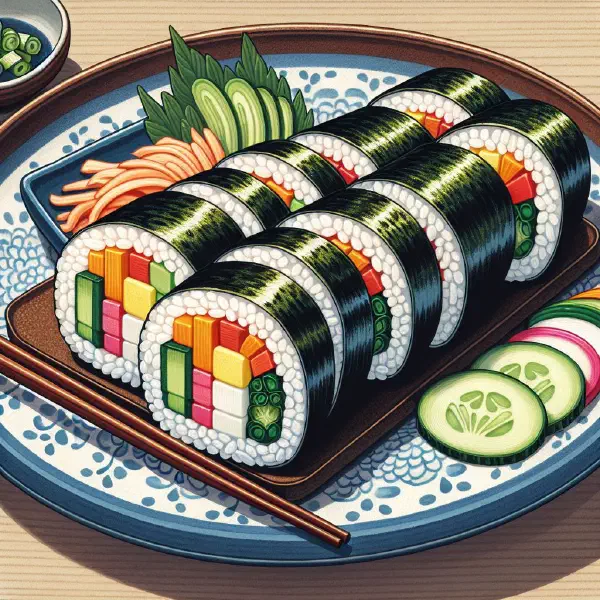
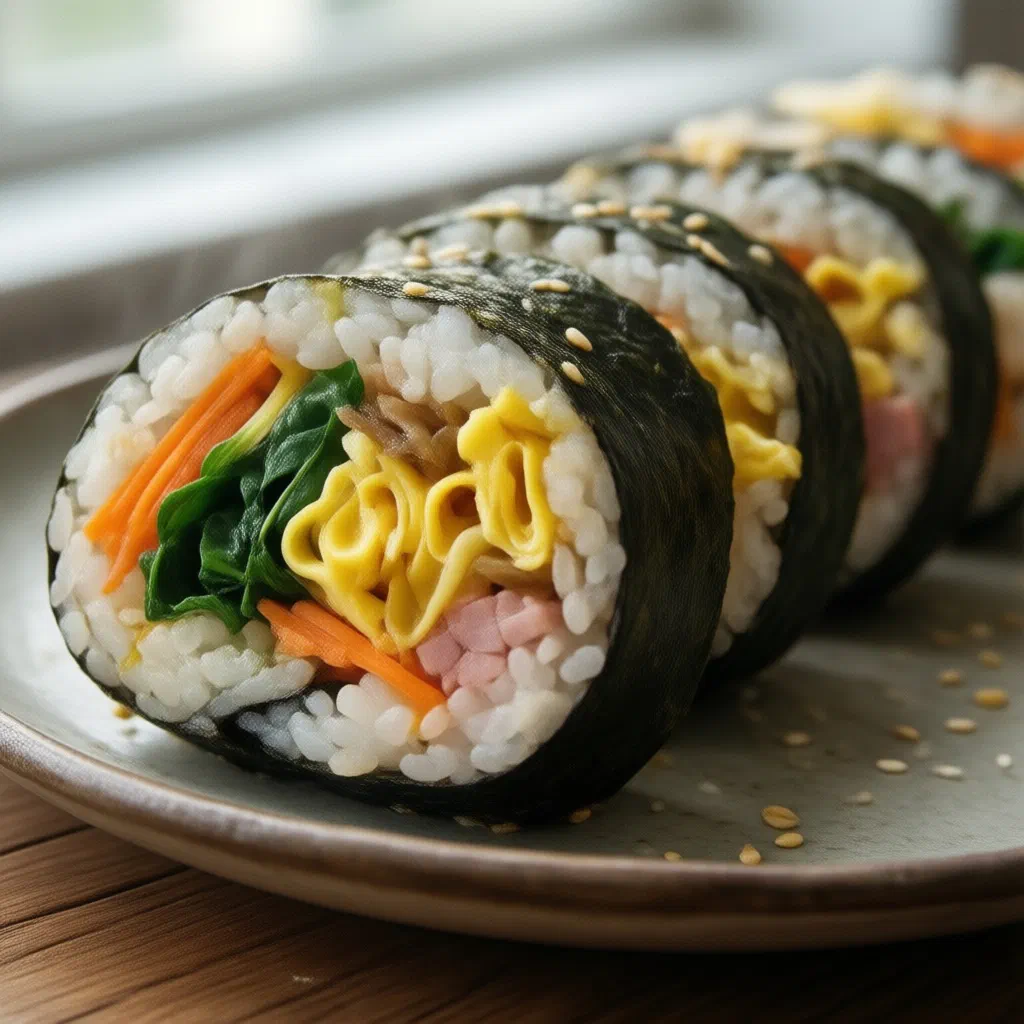
Meet Kimbap, South Korea’s answer to the lunchbox classic and one of its most cheerful, portable foods. Each roll wraps seasoned rice and a rainbow of fillings, crisp vegetables, savoury egg, pickled radish, inside a sheet of glossy seaweed, then is sliced into neat, bite-sized rounds. Healthy, endlessly customisable and ideal for picnics, parties or a quick snack on the go, kimbap brings a little slice of Korean everyday life straight to your table.
About Kimbap
Kimbap is South Korea’s answer to sushi, yet it is far more than a local take on the Japanese classic. This national favourite is woven into daily life and prized for its versatility and its practical, grab-and-go format. Every roll is built on sheets of seaweed (gim), spread with seasoned rice and layered with fillings such as vegetables, fish or meat before being rolled up tight. What makes kimbap so special is the harmonious play of different flavours and textures, along with the freedom to vary it however you like.
Ingredients (serves 1–2)
- 2 sheets of gim (dried seaweed)
- 250 g cooked and seasoned sushi rice
- 1 carrot, cut into strips and lightly sautéed
- 1 cucumber, cut into strips
- 2–3 slices of cooked ham or surimi sticks
- A few strips of pickled radish (danmuji)
- 2 eggs, fried into thin omelettes and sliced into strips
- Sesame oil and salt for the rice
- Toasted sesame seeds, to sprinkle
Shopping for the ingredients
For an authentic kimbap, it is well worth visiting an Asian supermarket if you can. There you will find proper sushi rice with the ideal texture for kimbap, along with danmuji (yellow pickled radish) and good-quality seaweed sheets. If a particular ingredient is hard to track down, it can usually be swapped for something similar, and the shop staff are often happy to point you in the right direction.
Preparing the dish
Before you start rolling your kimbap, it is important to get every component ready and within easy reach. Cook the rice according to the packet instructions and, once it has cooled, season it with salt and sesame oil. Cut all the fillings into even strips and pre-cook the vegetables and the egg. With everything prepared and laid out, the rolling stage becomes far quicker and much less fiddly.
Step-by-step instructions
- Lay a sheet of gim on a bamboo mat or a piece of cling film.
- Spread an even layer of rice over the seaweed, leaving roughly 2 cm clear along the top edge.
- Arrange the fillings horizontally in a line across the lower third of the rice.
- Roll the kimbap up gently but firmly, using the mat or film to guide and tighten it.
- Lightly dampen the bare strip of seaweed to seal the roll closed.
- Slice the kimbap into rounds with a sharp, moistened knife.
- Sprinkle the slices with toasted sesame seeds.
Gluten-free / lactose-free version
Kimbap is naturally close to gluten-free and lactose-free, which makes it easy to adapt. Plain seaweed and rice contain no gluten, so the main thing to watch is the ham and any seasonings, choose a certified gluten-free soy sauce or tamari and a gluten-free pickled radish to be safe. There is no dairy in a traditional roll, so it is already suitable for those avoiding lactose. With a few mindful swaps, everyone at the table can enjoy it.
Tips for vegans and vegetarians
Kimbap is wonderfully easy to make vegan or vegetarian, since the rice and seaweed do the heavy lifting. Simply leave out the ham, surimi and egg, and pack the roll with extra vegetables, sautéed carrot, cucumber, pickled radish, spinach or strips of fried tofu all work beautifully. Check that seasonings and pickles are free from hidden animal products, and lean on fresh, colourful produce for the best flavour. This is a dish that welcomes every kind of diet.
More tips and tricks
To stop the rice sticking to your fingers, keep a bowl of water with a splash of rice vinegar nearby and dampen your hands as you work. Roll the kimbap tightly enough that the filling stays put when you slice it, but not so tightly that the roll splits. A truly sharp, slightly wet knife is the secret to clean, neat slices that hold their shape.
Adapting the recipe to your taste
Kimbap offers endless variations. Experiment with different fillings such as tuna, fried tofu or fresh herbs, much as you would when building a Ssambap wrap. Pickled vegetables or a drizzle of different sauces can add an interesting twist too. Tailor the filling entirely to your own taste, and no two rolls ever need be the same.
Ingredient substitutions
If you cannot find or simply do not fancy a particular ingredient, there is plenty of room to improvise. You might swap danmuji for vinegar-pickled cucumber, or replace the ham with vegetarian options such as creamy avocado. For a heartier roll, a few strips of seasoned beef in the style of Bulgogi work well. This kind of flexibility is exactly what makes the kimbap recipe so special.
Drink pairing ideas
Kimbap pairs beautifully with green tea or a lightly chilled barley or roasted-rice tea. If you fancy something alcoholic, reach for a glass of light rice wine (makgeolli) or a crisp South Korean beer. These drinks support the flavours of the kimbap without ever overpowering them, making them a natural match for a light meal or snack.
Serving and presentation ideas
Serve your kimbap on a traditional bamboo plate or a simple ceramic dish for the prettiest effect. Arrange the individual slices neatly and add a splash of colour with a little pickled ginger or a few small salad leaves as a garnish. Presented this way, the dish becomes a highlight not just on the palate but for the eyes too. Perfect for sharing at a gathering.
A bit of history
The story of kimbap is closely tied to Korean tradition, and the dish really took off after the Korean War, when its simplicity and portability made it hugely popular. Originally conceived as a quick meal to eat on the move, it has since become a beloved choice for picnics and parties. Today it is one of the most recognisable everyday faces of South Korean cuisine.
More recipe ideas
Summary: Kimbap
Kimbap is a wonderfully versatile dish that suits just about any occasion. It brings together healthy ingredients and balanced flavours, and can be adapted entirely to your own preferences. With our step-by-step instructions and extra tips and tricks, you can bring a genuine piece of Korean food culture into your own kitchen, and discover just how rewarding these neat little rolls can be.