National Dish South Korea: Kimchi Jjigae (Recipe)
In this article
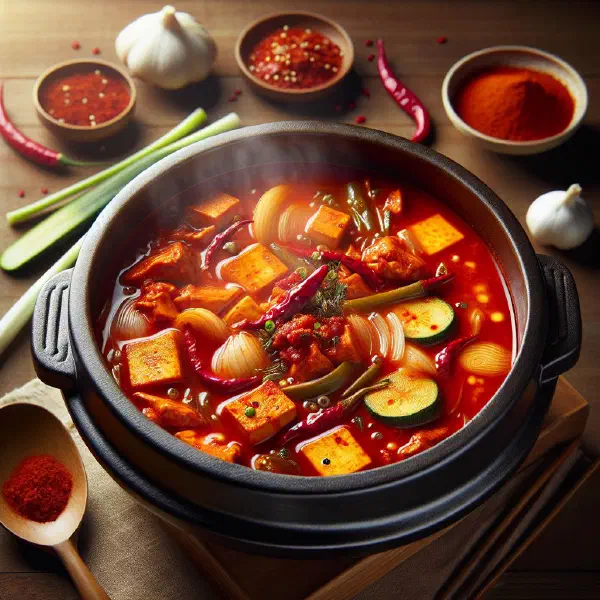
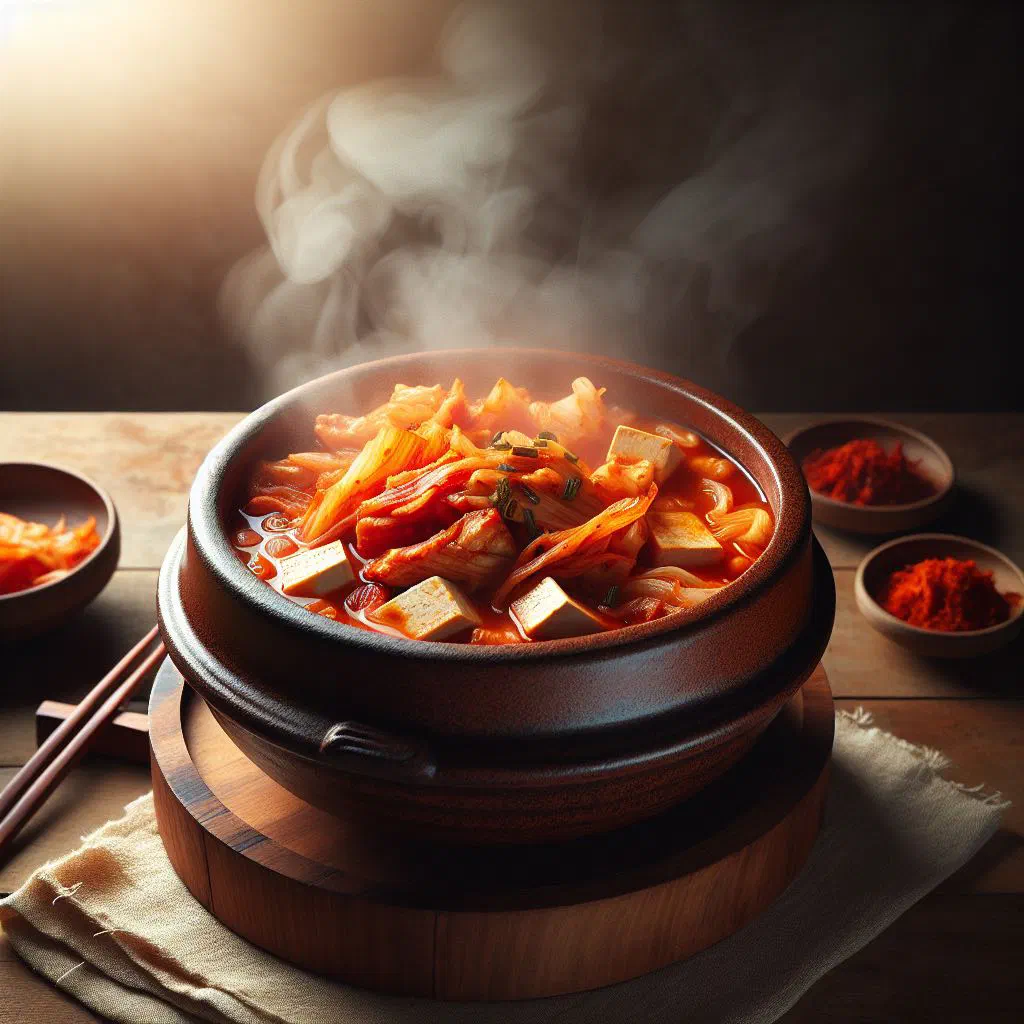
Few dishes capture the soul of Korean home cooking quite like Kimchi Jjigae, a bold, bubbling stew built around tangy fermented cabbage and a fiery hit of chilli. Simmered with pork or tofu until the flavours turn deep and comforting, it is the kind of meal that warms you from the inside out. Perfect for cold days and cosy evenings, this beloved bowl of comfort food brings a little piece of Korea straight to your kitchen.
About Kimchi Jjigae
Kimchi Jjigae is a traditional Korean dish made as a spicy stew, built mainly around fermented vegetables, meat and a handful of well-chosen seasonings. It is not only a firm favourite of Korean cuisine but is also cherished by many as true comfort food. The combination of intense, layered flavours makes every spoonful a memorable experience. Ideal for cold days, Kimchi Jjigae brings warmth and a sense of homeliness to any meal, much like the milder doenjang-based Doenjang Jjigae.
Ingredients (serves 1–2)
- 200 g kimchi
- 150 g pork (or tofu for a vegetarian option)
- 1 small onion
- 1 teaspoon gochugaru (Korean chilli powder)
- 1 teaspoon soy sauce
- 2 cups water or stock
- Spring onions and tofu, to taste
Shopping for the ingredients
When preparing Kimchi Jjigae, it is best to look for your ingredients at an Asian grocery or a well-stocked supermarket. Kimchi comes in many varieties, but be sure to choose one that is not too mild, since its flavour is the very heart of the dish. Gochugaru can likewise be found in Asian shops and gives the stew its characteristic level of heat. It is also worth paying attention to the quality of the pork or tofu, as this makes all the difference to a tasty final result.
Preparing the dish
Before you start cooking, it is important to prepare all your ingredients properly. Chop the onion and cut the meat into small pieces so that everything cooks evenly. If you are using tofu, gently press out the excess liquid and cut it into cubes. These simple preparations keep the cooking process smooth and stress-free. Stirring and keeping an eye on the stew also becomes far easier and more effective this way.
Step-by-step instructions
- Heat a pot over medium heat and add the pork. Fry until lightly browned.
- Add the onion and sauté briefly alongside the meat.
- Stir in the kimchi and the gochugaru, mixing everything together well.
- Pour in the water or stock and bring the whole thing to the boil.
- Lower the heat and let the stew simmer for about 20 minutes.
- Finally, add the spring onions and, if you like, the tofu, and leave to infuse for another 5 minutes.
Gluten-free / lactose-free version
To make Kimchi Jjigae gluten-free, use a gluten-free soy sauce. Take care to choose a kimchi that contains no gluten-based additives. For a lactose-free version the dish is naturally suitable, as it contains no dairy products. Even so, do double-check the kimchi to make sure it is lactose-free if you need to follow a strict diet. These small swaps make it easy for everyone to enjoy the stew.
Tips for vegans and vegetarians
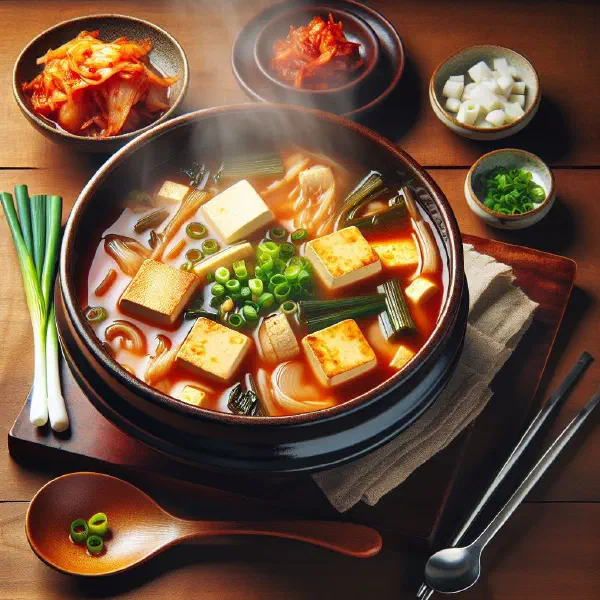
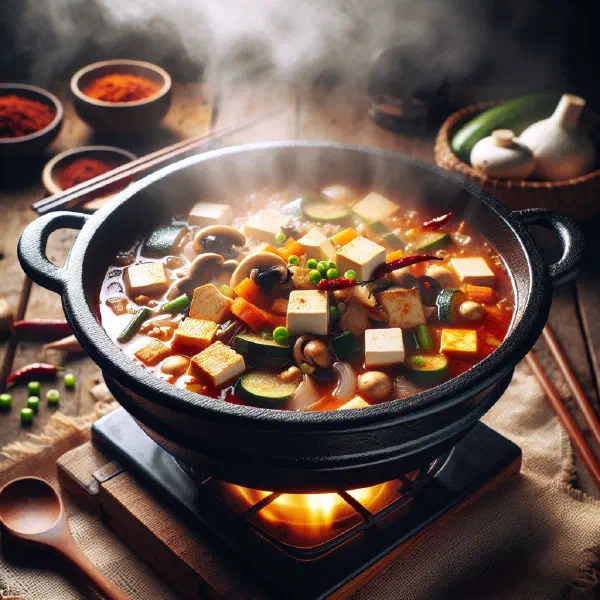
Vegan and vegetarian versions of Kimchi Jjigae are easy to make by replacing the meat with tofu or another plant-based protein. Be sure the kimchi you use contains no fish sauce, as some recipes include it. Instead, you can use vegetable stock and boost the umami depth with mushrooms or a little soy sauce. These versions are every bit as nourishing and flavourful as the traditional one, offering plenty of goodness in every bowl. For an all-tofu spin, try Sundubu Jjigae.
More tips and tricks
To deepen the flavours of Kimchi Jjigae, let the stew rest overnight and reheat it the next day. This improves the taste enormously, as the ingredients have time to mingle and develop. Extra flavour comes from additions such as king oyster mushrooms or a drizzle of sesame oil stirred in at the end. Experiment with different vegetables to tailor the dish to your own personal taste.
Adapting the recipe to your taste
Another wonderful feature of Kimchi Jjigae is how easily it can be adapted to suit whoever is eating. Add seasonal vegetables such as courgette or carrot for extra freshness and colour. The heat can also be dialled up or down simply by using more or less gochugaru. In this way, every pot becomes a personal flavour experience shaped to your liking.
Ingredient substitutions
There are plenty of alternatives for the ingredients in Kimchi Jjigae. Instead of pork you can use beef or chicken breast, and for a vegan option mushroom-and-tofu makes an excellent choice. If gochugaru is unavailable, cayenne pepper can provide a comparable heat, though the flavour will differ slightly. This flexibility makes it far easier to cook Kimchi Jjigae whatever ingredients you happen to have on hand, the same spirit of thrift that gives us dishes like Kimchi Fried Rice.
Drink pairing ideas
A range of drinks pairs beautifully with Kimchi Jjigae. Classically in Korea it is served with soju or Korean beer, both of which harmonise well with the heat of the dish. For an alcohol-free option, choose green tea or a Korean roasted-grain drink, which underscore the flavours of the stew. These combinations ensure that every bite and every sip becomes a truly memorable culinary experience.
Serving and presentation ideas
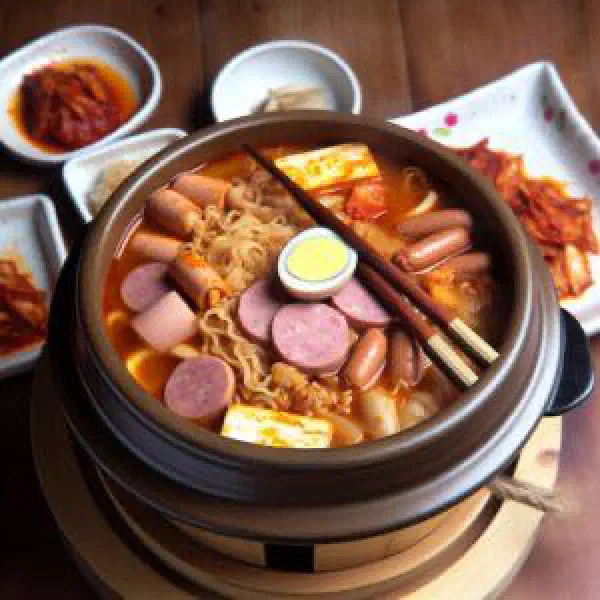
The presentation of Kimchi Jjigae can lift the enjoyment even further. Serve the stew in a traditional Korean earthenware pot to heighten that authentic feel. Garnish the dish with fresh spring onions or coriander to bring a splash of colour to the table. Take care to plate the accompanying side dishes, such as rice and pickled vegetables, attractively too, so you present a complete and inviting spread. A bowl of Bibimbap alongside makes a generous feast.
A bit of history
Kimchi Jjigae has its roots deep in Korean food culture and reflects the central role that fermented foods play in the Korean diet. The stew originally came about as a way of using up leftover kimchi; today it is a firm fixture of Korean cuisine as well as of Korean dining life far beyond the peninsula. The grandmothers and mothers of Korea are famed for their unique recipes, passed down from generation to generation. The dish is often seen as home cooking and brings people together around the table in good company.
More recipe ideas
Summary: Kimchi Jjigae
Kimchi Jjigae is a distinctive Korean dish that brings together the perfect flavours of fermented vegetables, meat and spices. With its history and countless variations, it offers delicious enjoyment and real nutritional benefits. Kimchi Jjigae is a unique experience that carries a piece of Korean tradition into your kitchen. Let its flavours win you over and savour this wonderful stew all year round, a proud classic of Korean cuisine.