National Dish South Korea: Kimchi (Recipe)
In this article
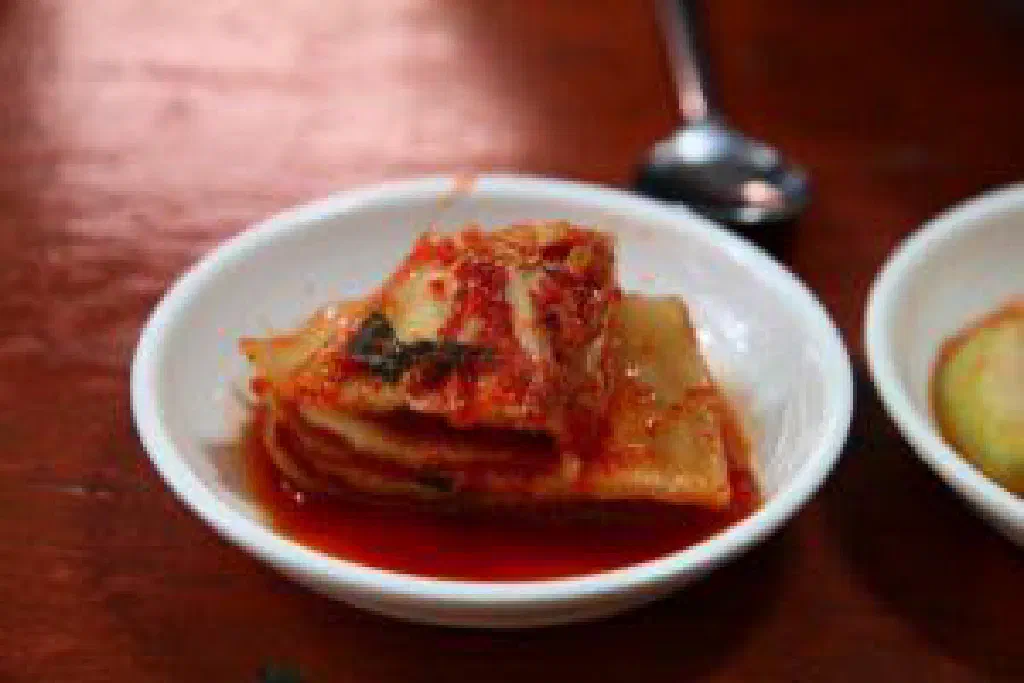
Kimchi is fermented cabbage and it is not one thing: there are hundreds of regional and seasonal versions. The one people mean is baechu kimchi, napa cabbage salted, coated in a paste of gochugaru, garlic, ginger and fish sauce, and left to ferment.
About Kimchi
Kimchi is eaten at nearly every Korean meal and the annual communal making, kimjang, is on UNESCO’s intangible heritage list. Households used to bury jars in the ground to hold a steady temperature; now there are dedicated kimchi refrigerators.
The salting is the step people rush. Cabbage needs several hours in brine so it wilts properly and the paste can penetrate.
Ingredients (serves 1–2)
- 1 head napa cabbage (about 500 g)
- 1 bunch mooli radish (about 200 g)
- 1 bunch small radishes (about 100 g)
- 2 cloves garlic
- 1 tablespoon ginger, chopped
- 1 tablespoon gochugaru chilli flakes
- 2 tablespoons fish sauce
- 2 tablespoons oyster sauce
- 1 tablespoon sugar
- 2 teaspoons salt
- 2 tablespoons fermented shrimp (optional)
Shopping for the ingredients
Gochugaru is not interchangeable with other chilli flakes: it is coarser, fruitier and less fierce. Korean fish sauce or anchovy sauce, and saeujeot, the fermented shrimp, which is the traditional depth. Coarse sea salt for the brine, not fine table salt.
Preparing the dish
Quarter the cabbage lengthways and salt it heavily between the leaves, then leave it four to six hours, turning occasionally, until the stems bend without snapping. Rinse it three times and drain thoroughly. That is the step that decides the result.
Step-by-step instructions
- Quarter the cabbage lengthways and salt heavily between the leaves; leave 4–6 hours until the stems bend without breaking.
- Rinse three times in cold water and drain thoroughly, squeezing gently.
- Blend the garlic, ginger, fish sauce, shrimp, sugar and gochugaru into a thick paste.
- Cut the radish into matchsticks and mix it into the paste.
- Wearing gloves, rub the paste between every leaf of the cabbage.
- Pack tightly into a clean jar, pressing down so no air remains, leaving headspace.
- Leave at room temperature 1–3 days until it smells sour and bubbles when pressed.
- Move to the fridge; it keeps for months and goes on improving.
Gluten-free / lactose-free version
Kimchi contains no dairy. Fish sauce and oyster sauce sometimes contain wheat, so check both, and some gochugaru is bulked with flour. Otherwise it is naturally gluten-free.
Tips for vegans and vegetarians
Vegan kimchi is a real Korean tradition, made in Buddhist temple cooking for centuries. Replace the fish sauce and shrimp with a kelp and dried mushroom broth reduced down, plus a little miso. It ferments identically.
More tips and tricks
Salt the cabbage properly and give it the full four to six hours. Wear gloves; gochugaru stings for hours afterwards. Press out all the air when packing. And let it ferment at room temperature until it is actively bubbling before it goes in the fridge.
Adapting the recipe to your taste
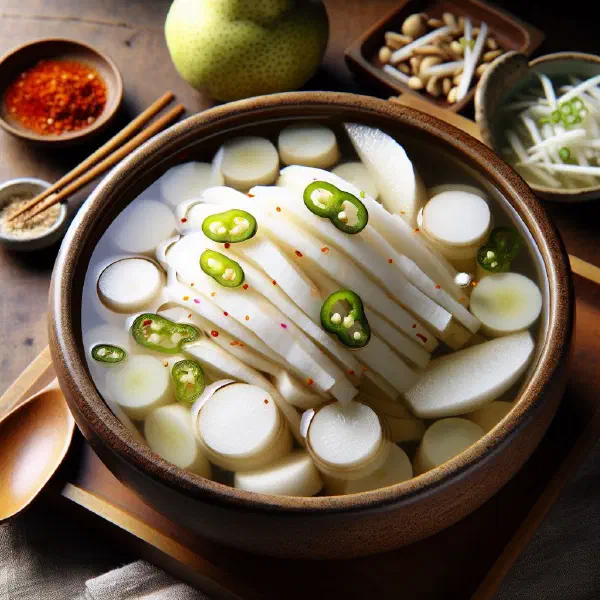
Kkakdugi is the radish cube version. Baek kimchi has no chilli at all and is the white summer kimchi. Older, sourer kimchi is what goes into kimchi jjigae, and it is better for it.
Ingredient substitutions
Miso and kelp broth replace fish sauce for a vegan version. Regular chilli flakes work at reduced quantity, though the flavour differs. Any radish.
Drink pairing ideas
Soju, obviously. Makgeolli, the cloudy rice wine, is the better pairing. Barley tea with a meal.
Serving and presentation ideas
Kimchi is banchan: a small dish among several, refilled as needed, alongside rice and everything else. It is not a condiment and not a salad. It also goes into stews, pancakes and fried rice once it is properly sour.
A bit of history
Kimchi predates chilli in Korea; peppers arrived from the Americas in the seventeenth century and were adopted within a hundred years. Kimjang, the November making, was listed by UNESCO in 2013 and is still practised communally. It anchors Korean cuisine more completely than any national dish anywhere.
More recipe ideas
Summary: Kimchi
Kimchi is napa cabbage salted, coated in a gochugaru and garlic paste and fermented. Salt it four to six hours, rinse well, wear gloves, and ferment until it bubbles before chilling.