National Dish South Korea: Nakji Bokkeum (Recipe)
In this article
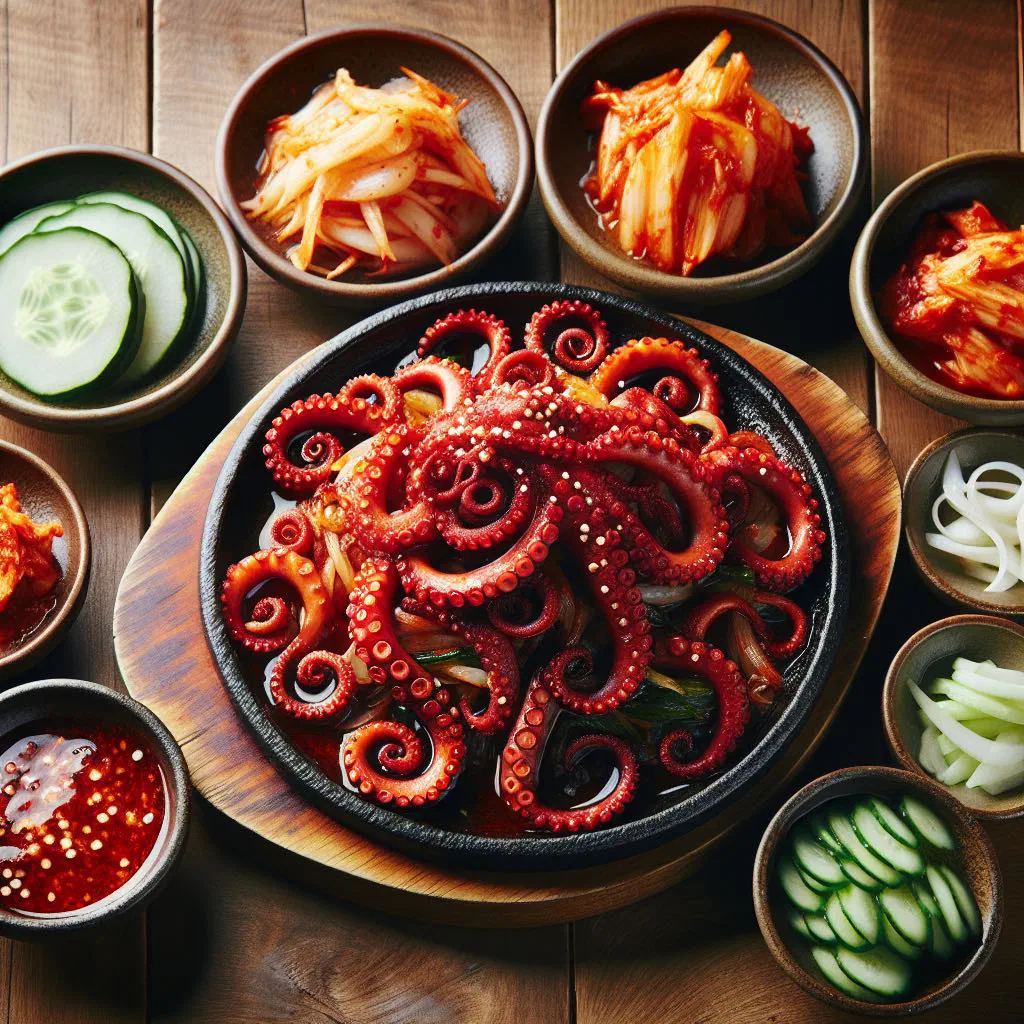
Meet Nakji Bokkeum, a fiery Korean stir-fry that brings together tender octopus and crisp, colourful vegetables in a glossy, gochujang-laced sauce. Sweet, savoury and pleasantly hot all at once, it is the kind of dish made for sharing, pile it high alongside a bowl of steaming rice and let the bold flavours do the talking. It is quick to cook yet feels every bit as special as a meal out.
About Nakji Bokkeum
Nakji Bokkeum is a traditional Korean dish built around tender pieces of octopus and fresh vegetables. It is most often served as a main course and is perfect for a relaxed meal shared with friends or family. The interplay of spicy, sweet and gently fiery notes makes every mouthful something to savour.
Ingredients (serves 1–2)
- 200 g fresh octopus, cleaned and cut into pieces
- 1 onion, cut into strips
- 1 carrot, cut into strips
- 1 courgette, cut into half-moons
- 2–3 spring onions, sliced into rings
- 2–3 tablespoons gochujang (Korean chilli paste)
- 1–2 cloves of garlic, finely chopped
- 1 tablespoon sesame oil
- 2 tablespoons soy sauce
- Sesame seeds, to garnish
- Cooked rice, to serve
Shopping for the ingredients
The ingredients for nakji bokkeum are available in most Asian grocers, especially those with a fresh seafood counter. Be sure to buy fresh octopus, as it gives the best flavour and texture. Gochujang, the heart of the sauce, can be found in the same shops. If you live somewhere where Asian ingredients are hard to come by, many of the items can also be ordered online.
Preparing the dish
Before you start cooking, prepare all the ingredients thoroughly. That means cleaning the octopus carefully and cutting it into even pieces so it cooks uniformly. The vegetables should be cut to a consistent size too, which keeps the cooking time even and creates an appealing finish. Having everything to hand before you begin makes the whole process far smoother.
Step-by-step instructions
- Heat a large pan or wok over medium heat and add the sesame oil.
- Add the onion, carrot and courgette and sauté the vegetables for 3–4 minutes, until just softened.
- Add the prepared octopus and fry until it turns opaque, about 2–3 minutes.
- Stir in the garlic and the gochujang, mixing well until the octopus and vegetables are evenly coated in the sauce.
- Pour in the soy sauce and add the spring onions. Stir everything together and cook for a further 2–3 minutes.
- Serve nakji bokkeum hot, garnished with sesame seeds, alongside steaming rice.
Gluten-free / lactose-free version
For a gluten-free version of nakji bokkeum, use gluten-free soy sauce and check the label carefully when buying it. As the recipe contains no dairy, it is already lactose-free. If you do add side dishes, take a quick look at their ingredients to make sure they are lactose-free too, and reach for lactose-free products wherever needed.
Tips for vegans and vegetarians
For a vegan and vegetarian take on nakji bokkeum, swap the octopus for tofu or the vegetables of your choice. Cashew nuts or mushrooms work especially well, lending both a satisfying texture and a comparable depth of flavour. Be sure to use a vegan soy sauce to keep the dish fully plant-based. It is a wonderful way to enjoy the flavours of Korean cooking without any animal products, much like a vegetable-rich Dubu Kimchi.
More tips and tricks
A key tip for nakji bokkeum is to watch the cooking time so the octopus stays tender, overcook it and it turns rubbery and far less pleasant to eat. It also helps to keep the vegetables with a little bite, which adds an interesting contrast in texture. Experiment with the amount of gochujang to dial the heat up or down to suit your taste.
Adapting the recipe to your taste
The recipe for nakji bokkeum is wonderfully flexible and easy to tailor to your own preferences. Feel free to add seasonal or favourite vegetables to vary the dish. The spice level can be adjusted simply by how much gochujang you use, less for a milder version, more for an intense kick. Just keep the flavours in balance and avoid throwing in too many ingredients at once.
Ingredient substitutions
If you do not have gochujang to hand, you can use an alternative chilli paste or even sriracha. They will not deliver quite the same authentic taste, but they still bring plenty of heat and flavour to the dish. Instead of fresh octopus, frozen or even squid can be used, as in the closely related Ojingeo Bokkeum, letting texture and flavour be your guide. You can also vary the vegetables according to what is available or what you enjoy most.
Drink pairing ideas
A good Korean lunch or dinner is often accompanied by something delicious to drink. Nakji bokkeum pairs well with Korean beers such as Hite or Cass. If you would prefer something refreshing, try black tea or green tea, which let the flavours of the food shine. For an alcohol-free option, freshly pressed juices or a sweet rice drink make an excellent choice.
Serving and presentation ideas
Presentation can make a real difference when serving nakji bokkeum. Use a large, shallow dish or the wok itself to show off the brightly coloured ingredients. Fresh coriander leaves or a few extra spring onions make a lovely garnish and lift the look of the dish. Serving it with smaller side bowls helps organise the plate visually and makes it easy to share out the portions. Try pairing it with a savoury Pajeon for a generous spread.
A bit of history
Nakji bokkeum is part of Korea’s food culture, which is shaped strongly by regional ingredients and cooking techniques. Octopus is a popular ingredient in many Korean dishes, particularly in the coastal regions where the seafood is caught fresh. Gochujang, the central ingredient, has been an essential part of Korean cuisine for centuries. Nakji bokkeum reflects the blend of tradition and innovation that defines Korean cooking, and it enjoys great popularity both in South Korea and abroad.
More recipe ideas
Summary: Nakji Bokkeum
Nakji bokkeum is a delicious and versatile dish of Korean cuisine, defined by its spicy sauce and fresh vegetables. This quick-to-make meal offers a wealth of flavours and textures that rival any restaurant visit. Nakji bokkeum is well and truly a must-try. Enjoy it with steaming rice and explore the fascinating world of Korean flavours.