National Dish South Korea: Ojingeo Bokkeum (Recipe)
In this article
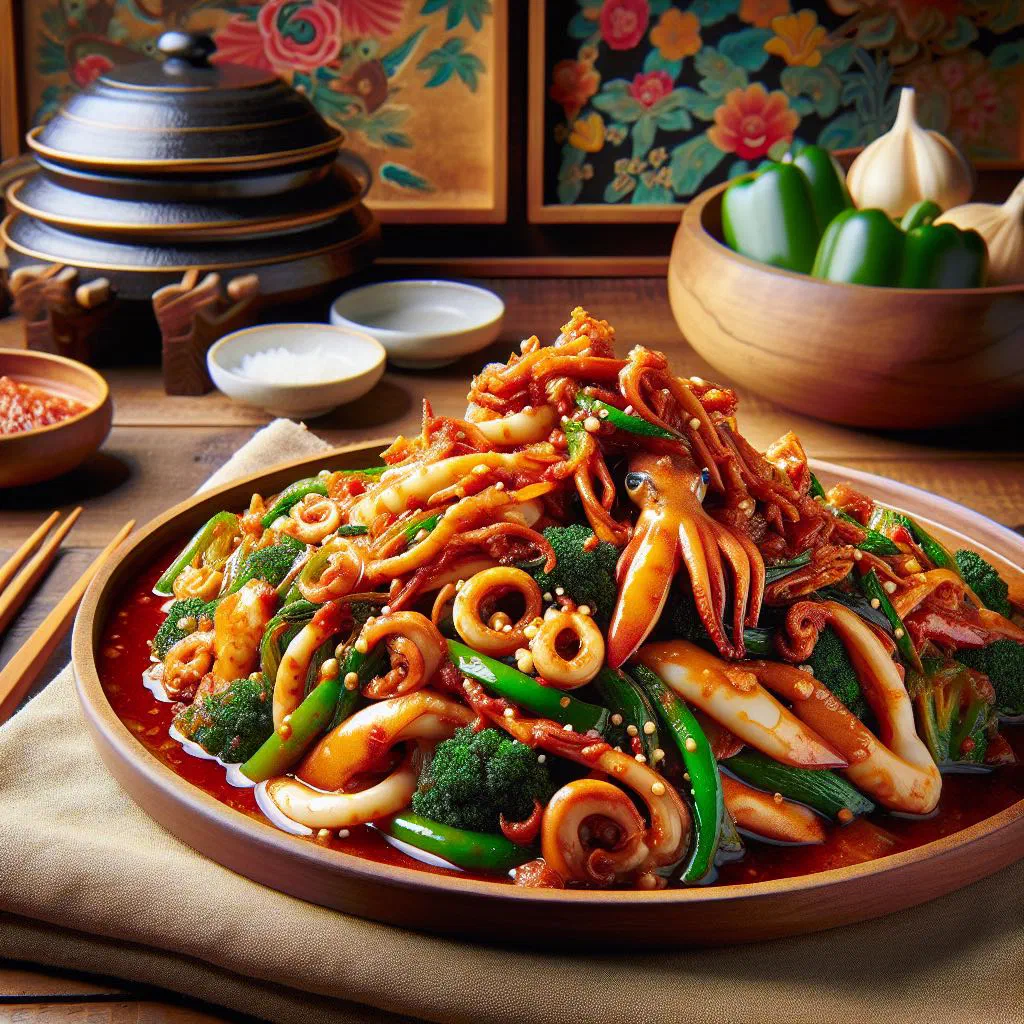
Meet Ojingeo Bokkeum, a fiery stir-fry that brings the fresh taste of the sea straight to your table. Tender squid is tossed with a glossy, spicy sauce and crisp vegetables to create a dish that is every bit as quick as it is impressive. With its bold balance of heat, savoury depth and a touch of sweetness, this Korean favourite is perfect for a speedy midweek supper, yet smart enough to wow your guests. Let the combination of fresh squid and punchy seasonings win you over.
About Ojingeo Bokkeum
Ojingeo Bokkeum is a traditional Korean dish built around stir-fried squid, enriched with a generous array of local ingredients and seasonings. It captures the best of Korean cuisine, the fresh flavours of the sea paired with the characteristic heat and depth of the spices. The dish is wonderfully aromatic and quick to put together, which makes it ideal for a fast weeknight dinner that can still impress visitors.
Ingredients (serves 1–2)
- 300 g fresh squid
- 2 tablespoons vegetable oil
- 1–2 tablespoons gochujang (Korean red chilli paste)
- 1 tablespoon soy sauce
- 1 teaspoon sugar
- 1 small onion, sliced
- 1 carrot, cut into strips
- 2–3 spring onions, cut into rings
- Sesame oil, to taste
- Sesame seeds, to garnish
Shopping for the ingredients
The ingredients for Ojingeo Bokkeum are easy to find in most Asian grocery shops. Fresh squid is often kept in the chilled section and should be chosen as fresh as possible. When buying gochujang, look for a good-quality brand, as it has a real impact on the final flavour of the dish. Alongside the basics, you can also pick up a range of fresh vegetables to bring even more variety to the plate.
Preparing the dish
Before you start cooking Ojingeo Bokkeum, it is important to get all of your ingredients ready. Clean and slice the squid carefully so it cooks evenly, and prepare the various vegetables in advance too, since the cooking itself moves quickly. A useful tip is to lay everything out in small bowls so it is all within easy reach once the pan is hot.
Step-by-step instructions
- Heat the oil in a large frying pan or wok over a medium heat.
- Add the onion and carrot and stir-fry for around 2 minutes until softened.
- Add the prepared squid and stir-fry, stirring constantly, for about 3–4 minutes.
- Stir in the gochujang, soy sauce and sugar, mixing everything together well.
- Add the spring onions and cook for a further 1–2 minutes.
- Finish with a drizzle of sesame oil and garnish with sesame seeds.
Gluten-free / lactose-free version
For a gluten-free version of Ojingeo Bokkeum, use gluten-free soy sauce, which offers a flavour close to the regular kind. Just make sure all the other ingredients you use are gluten-free as well. The heat of the dish stays intact, so it remains every bit as tasty an experience. As for dairy, the dish is naturally lactose-free, making it well suited to anyone with a lactose intolerance.
Tips for vegans and vegetarians
To make Ojingeo Bokkeum vegan or vegetarian, you can replace the squid with mushrooms or tofu. Both alternatives soak up the seasonings beautifully and deliver a satisfying, spicy bite. Be sure to press the tofu well so it better mimics the texture of squid. The sauce is also easily adjusted to suit the new ingredients and bring out their best flavour.
More tips and tricks
A key tip when cooking Ojingeo Bokkeum is to keep stirring constantly, which ensures even cooking and stops anything sticking to the pan. Mix the sauce in advance so you only need to add it once the vegetables and squid are ready. If you like things hot, throw in some fresh chillies to ramp up the spice. Finally, a scattering of spring onions and sesame seeds gives the dish an appealing finish, much like the garnishes on a classic Pajeon.
Adapting the recipe to your taste
The beauty of Ojingeo Bokkeum lies in its versatility. Feel free to adjust the vegetables to suit your taste, or add extras such as peppers or courgette. Anyone can shape this dish to their own liking, be it more seasoning or a different choice of protein. Experiment with different combinations to create your own unique take on this classic.
Ingredient substitutions
If some ingredients are unavailable or simply not to your taste, there are plenty of alternatives for Ojingeo Bokkeum. The chilli paste, for instance, can be swapped for sriracha if you fancy a slightly different flavour, just as the spicy sauce in a Dak Galbi can be tuned to taste. The soy sauce can also be replaced with coconut aminos for a sweeter note. Tweaks like these let you adapt the dish to personal preferences or whatever you have to hand, without losing any flavour.
Drink pairing ideas
For a perfectly matched companion to your Ojingeo Bokkeum, reach for light and refreshing drinks. A Korean lager or a sweet rice beer pairs wonderfully with the flavours of the dish. A light white wine or a crisp rosé can also make a lovely match. Alternatively, alcohol-free options such as green tea or a fruity lemonade are highly recommended for balancing out the heat.
Serving and presentation ideas
An attractive presentation can lift the whole eating experience. Serve the Ojingeo Bokkeum in a large bowl and garnish it with fresh spring onions and sesame seeds to add depth of colour. Round out the table with traditional Korean side dishes such as pickled vegetables or rice to make the meal complete, the comforting rice crust of Nurungji is a lovely option. For an extra feast for the eyes, add fresh herbs and edible flowers.
A bit of history
Ojingeo Bokkeum has its roots in traditional Korean cuisine, which holds local produce and seafood in high regard. As a dish commonly enjoyed in coastal regions, it reflects the deep connection between the Korean people and the sea. The use of fiery seasonings is typical of Korean cookery and gives the dish its characteristic flavour. Today, Ojingeo Bokkeum is hugely popular not only in South Korea but internationally too, representing the flavours and food culture of the country.
More recipe ideas
Summary: Ojingeo Bokkeum
In short, Ojingeo Bokkeum is a versatile and delicious dish that brings the flavours of South Korea to your plate. It unites fresh squid with a blend of spicy and sweet notes that make it a hit for any occasion. The preparation is simple and fast, which makes it an excellent choice for a light dinner or a sociable get-together. Give this dish a try and let its authenticity and flavour win you over.