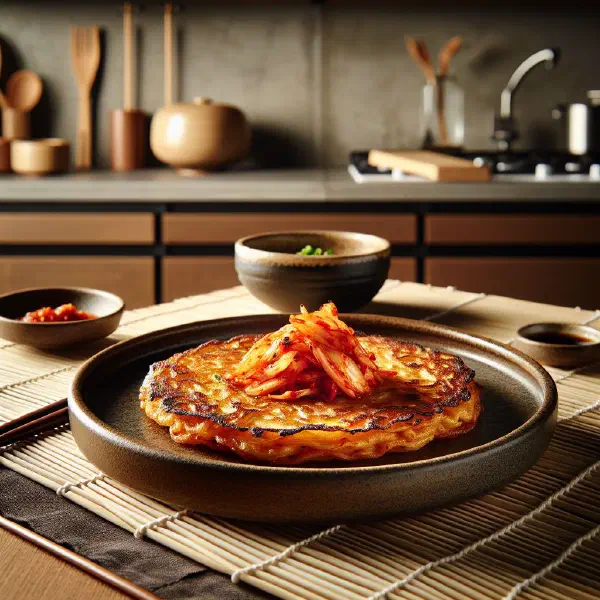
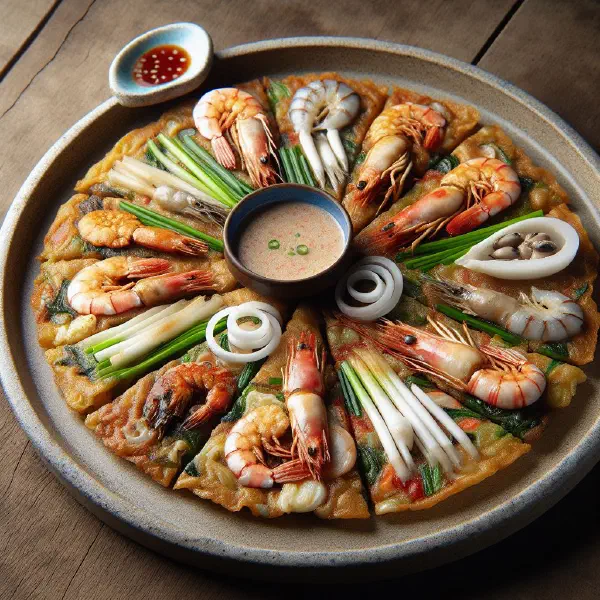
National Dish South Korea: Pajeon (Recipe)
In this article
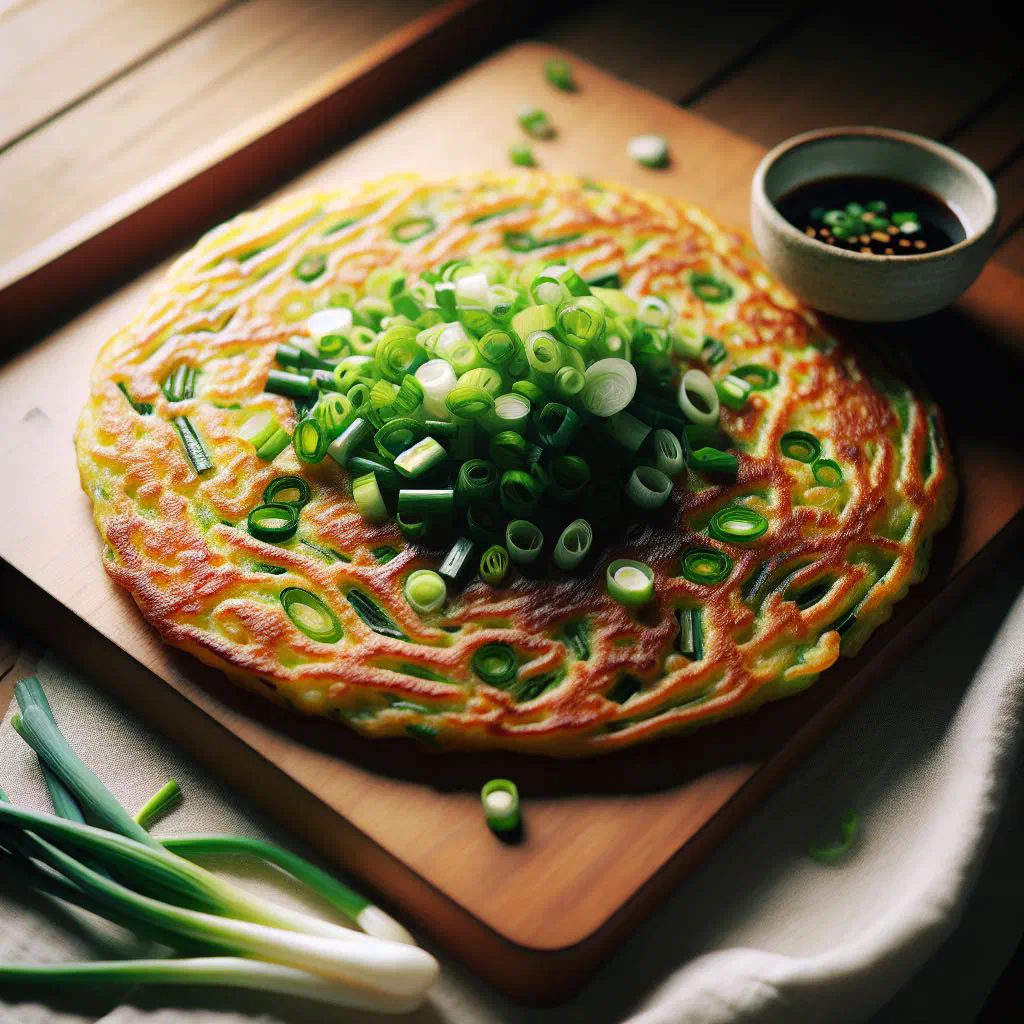
Say hello to Pajeon, one of South Korea’s most comforting savoury treats. This traditional Korean pancake brings together a light, slightly chewy batter and a tumble of fresh vegetables for a snack that is every bit as satisfying as it is simple. Crisp at the edges and tender in the middle, it carries the authentic flavour of South Korea straight to your table. It is sure to win everyone over.
About Pajeon
Pajeon is a traditional Korean pancake, rich in both flavour and texture. It is made chiefly from rice flour and water, which gives it a gently chewy yet pleasingly crisp consistency. More often than not it is studded with fresh spring onions and a mix of seasonal vegetables, so that every bite becomes a little taste experience. This moreish dish is hugely popular as a snack and as a side to all manner of Korean dishes, and it slots happily into a spread of Korean cuisine alongside heartier plates.
Ingredients (serves 1–2)
- 100 g rice flour
- 200 ml water
- 1 handful of fresh spring onions
- 1 small carrot, grated
- 1 small courgette, grated
- Oil, for frying
- Soy sauce, for dipping
Shopping for the ingredients
To get the very best results, choose fresh ingredients for your pajeon. Rice flour is available in most supermarkets or Asian grocery shops; just make sure you pick up a good-quality flour. Fresh vegetables such as spring onions, carrots and courgette bring colour and plenty of nutrients to the dish. Using fresh produce will improve the flavour enormously, much as it does in a comforting bowl of Kongnamul Guk.
Preparing the dish
Before you start cooking the pajeon, it pays to get all your ingredients ready. That means grating the carrot and courgette, as well as slicing the spring onions. This little bit of preparation keeps the cooking process smooth and quick. It really is worth doing everything in advance so you can work efficiently once the pan is hot.
Step-by-step instructions
- Combine the rice flour and water in a bowl and mix well until you have a smooth batter.
- Stir the sliced spring onions, grated carrot and courgette into the batter.
- Heat a little oil in a frying pan and pour in a ladleful of the batter.
- Fry over medium heat for about 3–4 minutes per side, until the pancake is golden brown.
- Drain the finished pancake on kitchen paper and serve warm.
Gluten-free / lactose-free version
The wonderful thing about pajeon is just how adaptable it is. For a gluten-free version, swap the rice flour for a blend of gluten-free flours, widely available in health-food shops. The recipe also contains no lactose, which makes it an excellent choice for anyone with a lactose intolerance.
Tips for vegans and vegetarians
This pajeon recipe is already suitable for vegans, as it contains no animal products at all. To make the dish even more versatile, add a few mushrooms or other vegetables such as peppers. These variations introduce new flavours and textures, in much the same spirit as the lively Kongnamul Muchim. Vegans can also reach for a plant-based soy sauce as a dip.
More tips and tricks
To achieve the perfect texture and the best possible flavour for your pajeon, it is important to preheat the pan thoroughly. Make sure there is enough oil in the pan to create a crisp surface. Adding a touch of cornflour or potato starch will make the consistency even crunchier. Experiment with different herbs and spices to add your own personal touch.
Adapting the recipe to your taste
The recipe for pajeon is easy to adjust to your own preferences. You can add different vegetables, or even some tofu, to make the dish more varied. You might also play with the seasoning, stirring in optional garlic or chilli for an extra kick. Have a go and find out which combination you like best.
Ingredient substitutions
If you do not have every ingredient to hand, there are plenty of alternatives to fall back on. Instead of rice flour, you could try cornmeal for a slightly different flavour. When it comes to the vegetables, be creative and use whatever you have available, even leftover vegetables from a previous meal can be folded into the batter, the kind of resourceful approach that also works beautifully for Ssambap.
Drink pairing ideas
To round off your pajeon nicely, there are several drinks that make a fine match. A chilled Korean beer is a popular choice and pairs wonderfully with the savoury flavour of the pancake. Alternatively, you could reach for a traditional Korean drink such as makgeolli, a lightly sparkling rice wine. If you would rather stay alcohol-free, a cup of green tea makes a refreshing option.
Serving and presentation ideas
An appealing presentation can lift the whole pajeon experience considerably. Serve the pancake on a warm plate and garnish it with fresh spring onions or sesame seeds. A small bowl of soy sauce on the side adds to the visual interest too. Remember that we eat with our eyes first, and a beautifully presented dish often tastes all the more appetising, a finishing flourish that suits a sweet treat like Yakgwa just as well.
A bit of history
Pajeon has a long history in Korean cooking and is often called the “rainy-day pancake”. There is a tradition of enjoying these tasty pancakes during the rainy season, when the rain encourages the harvest of fresh herbs and vegetables. These days, however, pajeon is served all year round and remains a much-loved snack, held in high regard by locals and tourists alike. These savoury pancakes are delicious and a genuine piece of Korean culture.
More recipe ideas
Summary: Pajeon
In summary, pajeon is a delicious and versatile Korean pancake that suits all kinds of occasions. With its straightforward preparation and the freedom to tailor the recipe however you like, it is easy to enjoy this delicacy in your own kitchen. Give it a try and bring the taste of South Korea to your table.