National Dish South Korea: Samgyetang (Recipe)
In this article
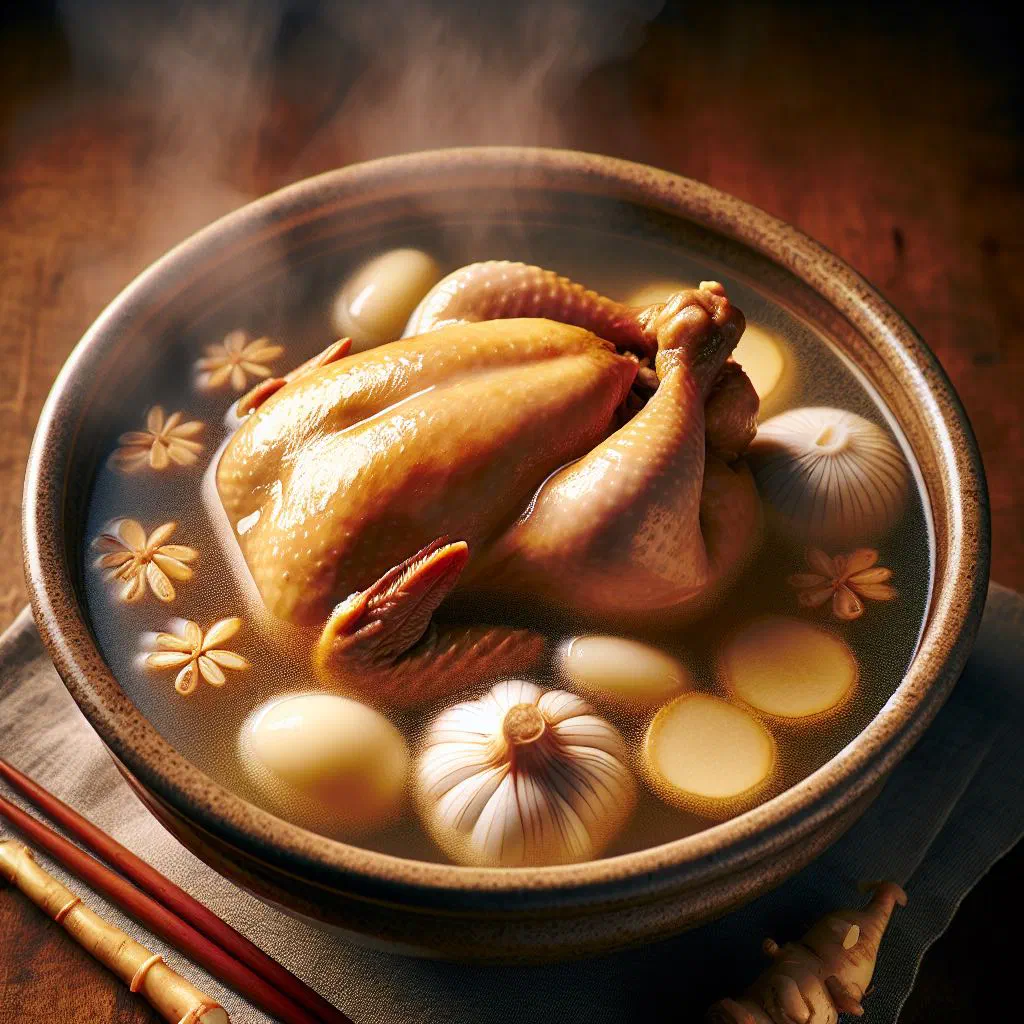
Meet Samgyetang, the restorative chicken soup that South Koreans famously turn to on the hottest days of summer. A whole young chicken is stuffed with glutinous rice, ginseng and a handful of aromatics, then gently simmered until the broth turns milky and deeply nourishing. Believed to boost energy and fortify the body, this is comfort in a bowl, soothing, wholesome and surprisingly simple to make at home.
About Samgyetang
Samgyetang is a traditional Korean dish enjoyed above all during the warm months of the year. This delicious chicken soup is built around a whole young chicken, stuffed with ginseng, glutinous rice and a variety of herbs. Eating samgyetang is regarded as a feast and as a genuinely health-giving meal. Many Koreans believe the soup boosts energy and strengthens the immune system, which is exactly why it remains such a popular choice through the summer.
Ingredients (serves 1–2)
- 1 young chicken (about 500 g)
- 1 cup glutinous rice
- 2–3 slices ginseng
- 2–3 cloves garlic
- 2–3 pieces ginger
- 1–2 spring onions
- Water (enough to cover the chicken)
- Salt and pepper, to taste
- Sesame oil (optional, to finish)
Shopping for the ingredients
The ingredients for Samgyetang are easy to track down in most Asian grocery shops. Young chicken is usually found in the fresh meat section, while glutinous rice and ginseng tend to sit on the well-stocked dry-goods shelves. It pays to choose fresh ingredients to get the very best flavour and the greatest health benefits. Don’t forget to pick up garlic and ginger too, as both are essential to the soup’s full flavour and its restorative qualities.
Preparing the dish
Before you start cooking Samgyetang, a little preparation goes a long way. First, soak the glutinous rice in water for at least 2 hours. This softens the grains and helps them absorb more liquid as they cook. Next, wash the chicken thoroughly and remove any internal organs. It is important to clean the bird well inside and out so that no unwanted flavours find their way into the broth.
Step-by-step instructions
- Place the cleaned chicken in a large pot and add enough water to cover it.
- Stuff the chicken with the garlic, ginger and 1 cup of the soaked glutinous rice.
- Bring the pot to the boil over medium heat, then reduce the heat and simmer gently for 1.5 to 2 hours.
- Once cooked, carefully lift out the chicken and ladle it into individual bowls with plenty of broth.
- Season with salt, pepper and a little sesame oil if you like, then serve piping hot.
Gluten-free / lactose-free version
The recipe for Samgyetang is naturally gluten-free and lactose-free. It contains no ingredients that bring gluten or lactose to the table. To be certain the dish suits anyone sensitive to gluten or lactose, use a gluten-free stock or simply double-check that all your ingredients, especially any seasonings or sauces, are gluten-free. These small tweaks make it a great choice for a wide range of dietary needs.
Tips for vegans and vegetarians
Although Samgyetang is traditionally made with chicken, there are ways to create a vegan or vegetarian version. In place of the bird you might use large pieces of tofu or seitan, both of which soak up the liquid and the aromas beautifully. You can also add vegetables such as carrots, mushrooms and courgette to boost the flavour and nutrition. Swapping the water for a good vegetable stock rounds the whole thing out on a plant-based note.
More tips and tricks
To make Samgyetang even tastier, try adding ingredients such as goji berries or jujube dates, both prized in traditional Korean cooking as nourishing extras. The slow simmer is key to drawing out the full depth of flavour, so take your time. Experiment with different herbs and spices to tailor the dish to your own palate. It also keeps wonderfully, the flavour often improves the longer it stands. For another comforting bowlful, try the gentle Kongnamul Guk.
Adapting the recipe to your taste
If you would like to adapt Samgyetang to your own preferences, you can vary the stuffing. Beyond glutinous rice, quinoa or even a coloured rice can be used to add a special look to the dish. For a little heat, add a touch of chilli, or play around with the herbs you choose. Give yourself permission to be creative and shape the recipe to suit your taste exactly. If hearty and spicy is more your style, the fiery Yukgaejang is well worth a look.
Ingredient substitutions
If some of the traditional ingredients for Samgyetang prove hard to find, there are useful alternatives to fall back on. In place of ginseng, for instance, you can use ginger to retain some of the health benefits. If glutinous rice is unavailable, plain long-grain rice works as a stand-in, though the texture will be different. Stay open to substitutions so you can still enjoy the dish whatever your kitchen happens to hold.
Drink pairing ideas
To round off the experience of eating Samgyetang, it is worth thinking about a suitable drink. Traditionally a sorghum beer or a lightly chilled Korean rice wine is served, balancing the soup’s flavours nicely. If you prefer something alcohol-free, fresh ginger tea or a light green tea both make refreshing companions. These drinks bring the meal together harmoniously and help with digestion.
Serving and presentation ideas
To serve Samgyetang at its best, reach for handsome bowls or deep plates that let the soup really shine. Garnished with fresh herbs such as extra spring onions or a drizzle of sesame oil, it makes a colourful sight. Arrange the components so they look inviting and encourage your guests to dive straight into the soothing broth. An attractive presentation adds a great deal to the pleasure of the meal.
A bit of history
The dish Samgyetang has a long and fascinating history within Korean culture. It is often linked to the belief that it raises the body’s warmth on hot summer days and helps to guard against the effects of the heat. In the past it was viewed as a remedy for weakness and general exhaustion. Today it is a cherished traditional dish and a feast, frequently enjoyed at special occasions and gatherings, a fine example of the restorative side of South Korean cuisine.
More recipe ideas
Summary: Samgyetang
In short, Samgyetang is a delicious dish and a remarkably wholesome one, made with care and traditional ingredients. This soup is a rewarding experience. It offers a captivating link to Korean culture and is easy to cook once you have the right tips and tricks to hand. Give it a try and let the magic of Samgyetang win you over.