National Dish South Korea: Seolleongtang (Recipe)
In this article
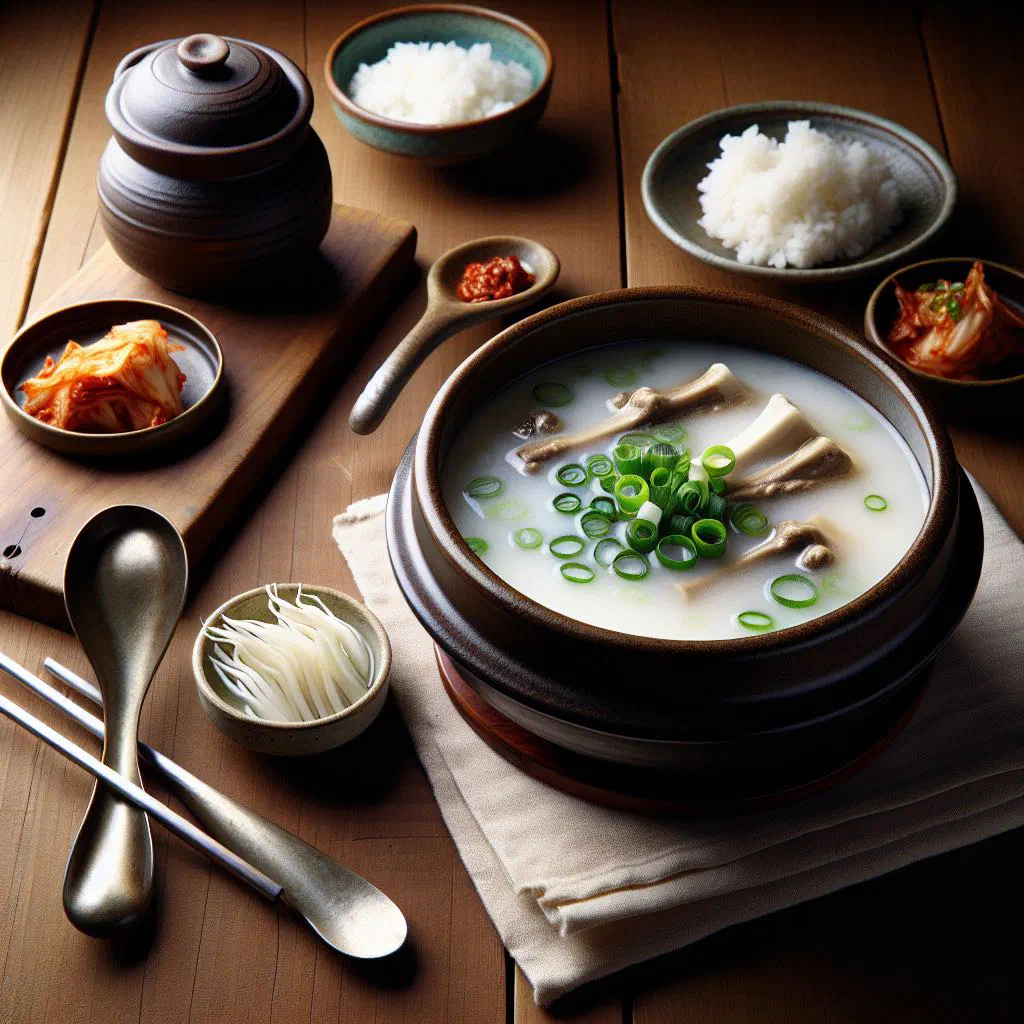
Warm yourself with Seolleongtang, one of Korea’s most soothing bowls of comfort. This milky-white beef broth is coaxed from bones and slow-cooked meat over many patient hours until it turns rich, silky and deeply nourishing. Gently seasoned at the table and served with rice and fresh spring onions, it is the kind of honest, restorative dish that Koreans have cherished for centuries. Bring a little of that quiet Seoul warmth to your own kitchen.
About Seolleongtang
Seolleongtang, a traditional Korean beef broth, is regarded as a true gem of Korean cooking. It is prized for its richness of flavour and for its nourishing qualities. The dish is built on slow-cooked beef and bones, simmered in water for several hours until they yield a milky yet clear broth. That long cooking time lets the flavours develop fully and draws the goodness out of the bones, giving the soup its signature body and depth.
Ingredients (serves 1–2)
- 500g beef (ideally shin or oxtail)
- 2 litres water
- 1 onion, peeled and halved
- 2–3 cloves garlic, peeled
- 1 piece ginger (about 2cm), peeled
- Salt, to taste
- Cooked rice, to serve
- Freshly sliced spring onions and black peppercorns, to garnish
Shopping for the ingredients
For Seolleongtang it is well worth paying attention to the quality of the beef. The best cuts are those rich in connective tissue, as these contribute to an especially flavourful broth as they cook. Fresh ingredients are key to the taste, so try to source them at a local market or an Asian grocery. Buy your aromatics and spices fresh too, to make the most of the flavour in your finished dish.
Preparing the dish
Making Seolleongtang begins with getting the ingredients ready. First, rinse the beef thoroughly to remove any impurities. It can also help to blanch the meat in cold water before cooking, drawing out any residual blood and impurities for a cleaner broth. The onion, garlic and ginger simply need to be peeled and set aside, ready to go into the pot.
Step-by-step instructions
- Place the beef and bones in a large pot and pour in 2 litres of water.
- Add the onion, garlic and ginger.
- Bring to the boil, then lower the heat and let it simmer for several hours, until the meat is tender.
- Pass the broth through a fine sieve to remove the solids.
- Season with salt to taste and serve the broth piping hot.
- Add rice and fresh spring onions to finish.
Gluten-free / lactose-free version
The recipe for Seolleongtang is naturally gluten-free and lactose-free, as it is essentially just meat and water. If you would like to enrich the broth with soy sauce or a similar product, take care to choose gluten-free alternatives. You can also refine the broth as you please with other seasonings that are likewise lactose-free. That way the dish stays accessible to every kind of diet.
Tips for vegans and vegetarians
For anyone wanting to avoid animal products, a vegan version of Seolleongtang is well worth considering. Instead of beef, use a mixed vegetable stock and add vegetables such as carrots, celery and mushrooms to build a deep flavour. Seitan or tofu make excellent additions too. Adjust the seasoning and reach for extra herbs to give the broth plenty of character, much as you would when cooking Japchae.
More tips and tricks
To get the very best from your Seolleongtang, patience is one of the most important ingredients. Let the broth simmer for at least 6–8 hours to draw out its full flavour. A slow cooker can be a great help here, developing the aromas gently over a longer period. Remember to bring the broth back up to the right temperature before serving and to season it with fresh herbs or spices to taste.
Adapting the recipe to your taste
One of the great things about Seolleongtang is how flexible it is to prepare. You can adjust the dish to your own taste by using different cuts of meat or adding extra seasonings. For some cooks, a hint of chilli powder or black pepper makes the broth more exciting. Be creative and try out different combinations to find the perfect version for you, the same spirit of adaptation that lends variety to a comforting bowl of Galbitang.
Ingredient substitutions
If you have trouble finding certain ingredients for Seolleongtang, there are some sensible alternatives. Instead of oxtail you can use beef rich in connective tissue, such as beef bones or beef brisket. If you are not keen on onions, swap them for shallots or leek. Just make sure your substitutes preserve the flavour and texture the dish is known for.
Drink pairing ideas
To round off your Seolleongtang, a light Asian drink works best, something like green tea or Jujube Tea. A cool rice-based drink can also be a refreshing accompaniment, especially on warmer days. Experiment with different fruit-based coolers too, to lift your menu.
Serving and presentation ideas
An attractive presentation can greatly enhance the Seolleongtang experience. Serve the broth in traditional earthenware bowls to leave an authentic impression. Add fresh spring onions and black pepper as a garnish to boost both the look and the aroma. Remember to offer the cooked rice in separate bowls, so everyone can add their own to taste.
A bit of history
Seolleongtang has its roots in Korean history and was once treasured by the working classes, who needed nourishing, filling meals. Over time the dish grew into one of the best-loved staples of Korean cooking. Historically it was often sold by street vendors in the city, providing workers with a quick and hearty meal. Today Seolleongtang is not only part of traditional Korean cuisine but is also served in many restaurants around the world.
More recipe ideas
Summary: Seolleongtang
In summary, Seolleongtang is an outstanding example of Korean cooking, one that appeals to with its clear, milky flavour and nourishing ingredients. It is simple to prepare and offers plenty of room for adjustment, so everyone can find the flavour that suits them best. Whether as a warming meal on cold days or an authentic treat for friends and family, Seolleongtang is a delicious choice that brings a little happiness with every spoonful. Let the deep aroma and heart-warming history of this dish work their magic on you.