National Dish South Korea: Ssambap (Recipe)
In this article
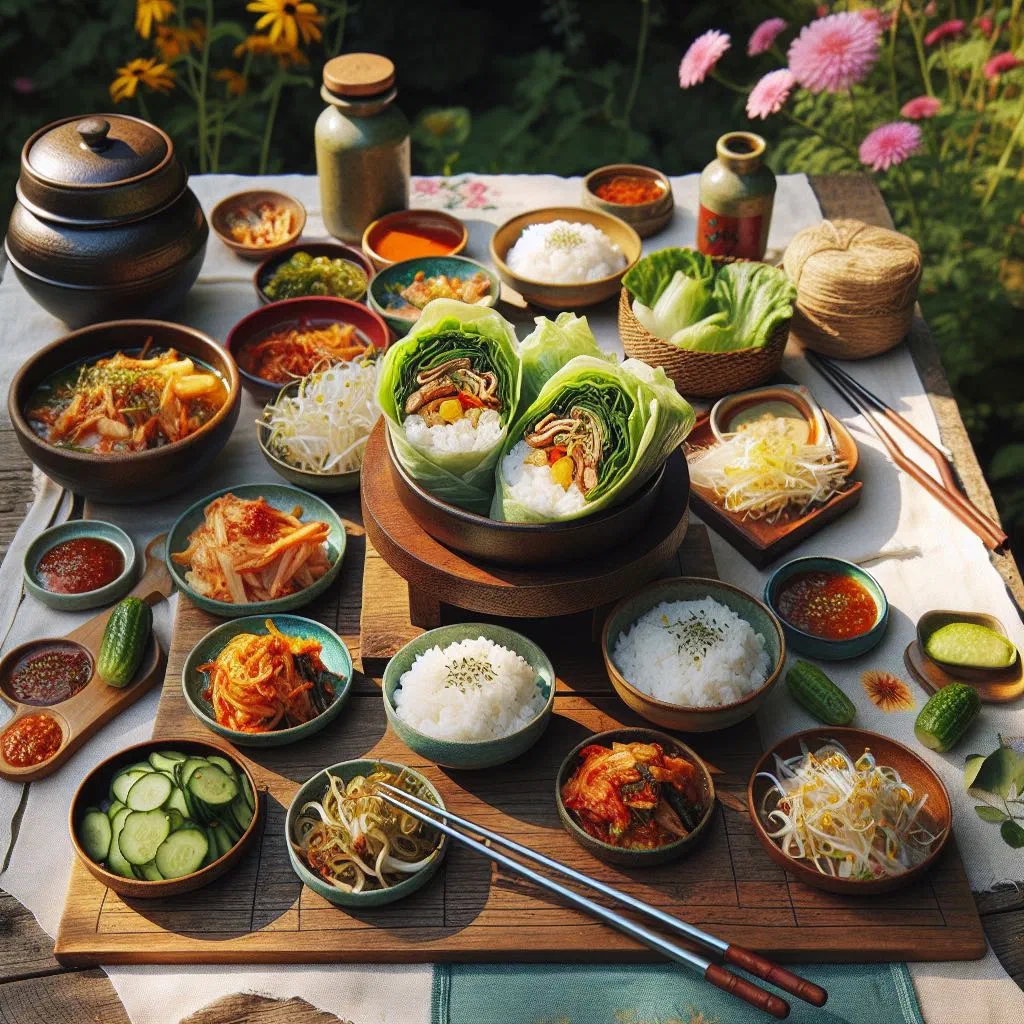
Discover Ssambap, a hands-on Korean favourite that turns dinner into a shared, build-your-own affair. At its heart are little parcels of sticky rice tucked into crisp leaves, served alongside grilled meat or tofu and a spread of fresh sides. Bright, savoury and endlessly customisable, it captures the warmth and generosity of the Korean table. Bring a slice of South Korea’s celebrated food culture straight to your own kitchen.
About Ssambap
Ssambap reaches deep into South Korean culture and has become one of the country’s most cherished dishes. It brings together sticky rice, fresh side dishes and crisp leafy greens in a way that captures the variety of Korean cooking. Ssambap is often served with meat or fish, yet there are just as many delicious versions for vegetarians and vegans. This interplay of flavours and textures makes it a memorable experience for every sense.
Ingredients (serves 1–2)
- 200 g sticky rice
- 100 g meat or tofu
- 1–2 large lettuce leaves or perilla leaves
- Vegetables of your choice (carrots, cucumber, etc.)
- 1–2 tablespoons sesame oil
- 1–2 tablespoons gochujang (Korean chilli paste)
- Soy sauce, to taste
Shopping for the ingredients
To make a perfect ssambap, it is worth picking up your ingredients from an Asian supermarket or online. There you will find the essentials such as sticky rice and gochujang, along with fresh leafy greens and typical side dishes. These shops often stock a wide range of spices and sauces that can make your creation even more intense. Fresh ingredients are key to an authentic flavour, so do not be shy about seeking out the best quality.
Preparing the dish
Before you start putting your ssambap together, it pays to have everything ready to go. Cook the sticky rice first so it does not have to cool for too long while you assemble the parcels. While the rice steams, grill or pan-fry the meat or tofu and cut the vegetables into thin strips. This bit of groundwork makes it far easier to bring the dish together quickly and smoothly.
Step-by-step instructions
- Cook the sticky rice according to the packet instructions and set aside.
- Grill or fry the meat or tofu until cooked through.
- Wash, peel and finely slice the vegetables of your choice.
- Mix the sesame oil with soy sauce and gochujang to make a quick dressing.
- Lay a leaf on a plate, spoon rice on top, then add your chosen filling.
- Drizzle with a little dressing and either roll it up or simply enjoy as it is.
Gluten-free / lactose-free version
Ssambap makes a wonderfully flexible base for those with allergies or intolerances. Instead of standard soy sauce, reach for a gluten-free alternative or use tamari. For a lactose-free version, just make sure all your side dishes and sauces are free from dairy. Many of the traditional ingredients are naturally gluten- and lactose-free, which makes ssambap an excellent choice for everyone at the table.
Tips for vegans and vegetarians
Vegans and vegetarians can adapt ssambap with ease by swapping the meat for tofu or tempeh. The sides lend themselves to plenty of variation too. Think of different vegetables or plant-based sauces. To deepen the flavour, scatter over toasted sesame seeds or nuts. Fresh herbs such as coriander or chives add a bright, fragrant lift that gives the dish a little extra character.
More tips and tricks
To create a truly great ssambap, keep your ingredients as fresh as possible. Prepare each component shortly before you eat so the flavour and texture stay at their best. Play around with how you combine the side dishes to find your own personal favourite. The contrast and balance of flavours are what make this dish such a pleasure to eat.
Adapting the recipe to your taste
The beauty of ssambap lies in how freely you can adjust it. Vary the ingredients to suit your mood and what you have on hand. Add fried mushrooms, aubergine or even avocado for a fresh twist on the flavour. If you like more heat, work in some fresh chilli or a splash of spicy sriracha sauce. Much like the build-it-yourself appeal of Hwe Dup Bap, ssambap rewards a little experimentation.
Ingredient substitutions
If you do not have every listed ingredient to hand, that is no problem at all. In place of sticky rice you can use quinoa, which lends the dish a pleasant nutty note. Instead of gochujang, fall back on another spicy sauce you might already have at home. There are countless ways to put your own stamp on ssambap.
Drink pairing ideas
To round off the experience, a range of drinks pairs beautifully with ssambap. A freshly brewed green tea is the ideal companion, complementing rather than overpowering the flavours. For a livelier contrast, serve homemade lemonade or a glass of fruity soju. These drinks bring extra freshness and let the Korean aromas shine through.
Serving and presentation ideas
The presentation of your ssambap can be every bit as appealing as its taste. Serve it on a large platter with all the ingredients neatly arranged. Garnished with fresh herbs, it will please the eye as much as the palate. Use colourful vegetables for visual contrast and to whet the appetite before the first bite.
A bit of history
Ssambap has a long tradition in Korean cooking and is a symbol of the hospitality at the heart of Korean culture. It is often served at festive occasions and family gatherings. The word ssambap literally means “wrapped rice”, which neatly sums up how the dish is made and enjoyed. In Korea it is frequently eaten in company, encouraging sharing and a sense of togetherness, a spirit it shares with Korean cuisine at large.
More recipe ideas
Summary: Ssambap
In short, Ssambap is a delicious and versatile dish that brings the flavours of South Korean cooking together in an uniquely satisfying form. Its readiness to be tailored to personal taste makes it ideal for any occasion. A vegetarian or a vegan, you will appreciate the freshness and variety it offers. Enjoy both making and eating ssambap as part of a long tradition that celebrates joy and community.