National Dish South Korea: Tangsuyuk (Recipe)
In this article
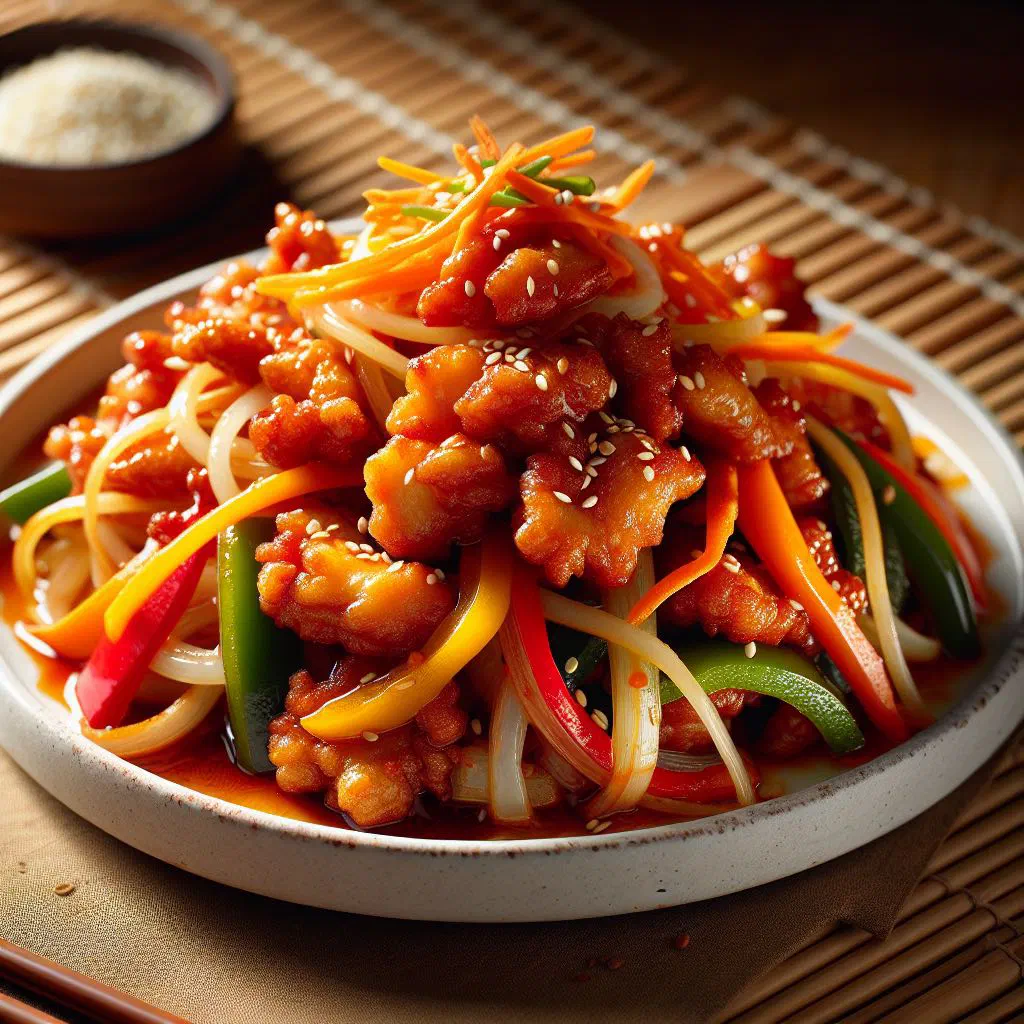
Discover Tangsuyuk, one of South Korea’s best-loved crowd-pleasers. This dish brings together crisp, golden-fried meat and a glossy sweet and sour sauce that strikes the perfect balance between tangy and mellow. Scattered with brightly coloured vegetables, it is as much a feast for the eyes as for the palate. Tangsuyuk delivers the unmistakable flavours of the Korean table straight to your own kitchen.
About Tangsuyuk
Tangsuyuk is a much-loved national dish of South Korea, made from meat that is fried until wonderfully crisp. The pairing of tender meat with its distinctive sweet and sour sauce turns this dish into a genuine treat. What really sets it apart is the abundance of colourful vegetables that accompany it, lifting the dish both in flavour and in looks. Served as a hearty main or a party snack, tangsuyuk truly comes into its own whenever good company gathers around the table.
Ingredients (serves 1–2)
- 250 g pork (or chicken)
- 1 carrot
- 1 pepper (red or green)
- 1 onion
- 1 egg
- 50 g starch (e.g. potato starch)
- 100 ml water
- 2 tablespoons sugar
- 3 tablespoons vinegar
- 2 tablespoons soy sauce
- Oil, for deep-frying
Shopping for the ingredients
The ingredients for tangsuyuk are widely available in Asian supermarkets and in well-stocked regular supermarkets too. Pantry staples such as soy sauce and vinegar come in everything from small bottles to larger containers, so you can buy as much as you need. It is worth choosing good-quality products, as they make a real difference to the finished flavour. Instead of fresh meat you can also use frozen, which simplifies the preparation and keeps for longer.
Preparing the dish
Before you start cooking tangsuyuk, wash and prepare all the ingredients thoroughly. Cut the meat into thin strips and marinate it for at least 30 minutes in a mix of soy sauce and a little sugar. The vegetables should also be cut into bite-sized pieces so they cook evenly during frying. A little groundwork ensures the whole process runs smoothly and efficiently, much as it does with the prep-friendly classic Bossam.
Step-by-step instructions
- Marinate the meat and leave it to rest for 30 minutes.
- Cut the vegetables into evenly sized pieces.
- In a bowl, whisk together the egg and the water.
- Tip the starch onto a separate plate.
- Coat the meat first in the egg-and-water mixture, then in the starch.
- Heat the oil in a deep-fryer or pan.
- Fry the meat in small batches until golden brown.
- Drain the cooked meat on kitchen paper.
- For the sauce, combine the sugar, vinegar and soy sauce and bring briefly to the boil.
- Add the vegetables to the sauce, stir well, then fold in the fried meat.
Gluten-free / lactose-free version
To make tangsuyuk gluten-free, use a gluten-free starch, which is often made from corn or potatoes. Be sure to choose a gluten-free soy sauce, as the conventional kind frequently contains wheat. The recipe is naturally suited to a lactose-free diet, as it contains no dairy. When picking your ingredients, read the packaging carefully to make sure there are no hidden lactose-based additives lurking in pre-processed products.
Tips for vegans and vegetarians
To prepare tangsuyuk for vegans and vegetarians, swap the meat for tofu or seitan. These protein alternatives can be marinated and fried in just the same way to intensify their texture and flavour. For an extra helping of vegetables, add broccoli or courgette. When making the sauce, take care to avoid any animal-based ingredients, which completes the fully plant-based version.
More tips and tricks
A key tip for tangsuyuk is to fry the meat at the right oil temperature to achieve an even, golden crispness. The oil should be hot enough that the meat forms a crust straight away, minimising any loss of moisture. Feel free to experiment with different vegetables and cuts of meat to create your own favourite version. Another handy trick is to cook the sauce until it is slightly thicker, so it clings to the fried meat more effectively.
Adapting the recipe to your taste
The tangsuyuk recipe is easy to tailor to personal preference. Try different cuts of meat, or opt for a purely plant-based version. Vary the vegetables to suit the season or what you have to hand. Remember to choose a frying temperature you are comfortable with, and adjust the sweet and sour balance of the sauce to your own taste.
Ingredient substitutions
If some ingredients are missing, there are often good alternatives that work just as well. In place of pork you can use chicken breast or beef, depending on what you fancy, the same versatility you find in dishes like Dak Galbi. For the sauce, honey can be tried as a sweetener if you would rather not use sugar. Instead of soy sauce, tamari also works nicely and gives you a gluten-free option.
Drink pairing ideas
A delicious tangsuyuk pairs especially well with sweet drinks that complement the dish’s tangy, sweet and sour notes. Consider a cold Asian beer or a crisp soju to heighten the experience. A fruity cocktail can also round off the flavours beautifully. If you prefer alcohol-free options, green tea or a fruity lemonade makes an ideal choice.
Serving and presentation ideas
To present tangsuyuk attractively, use a large serving platter and garnish it with fresh vegetables or herbs. Place the dish in the centre, surrounded by a colourful selection of sides. Small bowls of extra sauce or dips alongside the tangsuyuk make the meal even more appealing. Keep the colours in mind too, so you create a pleasing contrast on the plate, much as you would when plating up Pajeon.
A bit of history
Tangsuyuk has its roots in Chinese cuisine and was adapted over the years to suit Korean tastes. Originally conceived as a side dish or snack, it gradually developed into a popular main course. During the Korean War its popularity and availability grew enormously, as it is straightforward to make and tastes wonderful. It has since established itself as a symbolic dish brought to the table on special occasions and holidays, a fine example of South Korean cuisine.
More recipe ideas
Summary: Tangsuyuk
Tangsuyuk is a delicate speciality of Korean cuisine, winning admirers with its crisp fried meat and its sweet and sour sauce. It is endlessly versatile, suited to special occasions and everyday snacking alike, and offers an exquisite blend of flavours and textures. With the right ingredients and a simple method, you can easily recreate this delicious dish at home. Let tangsuyuk inspire you and enjoy an authentic culinary experience.