National Dish South Korea: Yangnyeom Chicken (Recipe)
In this article
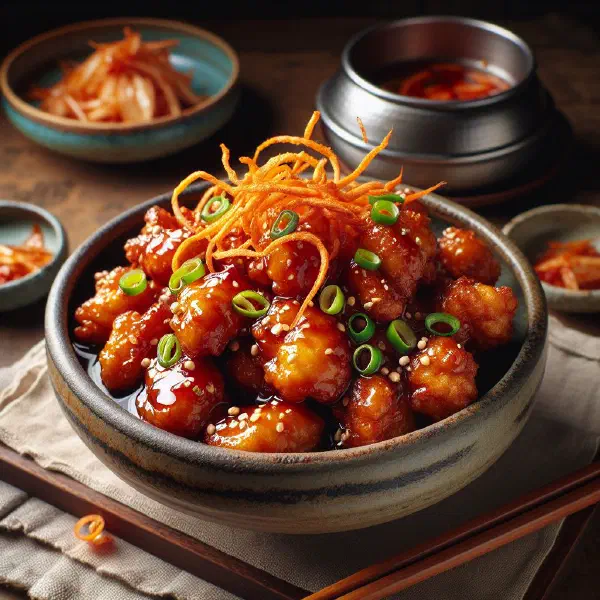
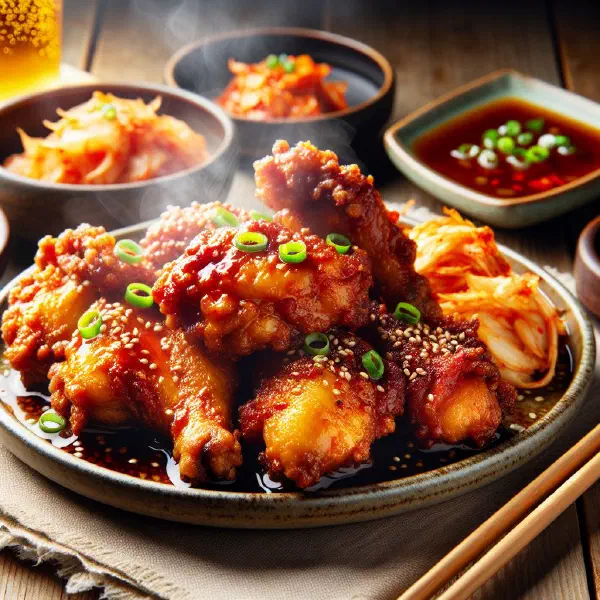
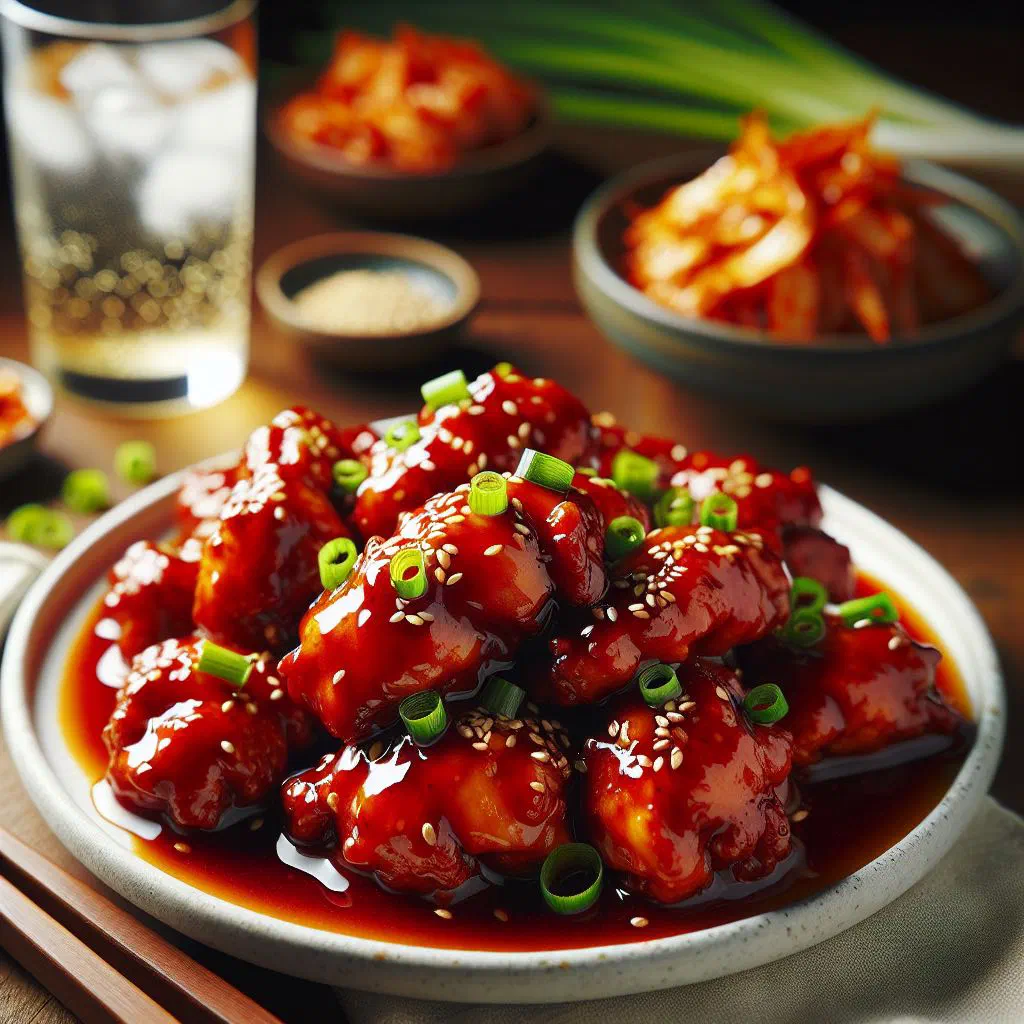
Meet Yangnyeom Chicken, the gloriously sticky, sweet-and-spicy fried chicken that has turned South Korea into a fried-chicken superpower. Each crisp piece is bathed in a glossy red glaze built around gochujang, garlic and ginger, at once fiery, sweet and deeply savoury. It is the sort of dish that demands good company, cold drinks and plenty of napkins. Bring a taste of Seoul’s buzzing chicken-and-beer culture straight to your own kitchen.
About Yangnyeom Chicken
Yangnyeom Chicken is a distinctive dish of Korean cuisine, celebrated for its bold flavour and very crisp texture. More than just a treat for the palate, it is a genuine part of Korean culture. The combination of soy sauce, garlic, ginger and fiery gochujang delivers a beautifully balanced flavour profile that is sweet, spicy and savoury all at once. Yangnyeom Chicken is often served at social gatherings, making it a firm favourite among families and friends alike.
Ingredients (serves 1–2)
- 500 g chicken wings or thighs
- 3 tablespoons soy sauce
- 2 tablespoons gochujang (Korean chilli paste)
- 2 tablespoons honey or sugar
- 2 garlic cloves, finely chopped
- 1 teaspoon ginger, grated
- 1 tablespoon sesame oil
- Flour for coating (optional)
- Oil for deep-frying
Shopping for the ingredients
The ingredients for Yangnyeom Chicken are available in most well-stocked supermarkets or Asian grocery shops. When buying your gochujang, look for a good-quality paste, as the flavour can vary considerably from one brand to the next. Fresh garlic and ginger are equally essential to the seasoning of the dish. If you are after the best possible quality of chicken, it pays to choose meat from a trusted supplier.
Preparing the dish
Before you start cooking Yangnyeom Chicken, make sure all your ingredients are ready to hand. The marinated chicken can easily be prepared the day before to let the flavours deepen. Cut the chicken into pieces if needed and prepare the marinade. Another important step is getting the frying oil ready, so the chicken turns out perfectly crisp.
Step-by-step instructions
- In a bowl, combine the soy sauce, gochujang, honey, garlic, ginger and sesame oil.
- Add the chicken to the marinade and leave it in the fridge for at least 30 minutes, or overnight.
- Heat the oil in a pan to 180°C.
- Lift the marinated chicken out of the marinade and, if you like, toss it in flour.
- Deep-fry the chicken pieces in the hot oil until golden brown and crisp (about 8–10 minutes).
- Drain the fried chicken on kitchen paper and drizzle with the remaining marinade.
Gluten-free / lactose-free version
For a gluten-free version of Yangnyeom Chicken, you can use gluten-free flour to coat the chicken. Make sure your soy sauce is gluten-free too, as many standard varieties contain wheat. Lactose plays no real part in this recipe, so the dish is naturally lactose-free. You can enjoy the marinade without having to worry about any dairy products at all.
Tips for vegans and vegetarians
If you would like to make a vegan or vegetarian version of Yangnyeom Chicken, you can use tofu or seitan. Marinate the plant-based proteins in exactly the same way to capture that signature flavour. Do check that your gochujang contains no animal products if you follow a strictly vegan diet. This variation is delicious and lighter, since you skip the fat of the chicken.
More tips and tricks
A key tip for fried chicken is to keep a close eye on the oil temperature, ensuring everything cooks evenly. Oil that is too cool leaves you with greasy chicken, while oil that is too hot can scorch the outside before the inside is cooked through. Shop-bought marinades are worth a try if you want to save a little time. One final pointer: prepare the dish fresh so it keeps that all-important crispness.
Adapting the recipe to your taste
You can easily tailor this recipe to your own preferences. For a milder version, reduce the amount of gochujang or stir in some sweet chilli sauce instead. The marinating time can be varied too, the longer the chicken sits, the more intense the flavours become. Be creative with the seasonings and try out new combinations.
Ingredient substitutions
In place of chicken you can also use other meats such as pork or beef. For a plant-based alternative, vegetables like cauliflower or sweet potato work beautifully, the same crowd-pleasing approach you will find in Dakgangjeong. You can swap the soy sauce for tamari to keep the dish gluten-free. Experiment with different ingredients to create your own unique twist.
Drink pairing ideas
A range of drinks pairs wonderfully with Yangnyeom Chicken, complementing its spicy notes. A light, fruity beer makes a refreshing choice, indeed, chimaek (chicken and beer) is a beloved Korean pastime. For wine lovers, a Riesling can harmonise nicely thanks to its sweetness and fruitiness. Alcohol-free options such as cucumber lemonade or unsweetened iced tea also stand up well to the heat of the dish.
Serving and presentation ideas
The presentation of Yangnyeom Chicken can give your meal a special touch. Serve the chicken on a large platter, garnished with fresh herbs or sesame seeds. A side of pickled vegetables or a colourful salad looks lovely on the table too. Consider serving the dish in small bowls for each guest to add a personal flourish.
A bit of history
Yangnyeom Chicken has its roots in Korean cuisine and rose to fame in particular through K-pop and K-drama culture. First introduced in the 1970s, it has since grown into one of South Korea’s best-known and best-loved dishes. In recent years Yangnyeom Chicken has gained an international following too, and is now served in Korean restaurants the world over. It is a symbol of the variety and richness of Korean cuisine.
More recipe ideas
Summary: Yangnyeom Chicken
Yangnyeom Chicken is a fascinating and flavour-packed dish that reflects the variety of Korean cuisine. With just a handful of intense ingredients, it is perfect for sociable get-togethers or special occasions. The adaptable nature of the recipe lets you tweak it to suit different tastes, whether by swapping ingredients or dialling the heat up or down. Give this delicious dish a go and bring a little piece of Korean culture to your table.