National Dish Spain: Cochinillo Asado (Recipe)
In this article
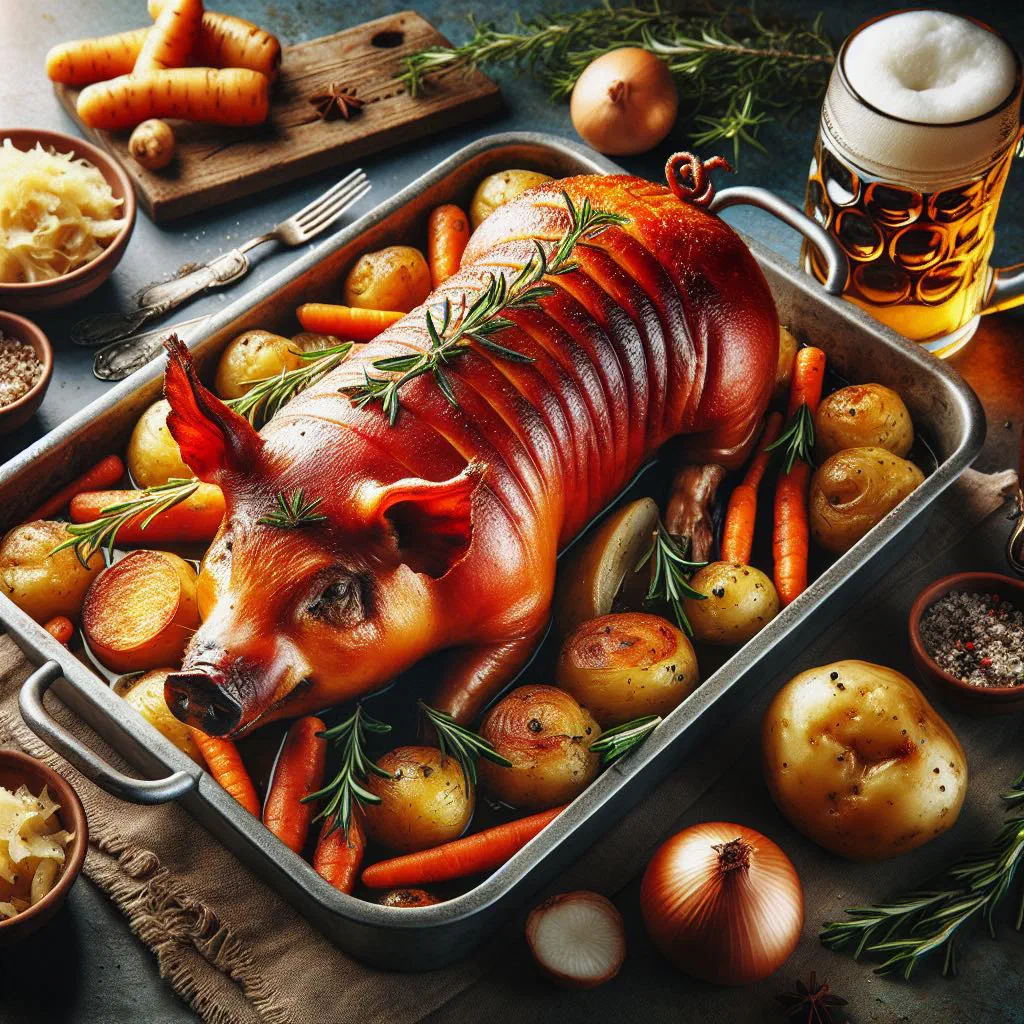
Few dishes capture the festive spirit of Spain quite like Cochinillo Asado, the celebrated roast suckling pig of Castile. With its shatteringly crisp skin and meltingly tender meat, it is the centrepiece you bring out for the occasions that truly matter. Slowly roasted with garlic, fresh herbs and a generous splash of white wine, this is a dish built on patience and tradition, and one that is guaranteed to leave your guests talking long after the plates are cleared.
About Cochinillo Asado
Cochinillo Asado is a traditional Spanish dish that is especially treasured in the region of Castile. The recipe sets out to produce a tender, deeply aromatic suckling pig, prized above all for its crisp crackling and juicy meat. It is very much a feast dish, served at special occasions and celebrations, and it never fails to impress those gathered around the table. With a little care and time, you can recreate this Castilian classic in your own kitchen.
Ingredients (serves 1–2)
- 1 small suckling pig (approx. 4–5 kg)
- 4–5 garlic cloves
- 2 tablespoons olive oil
- Salt and pepper, to taste
- 2–3 sprigs fresh rosemary
- 2–3 sprigs fresh thyme
- 1–2 bay leaves
- 500 ml white wine
Shopping for the ingredients
When buying the suckling pig, pay close attention to the quality of the meat. It should be fresh and ideally come from a well-reared, free-range source. The remaining ingredients, garlic, rosemary and thyme, are best bought fresh from a market or a good supermarket to guarantee the fullest aroma. The white wine should likewise be of decent quality, as it has a real influence on the finished flavour of the dish.
Preparing the dish
Begin by cleaning the suckling pig, rinsing it under cold water and patting it thoroughly dry. Peel and finely chop the garlic cloves, then prepare a paste of olive oil, garlic, salt, pepper and the chopped herbs. Rub the pig generously inside and out with this mixture and leave it to marinate for at least an hour so the flavours have time to take hold. This step is what gives the meat its depth, so don’t be tempted to rush it.
Step-by-step instructions
- Preheat the oven to 200°C.
- Place the suckling pig on a rack set in a large roasting tin.
- Pour the white wine into the tin to keep the meat moist as it roasts.
- Roast the pig for around 3–4 hours, basting it with the pan juices from time to time.
- Check the core temperature of the meat; it should reach at least 75°C.
- Remove the pig from the oven and let it rest for 15 minutes before serving.
Gluten-free / lactose-free version
This recipe is naturally gluten-free and lactose-free, as it contains no grain products or dairy. The only thing to watch for is the white wine, make sure it has no hidden gluten-containing ingredients. If in doubt, check the label of the bottle or choose a wine that is clearly marked as gluten- and lactose-free. As written, this dish suits anyone avoiding gluten or lactose with no changes needed.
Tips for vegans and vegetarians
This roast suckling pig is, unsurprisingly, unsuitable for vegans and vegetarians. As an alternative, however, you can apply the same marinade and roasting method to a plant-based centrepiece. A whole cauliflower or a stuffed squash, for instance, can be seasoned and roasted in much the same way for a generous meat-free feast. For more meat-free inspiration, try a hearty bowl of Espinacas con Garbanzos.
More tips and tricks
One key tip is to baste the pig regularly so it stays juicy throughout. Make sure the oven is properly preheated to encourage that all-important crisp crackling. If the skin starts to darken too quickly, cover the pig loosely with foil and lower the temperature. Marinating overnight can also be very worthwhile, allowing the flavours to develop even more fully before the meat goes into the oven.
Adapting the recipe to your taste
If you favour particular herbs or spices, feel free to add or swap them as you please. A little marjoram or sage, for example, can lend an interesting note to the suckling pig. A marinade of honey and mustard is another lovely way to give the dish a distinctive character. Experiment freely until you arrive at a version that matches your own taste exactly, much as you might with the seasonings in Chuletas de Cerdo a la Riojana.
Ingredient substitutions
If you would rather not use white wine, you can turn to cider, chicken stock or even apple juice instead. These liquids all help to keep the meat moist while lending a slightly different flavour note. For an alcohol-free version, apple juice comes especially recommended, bringing a gentle sweetness that pairs beautifully with the rich pork.
Drink pairing ideas
Cochinillo Asado goes wonderfully with Spanish white wines such as a fresh Albariño or a robust Verdejo. Alternatively, a Spanish red wine like a Tempranillo from the Ribera del Duero makes an excellent match. If you prefer non-alcoholic options, sparkling mineral water or freshly pressed juices work well, refreshing the palate without overpowering the flavours of the dish.
Serving and presentation ideas
To present the dish with a touch of elegance, set the roast suckling pig on a large serving platter and garnish it with fresh herbs such as rosemary and thyme. A scattering of potato wedges or a few vegetable sides arranged around the pig completes the look. For a decorative flourish, add some braised apples or lemon slices around the edge of the platter, perhaps alongside a few Patatas Revolconas.
A bit of history
Cochinillo Asado has a long culinary tradition in Spain, with roots in the country kitchens of the Castilian farming communities. It rose to popularity in the 15th century and remains a symbol of the festive cooking of Castile. The preparations of Segovia are especially famous, where the recipe was brought to perfection and continues to draw tourists and food lovers from around the world, a true highlight of Spanish cuisine.
More recipe ideas
Summary: Cochinillo Asado
Cochinillo Asado is a delicious and genuinely impressive dish, perfect for special occasions. It calls for a little time and dedication, but rewards you with an incomparable flavour and that prized crisp texture. With careful preparation and the right handling of the ingredients, this traditional Spanish dish is sure to succeed, and to earn its place as the showpiece of any celebration.