National Dish Spain: Ensaïmada (Recipe)
In this article
Treat yourself to the sweet flavour of Mallorca with Ensaïmada, the island’s most beloved pastry. Light, airy and gently sweet, this coiled spiral of enriched dough has been pleasing bakers and holidaymakers alike since the seventeenth century. The scent of a freshly baked ensaïmada conjures up lazy summer mornings and the easy-going warmth of the Mediterranean. In this guide you will find everything you need to bake the perfect ensaïmada in your own kitchen.
About Ensaïmada
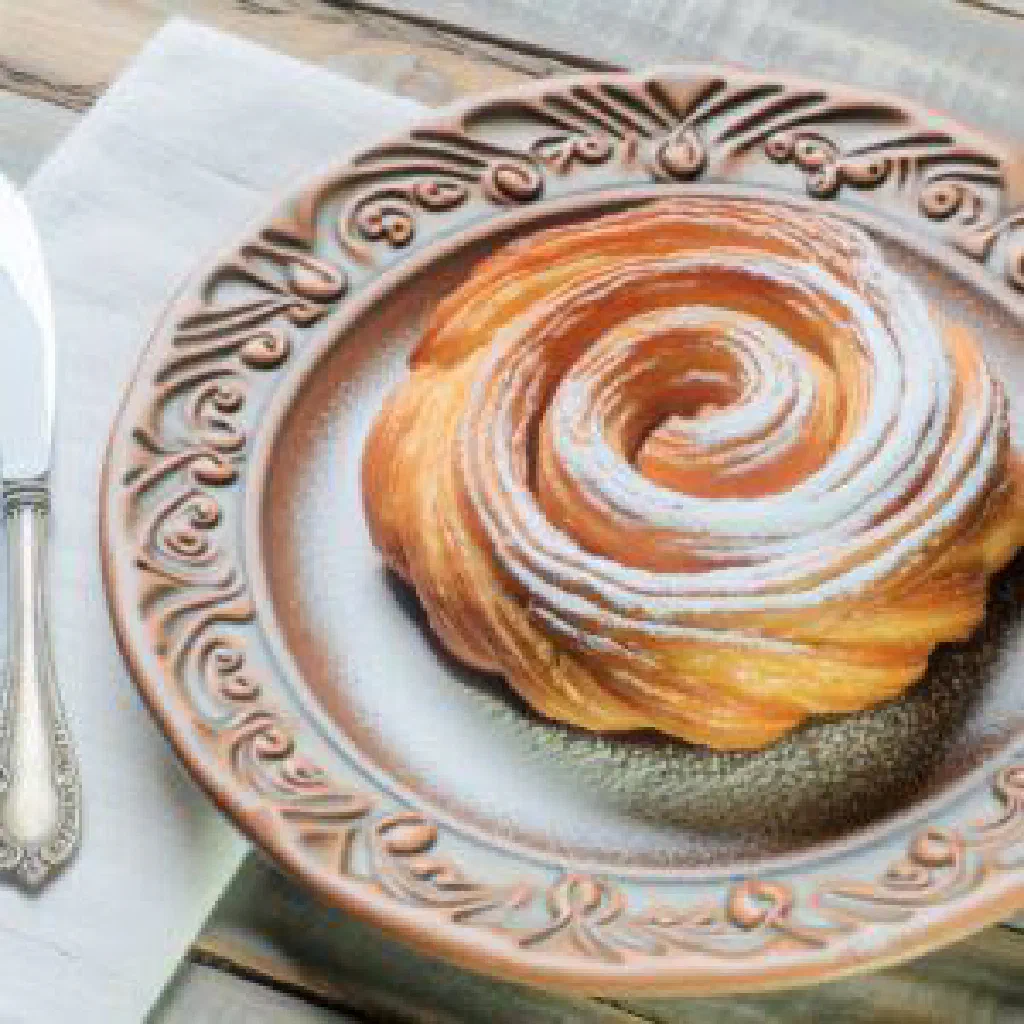
The Mallorca ensaïmada is a sweet, traditional pastry from Spain that is especially associated with the island of Mallorca. This delicious bake dates back to the seventeenth century and has held on to its popularity ever since. Made from a soft, enriched yeast dough coiled into its signature spiral, it is wonderfully light and tender once baked. The ensaïmada remains one of the finest expressions of Mallorcan baking and a cherished part of Spanish cuisine.
Ingredients (serves 1–2)
- 250 g plain flour
- 100 g sugar
- 2 eggs
- 50 g lard or butter
- 25 g fresh yeast
- 125 ml lukewarm water
- Icing sugar, for dusting
Shopping for the ingredients
The ingredients for the Mallorca ensaïmada are easy to find and stocked by most supermarkets. The lard, which is the traditional choice, can be swapped for butter if you cannot get hold of it. When shopping, pay close attention to the freshness of the yeast, as this is what gives the dough its proper rise. The sugar and flour should be of good quality too, since they form the very foundation of the pastry.
Preparing the dish
Before you start making the ensaïmada, it is important to prepare and measure out all the ingredients. Make sure the eggs and water are at room temperature so they do not disturb the proving process. The fresh yeast should be dissolved in the lukewarm water to ensure it spreads evenly through the dough. Allow yourself plenty of time, as the dough needs to rest and rise before it can be shaped and worked further.
Step-by-step instructions
- Dissolve the fresh yeast in the lukewarm water and leave it to stand for about 10 minutes.
- Sift the flour into a large bowl and make a well in the centre.
- Add the sugar, eggs and the yeast mixture to the well, then knead to a smooth dough.
- Add the lard or butter in small pieces and knead it through.
- Place the dough in a flour-dusted bowl, cover it and leave to rise in a warm place for about 1–2 hours.
- Carefully roll out the dough, shape it into a spiral and lay it on a baking tray lined with baking paper.
- Cover once more and leave to rise again for about 1 hour.
- Preheat the oven to 180°C and bake the ensaïmada for about 25–30 minutes, until golden brown.
- Once cool, dust with icing sugar and serve.
Gluten-free / lactose-free version
For a gluten-free version of the ensaïmada you can use a gluten-free flour blend that contains a suitable binding agent. Do check that the icing sugar is gluten-free too. To make a lactose-free variety, simply replace the lard or butter with lactose-free margarine. This way, people with a lactose intolerance can enjoy this lovely speciality just as much as everyone else.
Tips for vegans and vegetarians
The Mallorca ensaïmada is easily made vegan. Replace the eggs with apple purée or mashed banana as a binder, and use plant-based lard or vegan butter. Take care that all the products you choose are certified vegan. You can also use plant-based milk in place of the water for an even richer flavour.
More tips and tricks
The ensaïmada lends itself beautifully to variation by adding different fillings. Traditionally it is often filled with pumpkin jam (cabello de ángel). Chocolate, custard or even savoury fillings such as cheese and ham make wonderful alternatives. Experiment with different baking times and temperatures to find the perfect texture for your taste.
Adapting the recipe to your taste
The ensaïmada recipe can be adjusted however you like. If you have a serious sweet tooth, increase the sugar or add a sweet filling. To play with the flavour, you can also fold different aromatics such as vanilla or cinnamon into the dough. For a more savoury twist, small amounts of herbs or spices can be worked in.
Ingredient substitutions
If some of the original ingredients are hard to come by, there are plenty of alternatives. Instead of lard, you can use unsalted butter or margarine. If you have no fresh yeast to hand, dried yeast works just as well. Simply follow the quantities given on the packet. For a more exotic flavour you might try coconut blossom sugar or ground almonds, much as you would in a sweet bake like Bizcocho de Naranja.
Drink pairing ideas
The ensaïmada is traditionally served with coffee or hot chocolate. A glass of freshly squeezed orange juice also goes beautifully with this sweet pastry. For something a little more special, you could pair the ensaïmada with a glass of Spanish dessert wine or a sparkling cava. These drinks harmonise wonderfully with the gentle sweetness of the bake.
Serving and presentation ideas
A nicely presented ensaïmada is a real centrepiece and an invitation to indulge. Serve it on a pretty platter and dust it generously with icing sugar. For a festive touch, edible flowers or fresh fruit make lovely decorations. Cut the ensaïmada into even pieces and serve it with small bowls of different jams or chocolate spreads, much as you would alongside Filloas.
A bit of history
The ensaïmada has its origins in the seventeenth century and has been a firm fixture of Mallorcan culture ever since. It was once prepared as a special festive bake and was indispensable at celebrations and feasts. Its name derives from the Arabic word “saïm”, meaning lard, a nod to the original use of pork lard. Today the ensaïmada is enjoyed in countless variations, yet it remains deeply rooted in the traditions of Mallorca, in the same way that a Roscón de Reyes is tied to its own seasonal celebration.
More recipe ideas
Summary: Ensaïmada
The Mallorca ensaïmada is a traditional sweet pastry that is simple to make and incredibly delicious. With just a handful of ingredients and a little patience, you can enjoy this Spanish speciality at home. Whether gluten-free, lactose-free or vegan, the recipe is easy to adapt and leaves plenty of room for creative variation. Treat your guests to this delicacy and savour a little piece of Spanish culture in your own kitchen.