National Dish Spain: Huesos de Santo (Recipe)
In this article
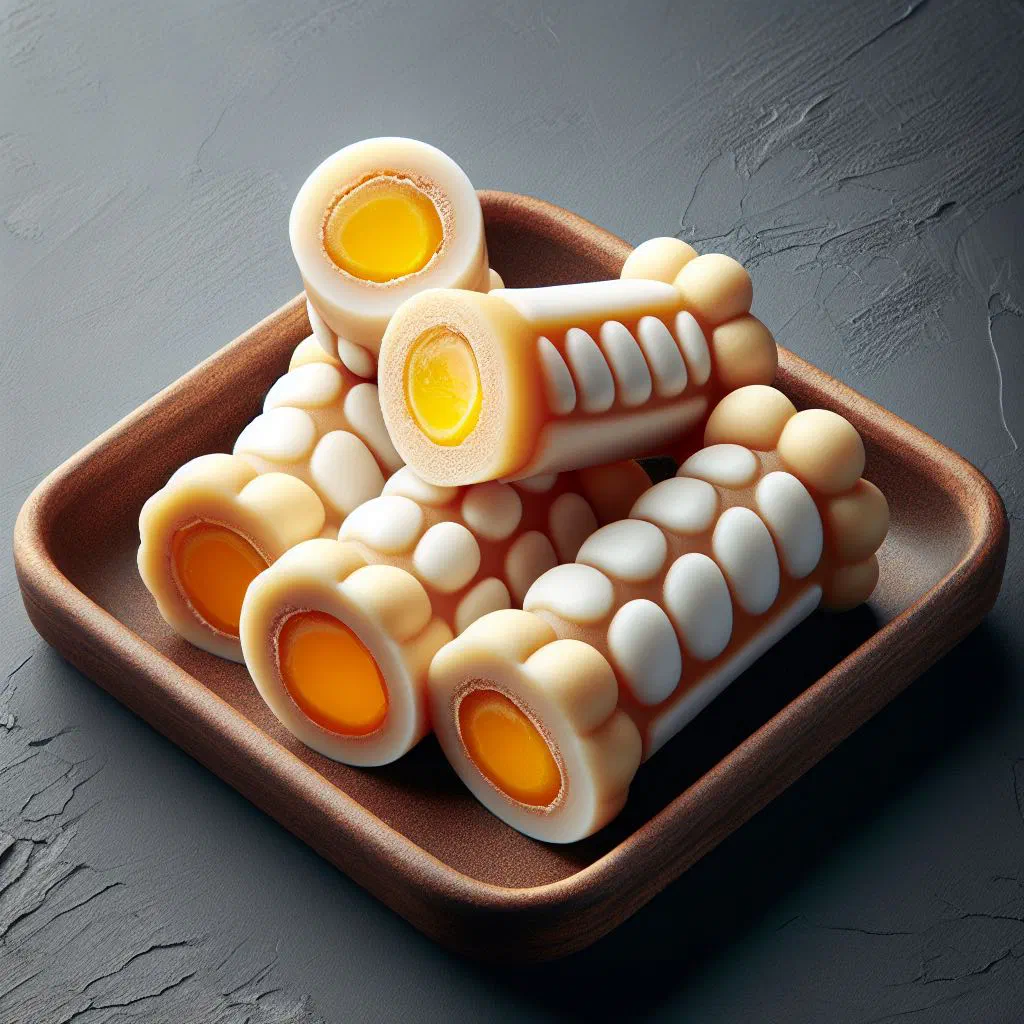
Step into the sweeter side of Spanish baking with Huesos de Santo, the little marzipan “saints’ bones” that appear in every pastry shop window come early November. Each bite-sized roll wraps a smooth almond shell around a rich, golden egg-yolk filling, then arrives dusted in a snowfall of icing sugar. Traditionally made for All Saints’ Day, these dainty treats are surprisingly simple to recreate at home and bring a touch of old-world charm to any sweet table.
About Huesos de Santo
Huesos de Santo, which translates as “saints’ bones”, are a traditional Spanish sweet enjoyed above all around All Souls’ Day on 2 November. These small delicacies are made from an outer layer of marzipan wrapped around an inner filling of sweetened egg yolk. The pairing of fragrant almond paste with the tender, custard-like yolk gives them an unmistakable flavour, and their pale, bone-like shape is what earned them their memorable name. They sit firmly within the rich tradition of Spanish cuisine and its seasonal sweets.
Ingredients (serves 1–2)
- 200 g marzipan paste
- 100 g icing sugar
- 50 ml water
- 3 egg yolks
- 50 g sugar
- 1 teaspoon lemon juice
- A little icing sugar, for dusting
Shopping for the ingredients
Take care to buy good-quality ingredients for your Huesos de Santo. Marzipan paste and icing sugar are stocked by most supermarkets, usually in the baking aisle. For the egg yolks we recommend fresh, ideally organic eggs, as their colour and flavour really come through in the filling. The lemon juice should be freshly squeezed too, to give the brightest possible aroma.
Preparing the dish
Before you begin, make sure you have all the ingredients and utensils close to hand. Divide the marzipan into small portions and chill the egg yolks lightly, which makes them easier to work with later on. Set out a clean work surface, as the dough can be a little sticky and benefits from plenty of room and a generous dusting of icing sugar.
Step-by-step instructions
- Knead the marzipan paste with the icing sugar and 50 ml of water into a smooth, pliable dough.
- Roll the dough out thinly on a work surface dusted with icing sugar.
- Heat the egg yolks, sugar and lemon juice in a bain-marie, stirring constantly, until the mixture thickens.
- Leave the egg-yolk filling to cool, then transfer it to a piping bag.
- Cut the marzipan into rectangles, pipe the filling along each one and roll the rectangles up.
- Slice the finished rolls into pieces about 5 cm long and dust generously with icing sugar.
Gluten-free / lactose-free version
Huesos de Santo are naturally gluten-free, as the recipe contains no flour at all. Because no dairy is used either, they are also ideally suited to a lactose-free diet. Just double-check that your icing sugar and marzipan contain no hidden gluten or lactose, as some commercial blends can include unexpected additives. With those small checks in place, this is a dessert almost everyone can enjoy.
Tips for vegans and vegetarians
Since Huesos de Santo contain egg yolk, they are not suitable for a vegan diet. For vegetarians, however, they make a perfect indulgence. Plant-based alternatives to egg yolk are hard to come by, but a few cooks have had success with vegetable-based fillings that mimic the same sweet, creamy texture, much like the inventive substitutions used in Filloas.
More tips and tricks
Take care not to let the egg-yolk mixture get too hot, or it will curdle rather than thicken into a smooth custard. If the marzipan becomes too sticky to handle, a little extra dusting of icing sugar soon sorts it out. Store the finished Huesos de Santo in an airtight container to keep them fresh and prevent the marzipan from drying out.
Adapting the recipe to your taste
The recipe can be tailored however you like. For instance, a hint of cinnamon or a touch of vanilla stirred into the egg-yolk filling adds a warm, fragrant note. You can also vary the size of the Huesos de Santo, making them larger or smaller depending on how generous you want each portion to be, in the same playful spirit as other festive Spanish bakes.
Ingredient substitutions
If you do not have marzipan paste to hand, you can use ready-made marzipan and knead it smooth with a little icing sugar and water. Instead of lemon juice, orange juice works beautifully and lends the filling a gently fruity character. These small swaps make the recipe easy to adapt to what you already have in the cupboard.
Drink pairing ideas
Ingredients like marzipan and egg yolk slot perfectly into Spain’s coffee culture, which makes coffee and espresso ideal partners for these sweets. If you lean towards fruitier accompaniments, a glass of sweet wine or a small liqueur can be a lovely match, echoing the relaxed, after-dinner spirit of a Spanish sobremesa.
Serving and presentation ideas
Huesos de Santo look wonderful arranged on a pretty platter or piled into a small bowl. A final dusting of icing sugar adds not only flavour but a decorative, frosted finish. You can also nestle each treat into little paper confectionery cases to serve them in a neat, eye-catching way, much as you might present a slice of Costrada de Alcalá.
A bit of history
Huesos de Santo are a speciality traditionally prepared for All Souls’ Day in Spain. Shaped to resemble the bones of the saints, they most likely date back to the Middle Ages. This sweet is especially treasured in the regions around Madrid and Castilla y León, where it remains a fixture of autumn bakeries and a cherished part of the country’s seasonal traditions.
More recipe ideas
Summary: Huesos de Santo
Huesos de Santo are traditional Spanish sweets made from marzipan and a sweet egg-yolk filling, especially popular around All Souls’ Day. They are both gluten- and lactose-free and can easily be adapted to suit individual tastes. With good-quality ingredients and a little patience, you can make these treats at home and enjoy a delicious glimpse into Spanish culture and cuisine.