National Dish Spain: Migas de Pan (Recipe)
In this article
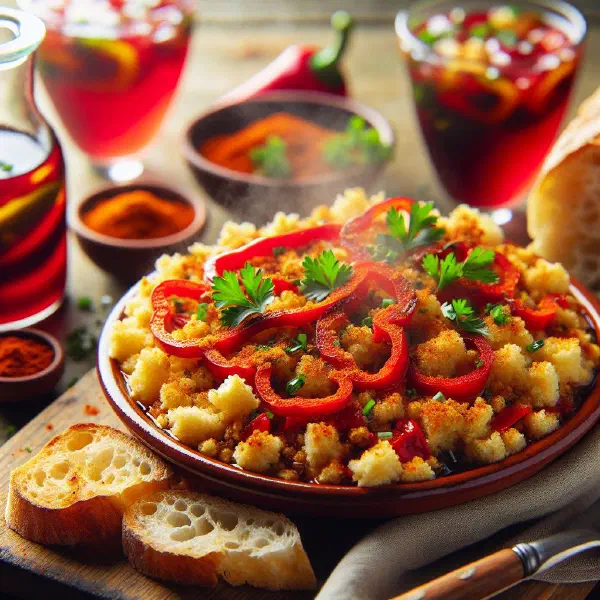
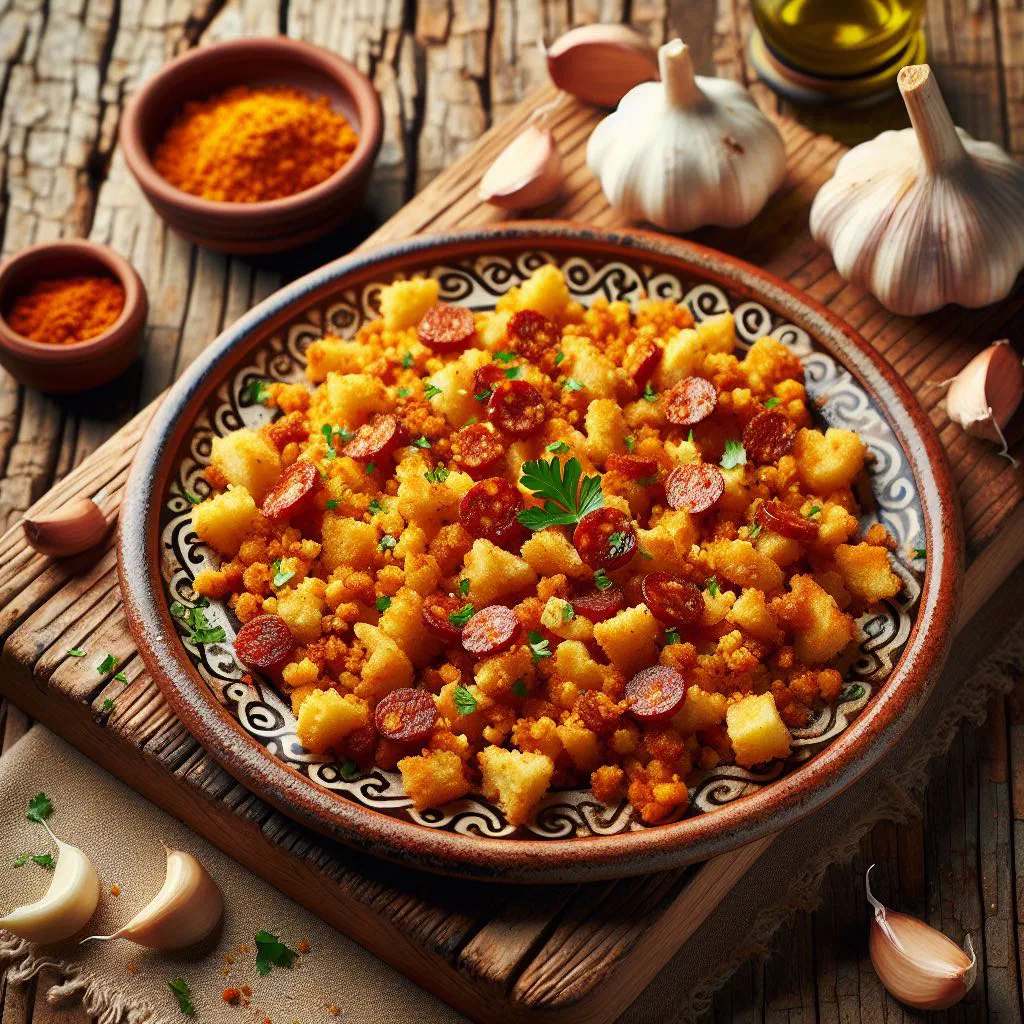
Discover Migas de Pan, a wonderfully rustic dish from the Spanish countryside. Born from the thrifty habit of turning yesterday’s loaf into something delicious, it brings together crisp bread, fragrant garlic, smoky paprika and a little chorizo for a plateful of pure comfort. Simple to make and endlessly satisfying, these golden, pan-fried crumbs carry the warm flavours of southern Spain straight to your table.
About Migas de Pan
Migas de Pan is a traditional Spanish dish that is especially common across the rural regions of Spain. At its heart lies a hearty mixture of bread, garlic, paprika and, more often than not, a little chorizo or bacon. The dish traces its origins back to the Middle Ages, when it offered the perfect way to make use of leftover bread. With its rustic flavours and its straightforward preparation, it has grown into a much-loved dish that works equally well as a side or as a main course.
Ingredients (serves 1–2)
- 200 g stale bread
- 2–3 cloves of garlic
- 50 g bacon or chorizo
- 1–2 tablespoons olive oil
- 1 teaspoon paprika (sweet or hot)
- Salt and pepper, to taste
- Fresh herbs (such as parsley), to garnish
Shopping for the ingredients
To make delicious migas de pan, it is worth seeking out fresh, good-quality ingredients. Visit a local market or a well-stocked grocery to pick up stale bread, fresh garlic and olive oil. Be sure to choose a good-quality cured sausage, whether bacon or chorizo. These ingredients form the foundation of the dish’s perfect, full-bodied flavour, much like the smoky sausage that gives Chorizo a la Parrilla its character.
Preparing the dish
Preparing migas de pan is quick and simple. Begin by cutting the stale bread into small cubes. You can also tear it by hand for a more rustic texture. Next, chop the garlic and cut the bacon or chorizo into small pieces. Depending on which sausage you choose, you can adjust and vary the flavour to suit yourself.
Step-by-step instructions
- Heat the olive oil in a large frying pan over medium heat.
- Add the garlic and fry gently until golden brown.
- Add the bacon or chorizo to the pan and cook until crisp.
- Add the bread pieces and toss everything together so the cubes soak up the oil and aromas.
- Sprinkle the paprika over the mixture and season with salt and pepper to taste.
- Fry, stirring, until the bread is crisp (around 8–10 minutes).
- Serve the migas de pan hot, garnished with fresh herbs.
Gluten-free / lactose-free version
For a gluten-free version of migas de pan, simply use gluten-free bread. There are now many kinds of gluten-free loaf on the market that work beautifully for this dish. When buying the sausage, always check that it contains no gluten-based additives. You can also reach for lactose-free alternatives to butter or cream, should they feature in other variations of the recipe.
Tips for vegans and vegetarians
If you would like to prepare a vegan or vegetarian version of migas de pan, swap the bacon or chorizo for smoked tofu or a suitable plant-based sausage. Roasted peppers or grilled courgette also add extra flavour and texture to the dish. Be creative with your herbs and spices to build up that appealing taste, and try the same hearty pulses that shine in Espinacas con Garbanzos. A handful of chopped nuts can lend an interesting note and a welcome bit of crunch.
More tips and tricks
To refine your migas de pan even further, consider serving a few side dishes alongside. A fresh salad with tomatoes and onions makes a lovely contrast to the hearty crumbs. Some cooks add a fried egg on top for a creamy finish. Getting the temperature right while frying is key, so the bread turns wonderfully crisp without burning. Experiment with different breads, such as ciabatta or baguette, to vary the flavour.
Adapting the recipe to your taste
The beauty of migas de pan lies in just how versatile the recipe is. You can adjust the ingredients entirely to your own liking. Add sun-dried tomatoes or olives, for example, to give the dish a Mediterranean twist. Different spices, such as cumin or thyme, can also create exciting flavour combinations. Let your imagination run free and make this dish your own.
Ingredient substitutions
If you happen to be missing a particular ingredient, there are usually easy alternatives to hand. Instead of stale bread, you can lightly toast fresh bread to achieve much the same effect. Do not leave out the garlic, but if it is not to your taste, onions make a fine stand-in. For extra depth, you can also use a little stock in place of oil to moisten the bread and build more flavour. Small changes like these can enrich and personalise the dish.
Drink pairing ideas
A range of drinks pairs beautifully with a hearty dish like migas de pan. A red wine, particularly a Spanish one such as Tempranillo or Garnacha, complements the flavours perfectly. For a non-alcoholic option, a refreshing lemon and mint juice is a good choice to cleanse the palate. Sparkling water or a light apple spritz will also accompany these savoury crumbs wonderfully.
Serving and presentation ideas
Presentation plays an important part, especially when serving a dish like migas de pan. Use bold colours by arranging fresh herbs or red peppers skilfully as a garnish. Serve the dish in a rustic bowl or on a wooden board to emphasise the warm, homely character of Spanish cuisine. Do not forget to keep the dish warm and to offer guests a small bowl of olive oil for dipping.
A bit of history
The history of migas de pan reflects Spain’s culinary tradition, which is strongly shaped by making the most of leftovers. Traditionally, migas was regarded as a country folk’s dish, created from bread left over after the grain harvest. Its simple yet nourishing preparation has endured for centuries. Today it is made across many regions of Spain to all sorts of different recipes, a fine illustration of the rich diversity of Spanish cooking, as varied as the shepherd’s classic Migas de Pastor.
More recipe ideas
Summary: Migas de Pan
Migas de Pan is a simple, flavoursome traditional Spanish dish that comes together quickly from just a few good-quality ingredients. Thanks to its versatility, it is easy to adapt to personal tastes, whether for vegans, vegetarians or those following special diets. This rustic dish brings the flavours of the south to your plate while carrying an intriguing history all its own. Enjoy it as a side or as a main course, and dive into the delicious world of Spanish cooking.