National Dish Spain: Patatas Bravas (Recipe)
In this article
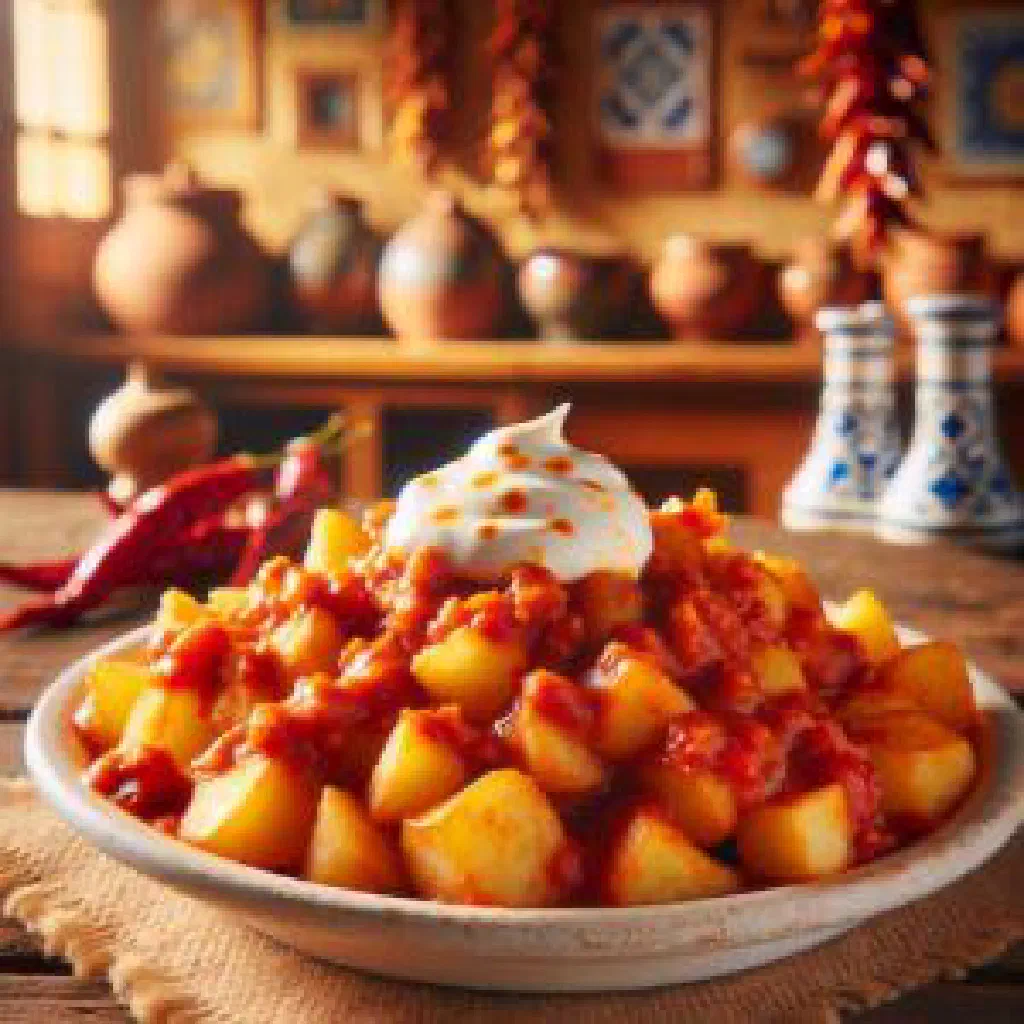
Say hello to Patatas Bravas, the very good little plate you’ll find in every tapas bar across Spain. Golden, crispy potato cubes meet a punchy, smoky tomato sauce that ranges from gently warming to properly fiery, depending on who’s cooking. Simple to make yet packed with flavour, this is the kind of dish that disappears from the table in minutes. Bring a taste of the Spanish bar scene to your own kitchen and watch everyone reach for more.
About Patatas Bravas
Patatas Bravas is a Spanish national dish you’ll spot in tapas bars the length and breadth of the country. The magic lies in the contrast between crisp fried potato cubes and a bold, spicy tomato sauce, a snack that’s hard to resist. Its appeal comes from a preparation that is wonderfully simple yet layered with flavour. Traditionally the potatoes are served with a sharp paprika sauce that shifts from mild to fiery depending on the region and the recipe, making every version just a little bit different.
Ingredients (serves 1–2)
- 500g potatoes
- Oil for frying
- Salt
- For the sauce:
- 1 tin chopped tomatoes
- 2 garlic cloves, finely chopped
- 1 small onion, diced
- 1 tsp hot paprika
- 1/2 tsp chilli powder
- 1 pinch of sugar
- Salt to taste
- Optional: 1 tsp sherry vinegar
Shopping for the ingredients
When buying your potatoes, look for a waxy variety, as these hold their shape far better during frying. Fresh garlic cloves and a good-quality tin of tomatoes will noticeably improve the flavour of your bravas sauce. For a truly authentic result, seek out Spanish smoked paprika (pimentón), which gives the sauce its signature depth, the same warm spice that lifts dishes like Espinacas con Garbanzos.
Preparing the dish
The potatoes should be washed thoroughly and cut into even cubes so that they cook uniformly. It’s well worth peeling and dicing the onion and garlic ahead of time, so that putting the sauce together goes off without a hitch.
Step-by-step instructions
- Peel the potatoes, cut them into cubes and rinse thoroughly under water, then pat dry.
- Heat plenty of oil in a large frying pan or pot.
- Fry the potatoes over medium heat until golden brown and crisp, then drain on kitchen paper.
- For the sauce, heat the olive oil in a pan and gently fry the onion and garlic until softened and translucent.
- Add the chopped tomatoes, paprika and chilli powder and let everything simmer for a few minutes.
- Season with salt and sugar, then stir in the sherry vinegar if using.
- Pour the sauce over the potatoes or serve it alongside for dipping.
Gluten-free / lactose-free version
Patatas Bravas is naturally gluten-free and lactose-free, which makes it a brilliant choice for guests with dietary needs. There’s no flour or dairy in the classic recipe, so all you need to do is double-check that your tinned tomatoes and spice blends carry no hidden additives. Served just as it is, this dish lets everyone tuck in without a second thought.
Tips for vegans and vegetarians
This recipe is already vegetarian and turns vegan with ease. Simply make sure none of your shop-bought ingredients contain animal products. To round things off, serve a bowl of vegan aioli on the side for dipping. Fresh produce and good-quality spices are the key to an authentic flavour, so this classic slots happily into any plant-based diet.
More tips and tricks
You can tweak the consistency of the bravas sauce by adding a splash of water to loosen it, or simmering it for longer to thicken it up. For a silkier finish, blend the sauce until smooth before spooning it over the potatoes. A little patience over a low heat lets the flavours deepen and really come into their own.
Adapting the recipe to your taste
If you prefer things milder, cut back on the chilli powder or leave it out altogether. For a bolder, more aromatic sauce, reach for extra spices such as cumin or coriander to build the flavour up. This way you can fine-tune the heat and seasoning until the dish sits exactly where you like it.
Ingredient substitutions
If certain ingredients aren’t to hand, there’s plenty of room to improvise. Swap the waxy potatoes for sweet potatoes to add a touch of natural sweetness and a different texture, much like the rustic comfort of Patatas Revolconas. A fresh ripe tomato, gently cooked down, can stand in for the tinned variety, while a dash of red wine vinegar makes a fine alternative to sherry vinegar. Substitutions like these let you adapt the recipe to whatever you have in the cupboard.
Drink pairing ideas
For alcohol-free options, a glass of refreshing Spanish horchata or a freshly pressed juice works beautifully with these spicy potatoes. A sparkling lemon water is another good shout, cleansing the palate between mouthfuls. If you fancy something with a little more body, a chilled soft drink with citrus notes keeps the meal lively without overwhelming the sauce.
Serving and presentation ideas
Patatas Bravas looks its best heaped into a handsome tapas dish, garnished with fresh herbs such as parsley. You can pour the sauce generously over the potatoes or serve it separately in a little bowl for dipping. Set it out alongside other small plates and you’ve got the makings of a colourful, inviting spread of Spanish cuisine.
A bit of history
Patatas Bravas has its roots firmly in Spain and has been a fixture of tapas culture since the 1960s. The name translates roughly as “fierce” or “wild potatoes,” a nod to the spicy sauce that defines the dish. Originally a humble, down-to-earth meal for the working class, it has since grown into one of the most popular snacks in Spanish bars and restaurants alike. Proof that the simplest food often travels the furthest.
More recipe ideas
Summary: Patatas Bravas
In short, Patatas Bravas is the perfect marriage of crisp golden potatoes and a piquant, paprika-spiked tomato sauce. This Spanish tapas classic is guaranteed to impress your guests and is an absolute must for anyone who loves the bold, sun-soaked flavours of Spanish cooking. It brings a little of Spain’s lively bar culture straight to your table, give it a go and let it win you over.