National Dish Spain: Rabo de Toro (Recipe)
In this article
Discover Rabo de Toro, the soul-warming oxtail stew that whisks you straight into the lively tapas bars of Andalusia. Tender chunks of meat are slow-braised in red wine until they fall from the bone, surrounded by a deep, glossy sauce rich with garlic, herbs and slow-cooked vegetables. It is a dish made for patience and good company, the kind of hearty centrepiece that turns a simple supper into a celebration. Bring a taste of southern Spain to your own table with this timeless classic.
About Rabo de Toro
Rabo de Toro is a traditional Spanish dish with its roots firmly in the regional kitchens of Andalusia. This hearty stew is made from oxtail, prized for its intense, savoury flavour and the meltingly tender texture the meat takes on after long, gentle cooking. It is a much-loved favourite, served especially at festivities and on special occasions when time can be given over to its slow preparation. Let this culinary highlight of Spain win you over with its rich, deeply comforting character.
Ingredients (serves 1–2)
- 1 oxtail (about 800g), cut into pieces
- 1 large onion
- 2 carrots
- 2 sticks of celery
- 4 cloves of garlic
- 2 tomatoes
- 1 glass of red wine
- 500 ml beef stock
- 2 bay leaves
- Thyme and rosemary, to taste
- Olive oil
- Salt and pepper
Shopping for the ingredients
When shopping for the ingredients, pay particular attention to the quality of the oxtail. Fresh meat from a good butcher is always the best choice and will reward you with a far richer result. The vegetables should be fresh too, ideally locally grown and in season. A good red wine lends the dish extra depth of flavour, so choose a bottle you would happily drink alongside the finished stew.
Preparing the dish
To prepare the dish, cut the oxtail into manageable pieces if your butcher has not already done so. Chop the onion, carrots and celery into small dice, finely chop the garlic and cut the tomatoes into small pieces. Good preparation makes the whole cooking experience far smoother, letting you move from one step to the next without rushing once the pot is on the heat.
Step-by-step instructions
- Heat the olive oil in a large pot and brown the oxtail pieces over high heat on all sides.
- Remove the meat, lower the heat, then add the onion, carrots, celery and garlic and cook until golden.
- Add the tomatoes and cook briefly to soften.
- Pour in the red wine to deglaze the pot and let it reduce.
- Return the beef stock and the browned meat to the pot, then add the bay leaves, thyme and rosemary.
- Leave to simmer gently until the meat is soft and tender (about 3–4 hours).
- Season with salt and pepper to taste and serve.
Gluten-free / lactose-free version
Rabo de Toro is naturally gluten-free and lactose-free, provided the beef stock you use contains no gluten-based additives. Check the ingredients list when buying ready-made stock, or make your own from scratch to be completely sure. With that single precaution, this dish can be enjoyed safely by anyone avoiding gluten or lactose.
Tips for vegans and vegetarians
For a vegetarian or vegan version, jackfruit makes an excellent stand-in for the meat. It mimics the texture of slow-cooked beef and soaks up the flavours of the wine and herbs beautifully. The method stays much the same: brown the vegetables, add vegetable stock in place of beef stock, and use jackfruit instead of oxtail for a plant-based take on this Andalusian classic.
More tips and tricks
For an especially deep, well-rounded flavour, let the finished dish rest overnight and gently reheat it the next day. The aromas marry and intensify as it sits, making the second-day stew arguably even better than the first. Feel free to play with different herbs and spices to give your Rabo de Toro a personal touch, a little smoked paprika, for instance, leans nicely into its Spanish character.
Adapting the recipe to your taste
Depending on your own preferences, you might add a few more tomatoes for extra body or hold back on the garlic for a gentler edge. The choice of red wine also has a strong influence on the final taste. Experiment with different wine varieties to find the balance you like best, much as you would when matching a robust red to a slow-cooked Caldereta de Cordero.
Ingredient substitutions
If you cannot get hold of oxtail, beef shin or a similar braising cut works well, sharing much of the same flavour and texture once slow-cooked. The vegetables can vary too. Try adding peppers or courgette to bring extra colour and sweetness to the sauce. Substitutions like these let you adapt the recipe to what is in season or simply to what you have to hand.
Drink pairing ideas
A robust Rabo de Toro pairs wonderfully with a Spanish red wine such as a Tempranillo or a Rioja, both of which echo and reinforce the flavours of the dish. Alternatively, a full-bodied red wine from another region works just as well, or you might even experiment with a dark beer for a maltier, more rustic accompaniment that holds its own against the rich sauce.
Serving and presentation ideas
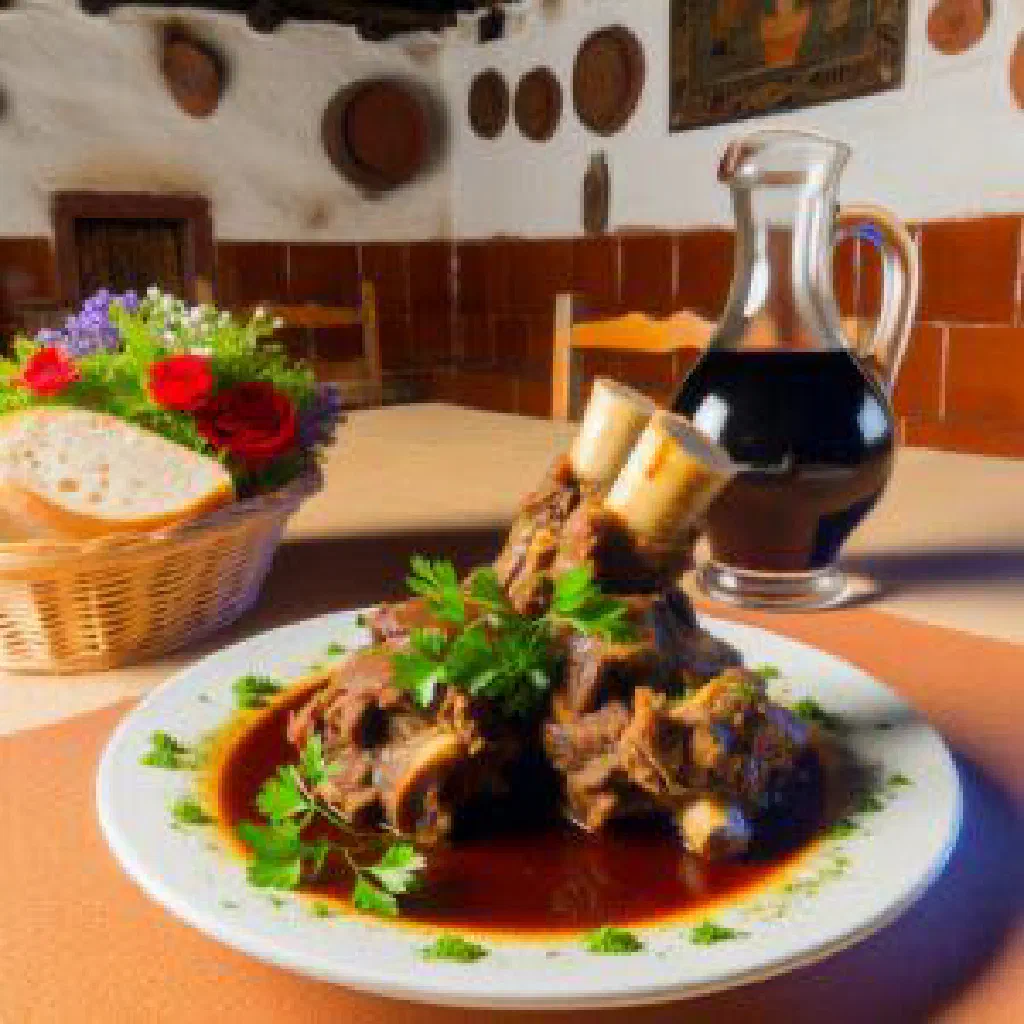
Rabo de Toro looks especially handsome served in a rustic clay bowl of the kind so often used in Spain. Fresh bread or polenta make ideal sides for mopping up the sauce, while a portion of Patatas Revolconas turns it into a generous, satisfying meal. Garnish with fresh herbs such as parsley or thyme to add a final touch of colour.
A bit of history
The origins of this traditional dish lie in Andalusia, where it was first made after bullfights from the parts of the animal that would otherwise have gone unused. Over the years, Rabo de Toro established itself as a culinary delicacy throughout Spain. Today it appears on the menus of countless tapas bars and restaurants, beloved by locals and visitors alike, and is a fine example of hearty Spanish cuisine.
More recipe ideas
- Caldereta de Venado
- Callos Extremeños
- Conejo en Salmorejo
- Puchero Andaluz
- Chuletas de Cerdo a la Riojana
Summary: Rabo de Toro
Rabo de Toro is a traditional Spanish dish, especially beloved in Andalusia, made from oxtail and famed for its powerful flavour and the tender texture of its slow-cooked meat. With the right ingredients and a little patience for the long braising time, this hearty stew comes together beautifully in your own kitchen too. Give it a try and let the warm, generous flavours of Spain work their magic.