National Dish Sudan: Sharmout (Recipe)
In this article
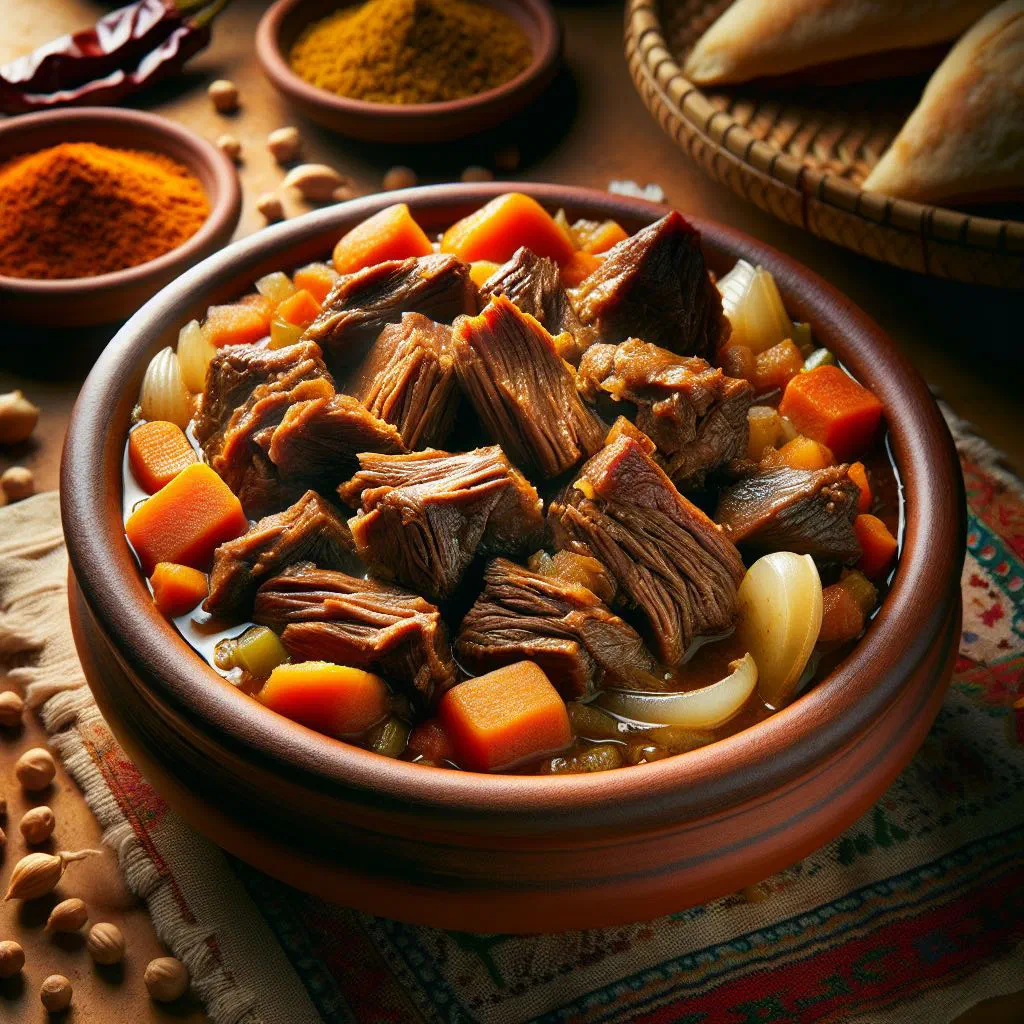
Say hello to Sharmout, a hearty dried-meat stew from Sudan that turns humble preserved meat into a deeply savoury feast. Slow-simmered with sweet onions, carrots and peppers and warmed through with cumin and paprika, it fills the kitchen with the kind of aroma that draws everyone to the table. This is comfort food built on tradition, equally at home at a lively family gathering or a quiet supper for two.
About Sharmout
Sharmout is a traditional dried-meat stew from Sudan, celebrated for its robust flavours and its generous use of spices. More than just a meal, it is a symbol of Sudanese cooking, where preserving meat by drying has long been a way of life. The pairing of dried meat, fresh vegetables and fragrant spices creates a rich, satisfying dish that shines at sociable get-togethers and family dinners alike. Sharmout brings together classic flavours and family tradition, earning it a special place in every household.
Ingredients (serves 1–2)
- 200 g dried meat (such as beef or lamb)
- 1 large onion, diced
- 2 cloves garlic, finely chopped
- 2 carrots, sliced
- 1 pepper, diced
- 1 litre water or stock
- 2 tablespoons tomato purée
- 1 teaspoon cumin
- 1 teaspoon paprika
- Salt and pepper to taste
- Olive oil, for frying
Shopping for the ingredients
When shopping for the ingredients for Sharmout, it is worth choosing good-quality dried meat. Look for meat that has been well preserved and is not overly salty, since the spices will already bring plenty of flavour to the dish. Fresh vegetables, particularly the onion, carrots and pepper, should be crisp and in the best condition. Many of the spices are readily available in international grocers or at markets, giving you the chance to enjoy fresh, authentic aromas.
Preparing the dish
Preparing the dish begins with soaking the dried meat to make it more tender. It is a good idea to soak the meat in water a few hours ahead so it can take up plenty of moisture. Meanwhile, get the vegetables and spices ready by washing, chopping and setting everything out. This groundwork is key to keeping the cooking smooth and to letting the flavours come through at their best.
Step-by-step instructions
- Cut the dried meat into small pieces and fry them in a pot with a little olive oil until lightly browned.
- Add the diced onion and chopped garlic and fry until translucent.
- Add the carrots and pepper and sauté briefly.
- Stir in the tomato purée along with the spices (cumin, paprika, salt and pepper).
- Pour in the water or stock and bring to the boil.
- Simmer over low heat for 1–1.5 hours, until the meat is tender.
- Adjust the seasoning to taste as it cooks, if needed.
Gluten-free / lactose-free version
Sharmout is naturally gluten-free and lactose-free, as the main ingredients contain none of the relevant components. Do take care to check the stock or spices for any hidden sources of gluten. With a little extra attention, gluten-free sides such as rice or quinoa pair beautifully with this dish. That way, people with intolerances can enjoy the savoury flavours of Sharmout too.
Tips for vegans and vegetarians
For vegan and vegetarian alternatives, the dried meat can be swapped for plant-based protein such as lentils or chickpeas. These provide plenty of nourishment and soak up the spices well, coming together with the vegetables to make a flavourful meal. Keep sautéing the vegetables to build an intense aroma. If you like, a splash of coconut milk adds a creamier texture and gives the dish even more charm, much as it does in a Sudanese Peanut Butter Stew.
More tips and tricks
To deepen the flavour of Sharmout, it is worth experimenting with different spices and herbs that are popular across the region. Fennel seeds or fresh herbs such as coriander, for example, can lend the dish an intriguing note. It also helps to let the stew rest for a few hours before serving so the flavours can fully develop. This simple trick makes it taste even more delicious at sociable gatherings.
Adapting the recipe to your taste
Adapting the recipe to your own preferences is easy with Sharmout. Depending on your taste, you can vary the amount of spice or add extra vegetables such as courgette or aubergine. The choice of stock, or the ratio of water to stock, can also be adjusted to reach the consistency you want. This makes Sharmout a flexible dish that can be shaped to suit every household.
Ingredient substitutions
If certain ingredients are not to hand, Sharmout welcomes plenty of substitutions. The dried meat could be replaced with smoked tofu or seitan for a vegan version. With the vegetables, there is scope to get creative too: sweet potatoes work well in place of carrots. This flexibility makes it easy to shape the dish around what is available and your own tastes, creating new flavour experiences each time, a spirit it shares with a hearty Sudanese Lamb Curry.
Drink pairing ideas
Sharmout pairs well with drinks that complement its flavours. Traditionally, a sweet, mellow tea is served to balance the savoury notes. A refreshing lemonade also works wonderfully to round off the spices. For the evening, a light red wine or an alcohol-free beer suits the dish, according to personal taste.
Serving and presentation ideas
The presentation of Sharmout can be lifted with colourful garnishes such as fresh herbs or lemon slices. The dish can be arranged in a large serving bowl to emphasise its sociable character. Small bowls of extra spices or sauces can be offered alongside, so guests can season to their liking. An inviting presentation makes the meal tastier and highlights the social side of eating together.
A bit of history
Sharmout has a history and is deeply rooted in the tradition of Sudanese cuisine. It is often prepared in rural areas, where access to fresh ingredients can be limited and drying the meat was a proven method of preserving it. The dish is frequently made for festive occasions or gatherings, making it a symbol of hospitality and community. In this way it reflects the culture and traditions of Sudan and is passed down from generation to generation. To explore more, dive into the wider world of Sudan cuisine.
More recipe ideas
Summary: Sharmout
Sharmout offers a unique combination of savoury flavours, dried meat and fresh vegetables, perfect for sociable gatherings or a filling family meal. Thanks to its straightforward preparation and the ease of adapting it to personal preferences, you can shape the dish entirely to your own taste. The blend of flavour, tradition and easy, approachable cooking makes Sharmout a beloved national dish of Sudan. Enjoy the culinary variety of Sudan with this warm and welcoming stew.