National Dish Suriname: Cassava (Recipe)
In this article
Meet cassava, the humble root that quietly holds Surinamese cooking together. Nutty, starchy and endlessly obliging, it can be boiled until soft, roasted until the edges crackle, or fried into golden little wedges to snack on. It turns up at family tables, at street stalls and at festival gatherings alike, a single ingredient that carries centuries of Caribbean and South American history in every bite. Give it a go and you will see why Suriname never lets it out of its sight.
About Cassava
Cassava, also known as manioc, is a wonderfully versatile root vegetable and a cornerstone of Surinamese cooking. The tuber originates in South America, where it has been prized for centuries. It can be prepared in all sorts of ways, baked, steamed, or served as a side to almost any main course. In Suriname in particular, cassava often appears as a snack or an accompaniment, and it plays a part in many traditional celebrations, much as it does in a plate of Telo Bakkeljauw.
Ingredients (serves 1–2)
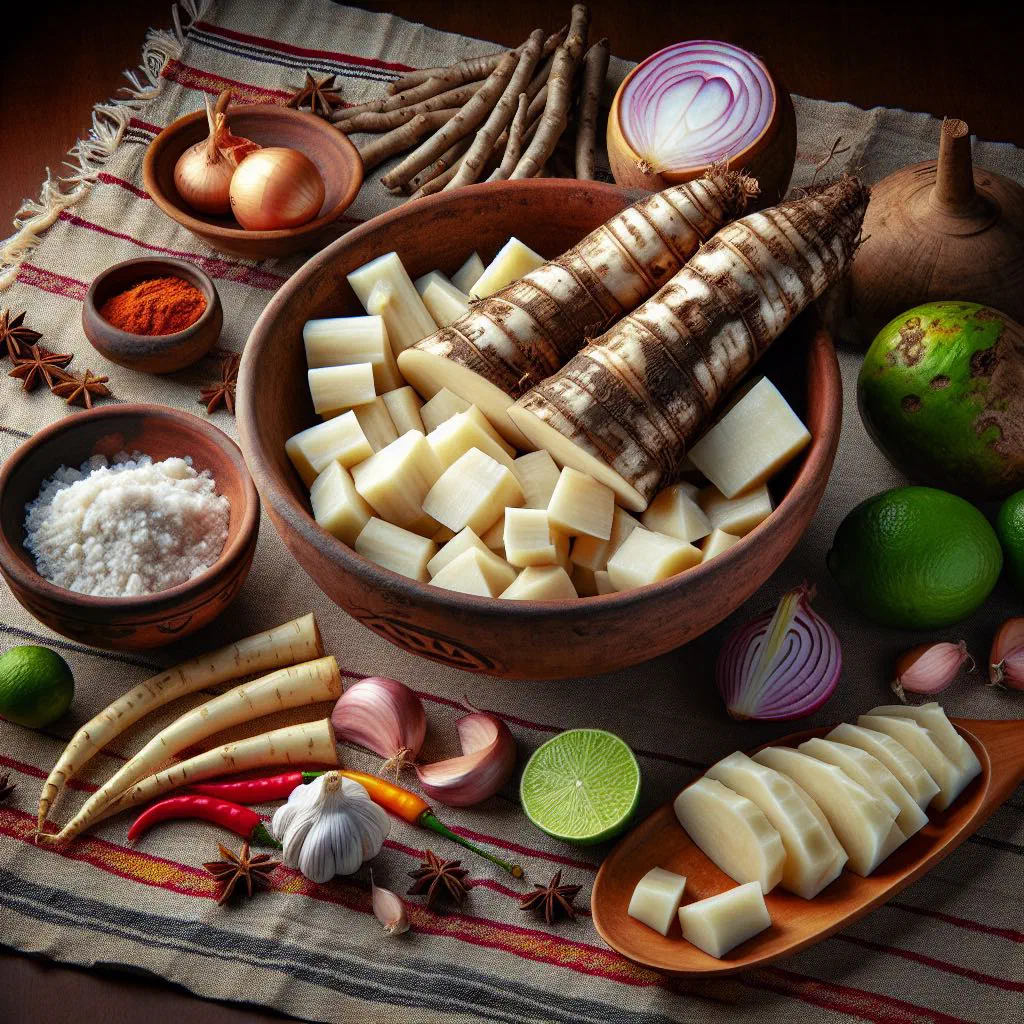
- 300 g cassava (manioc)
- 1 teaspoon salt
- 2 tablespoons vegetable oil
- Optional: herbs or spices of your choice
Shopping for the ingredients
When shopping for cassava, look for fresh tubers that feel firm and show no dark patches. Many Asian and South American grocers stock the root either fresh or frozen, and larger supermarkets increasingly carry it too. Make sure your other ingredients, the vegetable oil and any spices, are equally fresh and of good quality, as they make a real difference to the finished flavour.
Preparing the dish
Before you start cooking, the root needs to be peeled thoroughly. Cassava has a thick, rough skin that must come away completely before the flesh can be cooked. Once peeled, cut the tuber into evenly sized pieces so that everything cooks through at the same rate. This bit of groundwork is essential for a good texture and an even, satisfying result.
Step-by-step instructions
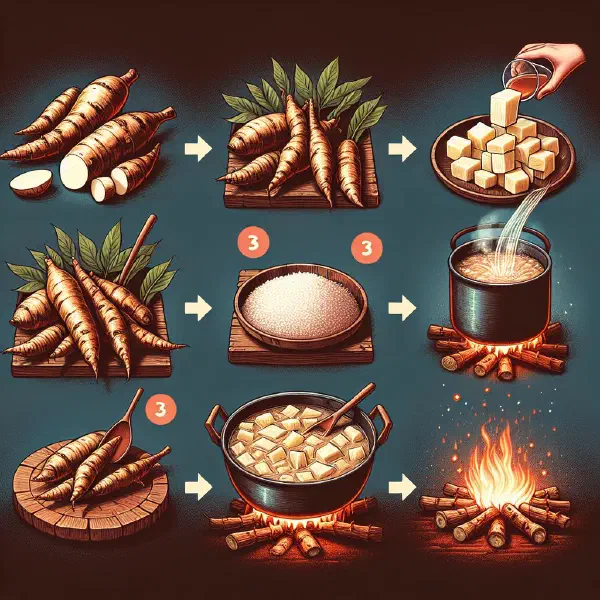
- Soak the peeled cassava pieces in water for around 30 minutes.
- Drain the water and transfer the pieces to a pan of fresh water.
- Bring to the boil and cook the cassava for about 20–25 minutes, until tender.
- Drain the cooked cassava and leave it to cool.
- Brush the cooled pieces with oil and either bake them at 200°C until crisp or fry them in a pan.
Gluten-free / lactose-free version
Cassava is naturally gluten-free and lactose-free, which makes it an excellent choice for anyone with those intolerances. Nothing in this recipe introduces either gluten or lactose. Do check, though, that the spices and oils you use are certified free from both, so there is no risk of cross-contamination along the way.
Tips for vegans and vegetarians
Cassava suits vegans and vegetarians perfectly, being a purely plant-based source of carbohydrate. Combine it with different plant oils, or with vegetables and pulses, to build it into a complete meal, the approach that works so well for Bruine Bonen Met Rijst. Experiment with herbs and spices to deepen the flavour, and cassava becomes a healthy, nourishing companion to any meat-free diet.
More tips and tricks
To get the very best from your cassava, try more than one cooking method in the same batch. Bake some pieces in the oven until they are properly crisp while others go into a pan, so you end up with contrasting textures on the plate. A scattering of grated hard cheese or fresh herbs adds another layer of aroma. Small touches like these lift both the taste and the look of the dish considerably.
Adapting the recipe to your taste
This cassava recipe is extremely adaptable, so feel free to season it with your favourite herbs and spices. Paprika, garlic powder or a pinch of chilli all give it more punch. You can also play with the texture by mashing the cassava before baking, or by mixing it with other vegetables. Adjustments like these let you create a version that is entirely your own.
Ingredient substitutions
If you cannot find cassava, other root vegetables such as sweet potatoes or ordinary potatoes step in nicely, offering a comparable texture and plenty of flavour. In place of plain vegetable oil, olive oil or coconut oil will each take the dish in a different direction.
Drink pairing ideas
Plenty of drinks work well alongside cassava. Something refreshing and fruity, almond milk or a citrus juice, is a good place to start. If you fancy something alcoholic, a cold beer or a light, fruity cocktail sits comfortably with the dish. A homemade Gemberbier is another lovely option, its ginger warmth playing off the mild sweetness of the root.
Serving and presentation ideas
Presentation counts for a lot with cassava, since the dish itself is modest in colour. Serving it in attractive bowls or on brightly coloured plates makes all the difference. Garnish with fresh herbs or a wedge of lime for a splash of contrast. These small details ensure your dish not only tastes good but looks properly inviting on the table.
A bit of history
Cassava has a long history and is deeply rooted in Caribbean and South American culture. Indigenous peoples valued the tuber as a nourishing staple long before European arrival, and in many communities it remains a daily essential. Methods of preparing it have been refined across generations, reflecting the rich cultural mix that shapes Surinamese cuisine and the wider Caribbean region.
More recipe ideas
Summary: Cassava
In short, cassava is a versatile and thoroughly satisfying dish that bends easily to whatever you happen to like. Baked or boiled, this Surinamese staple brings the flavours of Caribbean cooking straight to your table. With so many variations and cooking methods to explore, you can bring a genuine piece of Surinamese culture into your own home. Enjoy the process and discover the singular appeal of cassava for yourself.