National Dish Sweden: Lutfisk (Recipe)
In this article
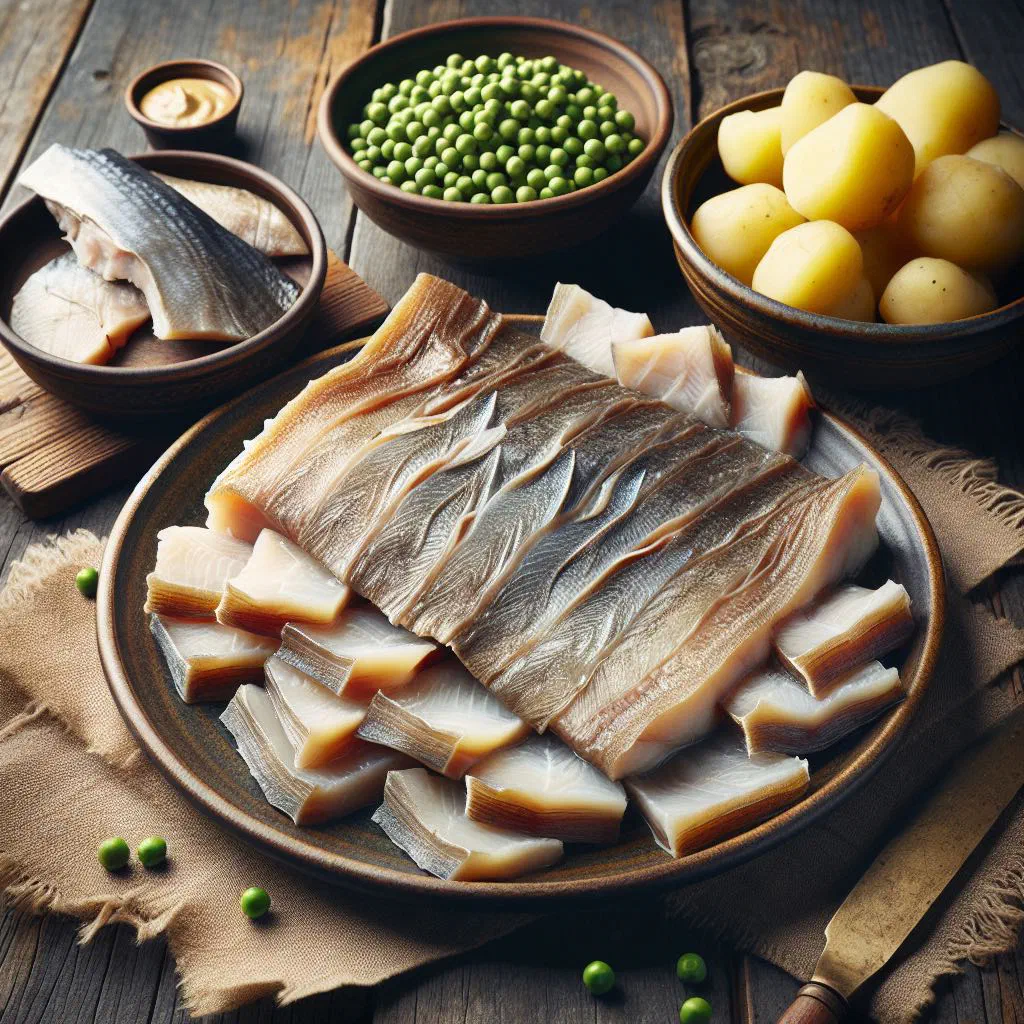
Meet Lutfisk, one of the most storied dishes on the Swedish festive table. Made from dried fish that has been steeped in a lye solution, it takes on a wonderfully soft, almost translucent texture that is quite unlike anything else. It is a true taste of Advent and Christmas in Sweden, served with buttery potatoes, pea purée and a rich white sauce. If you are curious to explore Scandinavian tradition through your kitchen, lutfisk is a dish well worth trying.
About Lutfisk
Lutfisk is one of Sweden’s most tradition-rich dishes and plays a central role in the Swedish Advent and Christmas season. This distinctive dish is made from dried, cured fish that is treated through a special process using lye. That treatment gives the fish its characteristic soft texture and turns it into an extraordinary delicacy for many people. Rooted deeply in the calendar of Swedish celebrations, it is far more than a simple meal. It is a piece of edible heritage best shared around a festive table.
Ingredients (serves 1–2)
- 200 g lutfisk (dried, lye-cured fish)
- 1 litre water
- 1 tablespoon lye
- 500 g potatoes
- 300 g peas
- 300 ml milk or a plant-based alternative
- Butter
- Salt and pepper to taste
Shopping for the ingredients
Fish is the star of this dish, so it pays to choose fresh, good-quality lutfisk. You will usually find it in Swedish or Scandinavian food shops, and it can also be ordered online in the run-up to Christmas. Make sure you pick up the traditional accompaniments too, potatoes and peas, so you can enjoy the dish the way it is meant to be served.
Preparing the dish
Before you begin cooking lutfisk, it is important to prepare the fish properly. Soaking it overnight in water is essential to mellow the flavour and improve the once-firm texture. Take care that the lye is mixed with the water in exactly the right ratio, as this has a big influence on the final result. The potatoes should be peeled and ready to go, since they are such an important side.
Step-by-step instructions
- Soak the lutfisk overnight in cold water.
- The next day, pour off the water, add fresh water and stir in the lye.
- Cook the fish gently in a large pan at low temperature for 30 to 40 minutes.
- Boil the potatoes in a separate pan until soft.
- For the pea purée, cook the peas in boiling water, then blend, seasoning to taste with a little butter and salt.
- Warm the milk in a pan and whisk together with butter, salt and pepper to make a smooth white sauce.
Gluten-free / lactose-free version
For those with particular dietary needs, this recipe adapts easily. To make lutfisk gluten-free, take care that the lye and every additional ingredient you use are certified gluten-free options. For a lactose-free version, simply swap the milk for a plant-based milk alternative.
Tips for vegans and vegetarians
Although lutfisk is a traditional fish dish, adventurous cooks can create alternatives for vegans and vegetarians by replacing the fish with vegetables or plant-based proteins. A popular option is marinated and baked tofu, which mimics both the flavour and the soft texture of lutfisk. The pairing with classic sides like potatoes and peas stays the same, giving a lovely balance of flavours. Adaptations like these let everyone enjoy Swedish cooking without setting aside their preferences.
More tips and tricks
A few small tricks can make lutfisk even more delicious. If you like to experiment, vary the white sauce by stirring in herbs or spices to liven up the plate. Cooking the potatoes correctly matters most; they should be soft but not mushy. Presentation counts for the visual experience too, so try to arrange the different components attractively on the plate. Serve everything piping hot, as the delicate fish is at its best straight from the pan.
Adapting the recipe to your taste
The beauty of lutfisk is how readily the recipe can be tailored to personal taste. Depending on what you fancy, you can change the sides and add, say, a fresh salad or a slice of rye bread. That is a change in flavour and brings different aromas to the table. Experiment with variations to find your own favourite version and, along the way, create a tradition all of your own, much like the endless family takes on Janssons Frestelse.
Ingredient substitutions
Swedish cooking offers plenty of ingredients that can be swapped without losing the character of the dish. The butter in the sauce, for instance, can be replaced with a plant-based product, or you might reach for olive oil, which brings a different note. Potatoes can be exchanged for sweet potatoes for a healthier angle, while peas can give way to broccoli or kale, adding a nourishing quality of their own. Experiment with these alternatives to discover new flavour experiences.
Drink pairing ideas
The right drink can lift the whole lutfisk experience considerably. A Swedish beer, such as a pilsner or a darker craft brew, harmonises beautifully with the flavours of the dish. A fresh Nordic cider could be an interesting choice too, underlining its subtle sweetness. For the wine lovers among you, a light, dry white wine complements the fish well and lets its aromas shine, much as it would alongside Gravad Lachs.
Serving and presentation ideas
Presentation can elevate the entire culinary experience of lutfisk. Use large, flat plates that give you plenty of room to arrange the fish and the sides neatly. Take care to spread the white sauce evenly around the dish and to place the pea purée attractively. A fresh herb leaf or a squeeze of lemon as a garnish makes the plate prettier and adds extra aromas that awaken the palate.
A bit of history
The history of lutfisk reaches all the way back to the Viking age and shows just how important fish was in Nordic culture. Originally, lutfisk was relied upon as food for the winter months, since the drying process made it possible to store the fish for long stretches of time. Today it is served especially during the Christmas festivities in Sweden and is regarded as a special delicacy. Thanks to these deep cultural roots, lutfisk is seen as more than just a meal; it is a symbol of Swedish identity and tradition, sitting proudly within the wider world of Swedish cuisine. It shares that festive spotlight with other seasonal favourites like Surstroemming.
More recipe ideas
Summary: Lutfisk
In short, Lutfisk is not merely a dish but a part of Swedish culture and tradition. With its unique flavour and fascinating preparation, it draws in many an enthusiast and lets them dive into the highs and lows of Scandinavian eating. Lutfisk is guaranteed to make for a truly special experience. Give it a go and let the flavours of Swedish cooking win you over.