National Dish Syria: Kibbeh (Recipe)
In this article
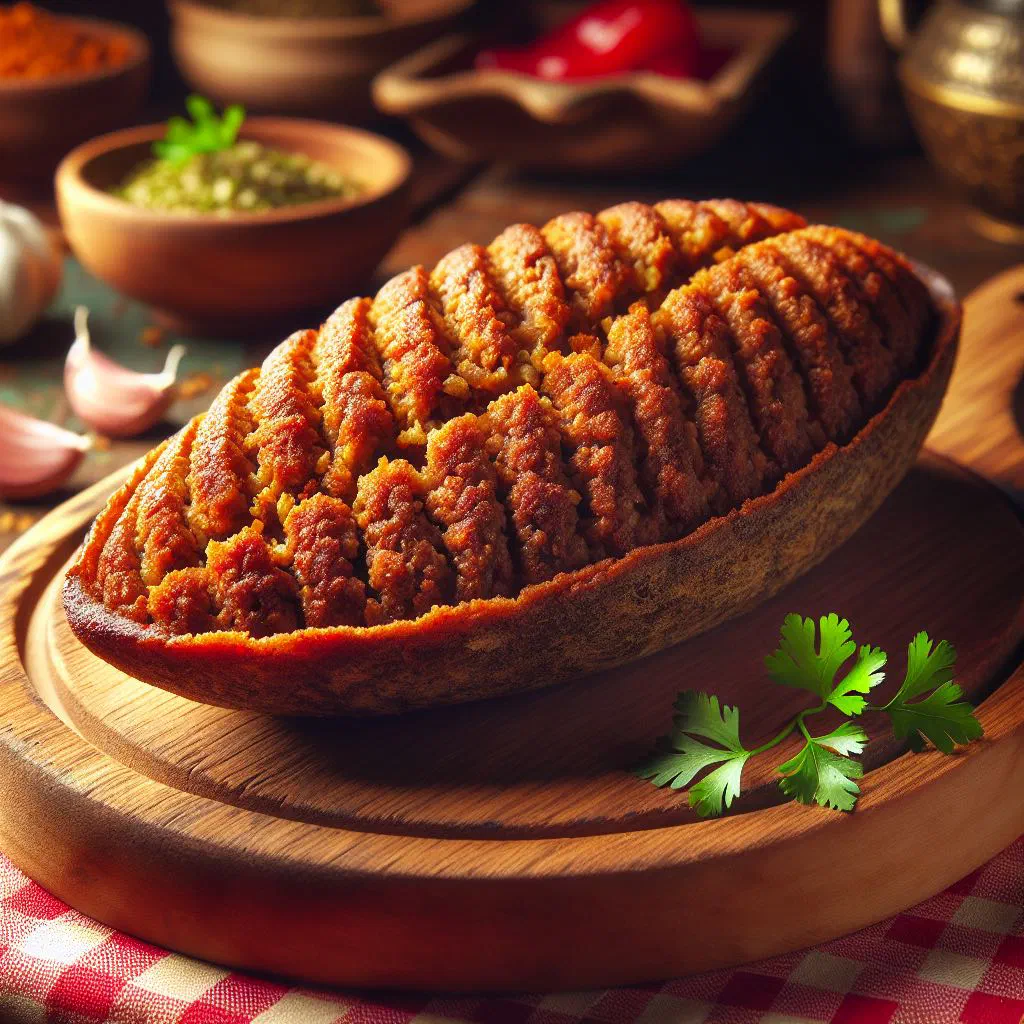
Kibbeh in Syria comes in dozens of forms, and Aleppo alone is said to have more than twenty. The version below is kibbeh maqliya, the fried torpedo with a shell of bulgur and meat around a filling of spiced lamb, onion and pine nuts.
About Kibbeh
The shell is fine bulgur kneaded into minced lamb until the two become one paste. The skill is hollowing that shell thin enough without splitting it, which is done with a wet finger and a great deal of practice.
Aleppo was one of the great cooking cities of the Arab world before the war, and kibbeh was its showpiece.
Ingredients (serves 1–2)
- 200 g fine bulgur
- 300 g minced lamb or beef
- 1 onion, finely chopped
- 50 g pine nuts or walnuts
- 1 tsp cinnamon
- 1 tsp nutmeg
- Salt and pepper to taste
- Olive oil for frying
Shopping for the ingredients
Fine bulgur, grade 1, and nothing coarser. Lamb shoulder minced twice. Aleppo pepper, if you can find it, is the region’s own chilli: mild, fruity and slightly sweet, and it belongs in the filling.
Preparing the dish
Soak the bulgur ten minutes and squeeze it dry. Knead it into the meat with wet hands until the mixture is smooth and slightly sticky, several minutes’ work. Chill it before shaping, which makes it far easier to handle.
Step-by-step instructions
- Place the bulgur in a bowl, cover with water and leave to swell for 30 minutes, then squeeze dry.
- Combine the soaked bulgur thoroughly with the minced meat, onion, cinnamon, nutmeg, salt and pepper, and knead into a smooth, homogeneous mixture. Chill 30 minutes.
- Prepare the filling by toasting the nuts and frying the remaining minced meat with onion and spice.
- With wet hands, take a piece of the shell mixture, hollow it with a finger and shape it into a thin-walled shell.
- Fill with the meat-and-nut mixture and seal the ends into a torpedo shape.
- Fry the kibbeh in a pan with olive oil over a medium heat until golden brown, or deep-fry.
Gluten-free / lactose-free version
Bulgur is wheat, so kibbeh is not gluten-free. Potato or pumpkin shells are the traditional alternatives in Lenten cooking and are naturally gluten-free. There is no dairy in the fried version.
Tips for vegans and vegetarians
Kibbeh bil sanieh with a potato or pumpkin shell and a walnut and onion filling is a real Syrian Lenten dish. Both are vegan and both are good. Chickpeas can replace meat in the filling.
More tips and tricks
Keep your hands wet at every stage. Chill the mixture before shaping. Work the shell thin but not so thin that it splits. And accept that the first few will be clumsy; this is a technique people learn over years.
Adapting the recipe to your taste
Kibbeh nayyeh is the raw version, eaten with olive oil and mint. Kibbeh labanieh is poached in a yoghurt sauce. A tray-baked version is much easier and nearly as good.
Ingredient substitutions
Beef in place of lamb. Walnuts for pine nuts, which are expensive. Seven-spice, baharat, replaces the individual spices.
Drink pairing ideas
Arak with water and ice. A Syrian or Lebanese red from the Bekaa. Ayran or lemon-mint alongside.
Serving and presentation ideas
Serve them warm as part of a mezze table with hummus, tabbouleh, fattoush and yoghurt. Kibbeh is one dish among many, not a main course, and the table should be crowded.
A bit of history
Kibbeh is Levantine and old, and the stone mortar used to pound the meat, the jurn, is a household item passed down. The Syrian conflict scattered its cooks across the world, and Syrian restaurants from Berlin to Toronto are one consequence. It anchors Syrian cuisine.
More recipe ideas
Summary: Kibbeh
Kibbeh is a shell of fine bulgur and minced lamb around a spiced meat and pine nut filling, fried until crisp. Squeeze the bulgur dry, knead it smooth, chill it, and keep your hands wet.