National Dish Tanzania: Rice with Beans (Recipe)
In this article
Meet Rice with Beans, known across Tanzania as wali na maharagwe and celebrated as one of the country’s national dishes. Fragrant steamed rice meets a slow-simmered stew of red beans, tomatoes and warm East African spices, often enriched with a splash of coconut milk for a silky finish. It is honest, filling, everyday food, the kind of meal that turns up on kitchen tables from Dar es Salaam to the shores of Lake Victoria.
About Rice with Beans
Rice with Beans, or wali na maharagwe, is a cornerstone of Tanzanian cooking and one of its best-known national dishes. Its appeal lies in its simplicity: steamed rice paired with a hearty bean stew that is frequently rounded out with coconut milk to make it wonderfully creamy. The dish mirrors Tanzania’s farming traditions, where rice and pulses are staple crops, and it is a genuine symbol of the country’s culinary identity. Every household has its own version, some fiery, some mild, but all of them deeply comforting.
Ingredients (serves 1–2)
- 1 cup basmati or long-grain rice
- 2 cups water or, for extra flavour, vegetable stock
- 1 cup red beans
- 2 large tomatoes, diced
- 1 medium onion, chopped
- 2 garlic cloves, finely chopped
- 1 teaspoon curry powder
- ½ teaspoon ground cumin
- Salt and pepper to taste
- 2 tablespoons vegetable oil
- Optional: fresh coriander, to garnish
Shopping for the ingredients
Fresh ingredients make all the difference to a good plate of rice with beans. Choose a decent-quality rice so you get the right fluffy texture rather than a sticky mass. The beans can be bought dried or tinned; if you go for dried, remember to soak them overnight. Ripe tomatoes and the spices are easy to find in any supermarket, though local, seasonal produce will always give you more fragrance and flavour.
Preparing the dish
Start with the beans if you are using dried ones and leave them to soak overnight. This shortens the cooking time considerably and helps them cook evenly. Rinse the rice thoroughly to wash away the excess starch and stop the grains clumping together. Line up all your spices before you begin, because once the pan is hot the cooking moves quickly and you will want everything within easy reach.
Step-by-step instructions
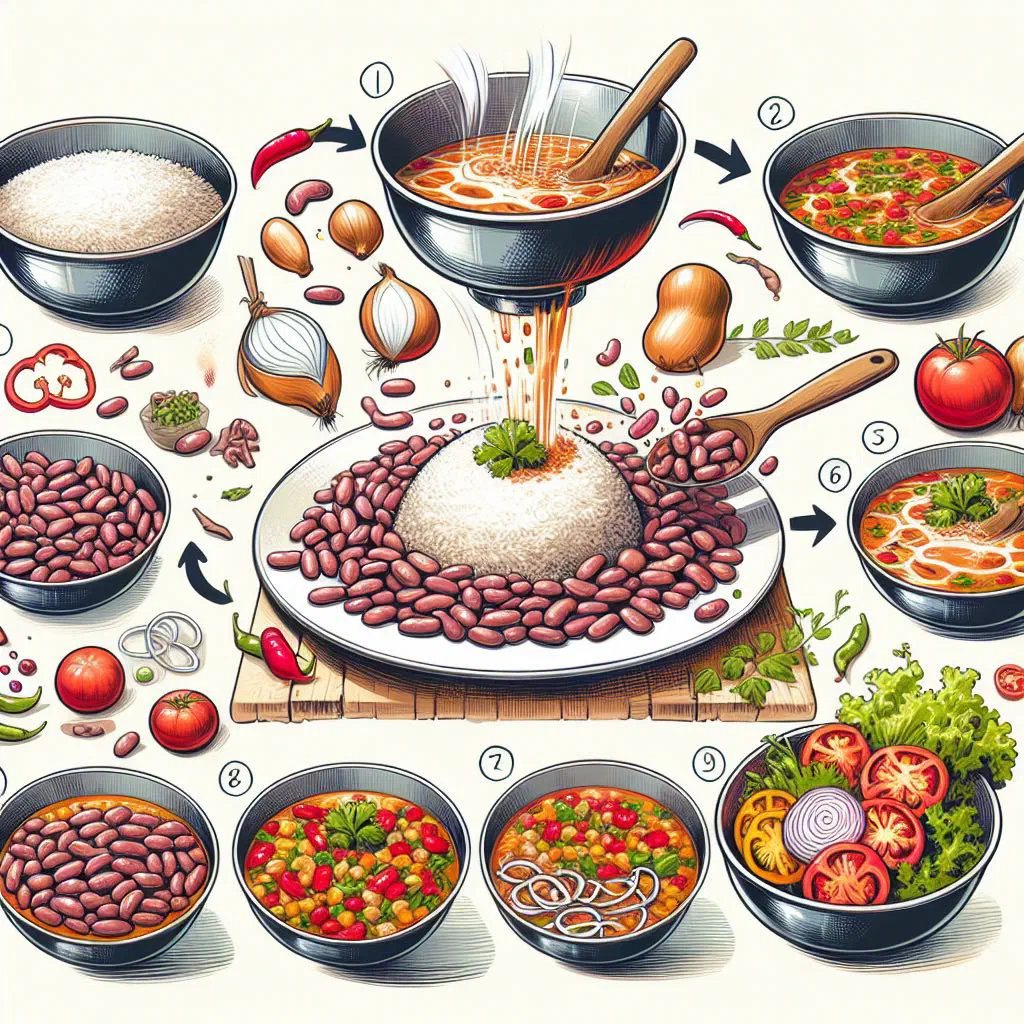
- Cook the rice in water or stock according to the packet instructions until it is fluffy and tender.
- While the rice cooks, heat the oil in a pan and fry the onions until translucent.
- Add the garlic and let it sizzle briefly before stirring in the tomatoes; cook until they break down and soften.
- Stir in the spices — curry powder, cumin, salt and pepper — then add the beans. Pour in a little water or stock if needed and bring everything to a gentle simmer.
- Let the beans simmer for 20–30 minutes until soft and the flavours have married together.
- Spoon the beans over the steamed rice and finish with fresh coriander, if using.
Gluten-free / lactose-free version
Rice with beans is naturally gluten-free, since rice and pulses contain no gluten at all. Just check that your curry powder is free from any wheat-based fillers. It is equally straightforward to keep the dish lactose-free: use oil rather than butter and reach for coconut milk if you want that creamy richness. This makes it a reliable choice when you are cooking for guests with several dietary needs at once.
Tips for vegans and vegetarians
In its classic form the dish is already vegan, provided you cook the rice in water or a vegetable stock rather than a meat-based one. Bulk it out with peppers, spinach or pumpkin for extra colour and nutrition, or fold in a handful of greens in the style of Mchicha. The combination of rice and beans delivers complete protein, which is exactly why it has sustained Tanzanian households for generations.
More tips and tricks
Cooking times for beans vary depending on the variety and whether they were soaked beforehand, so taste as you go. Keep an eye on the pan and add more liquid if things start catching on the base. For an extra layer of flavour, stir coconut milk into the beans towards the end of cooking, a trick shared with the much-loved Maharagwe Ya Nazi.
Adapting the recipe to your taste
The beauty of this dish is how easily it bends to suit you. If you like heat, add fresh chilli or a pinch of cayenne pepper. For something more substantial, serve it alongside grilled meat or fish. Vegetarians and vegans can stir through extra vegetables such as peppers or spinach, and a squeeze of lime at the table brightens the whole plate.
Ingredient substitutions
If beans are not to your liking, chickpeas or lentils step in beautifully without changing the character of the stew. Quinoa or couscous can replace the rice when you fancy a change, and the vegetable oil works just as well swapped for olive or coconut oil. Cassava also makes a fine starchy partner, much as it does in Muhogo Wa Nazi.
Drink pairing ideas
A cold lager or a glass of dry white wine sits nicely against the savoury, spiced beans. For something without alcohol, fresh mango or passion fruit juice offers a sweet contrast that flatters the spices. A cup of sweet, milky spiced tea in the style of Chai Ya Maziwa is the traditional way to round the meal off.
Serving and presentation ideas
A little care with presentation lifts the whole experience. Serve the rice and beans in separate bowls so guests can help themselves, or layer them in a deep plate for contrast between the white grains and the deep red stew. A scattering of fresh coriander or spring onions adds colour and freshness, and a sharp tomato-and-onion salad on the side makes an ideal companion.
A bit of history
Rice and beans have a long history in Tanzania, shaped both by local farming communities and by centuries of Indian and Arab influence along the Swahili coast. Traders brought rice, spices and cooking techniques that gradually merged with indigenous ingredients, and the result is a dish that feels unmistakably Tanzanian while carrying echoes of the wider Indian Ocean world. It is a fine illustration of how Tanzanian cuisine absorbed outside ideas without ever losing its own voice.
More recipe ideas
Summary: Rice with Beans
Rice with beans is hearty, nourishing and endlessly adaptable, and it sits right at the heart of Tanzanian home cooking. It speaks of the country’s agricultural roots and of a living food culture found in kitchens the length and breadth of Tanzania. It makes a satisfying meal that costs little and rewards plenty. Give it a go. It may well become a regular fixture on your own table.