National Dish Tanzania: Supu ya Ndizi (Recipe)
In this article
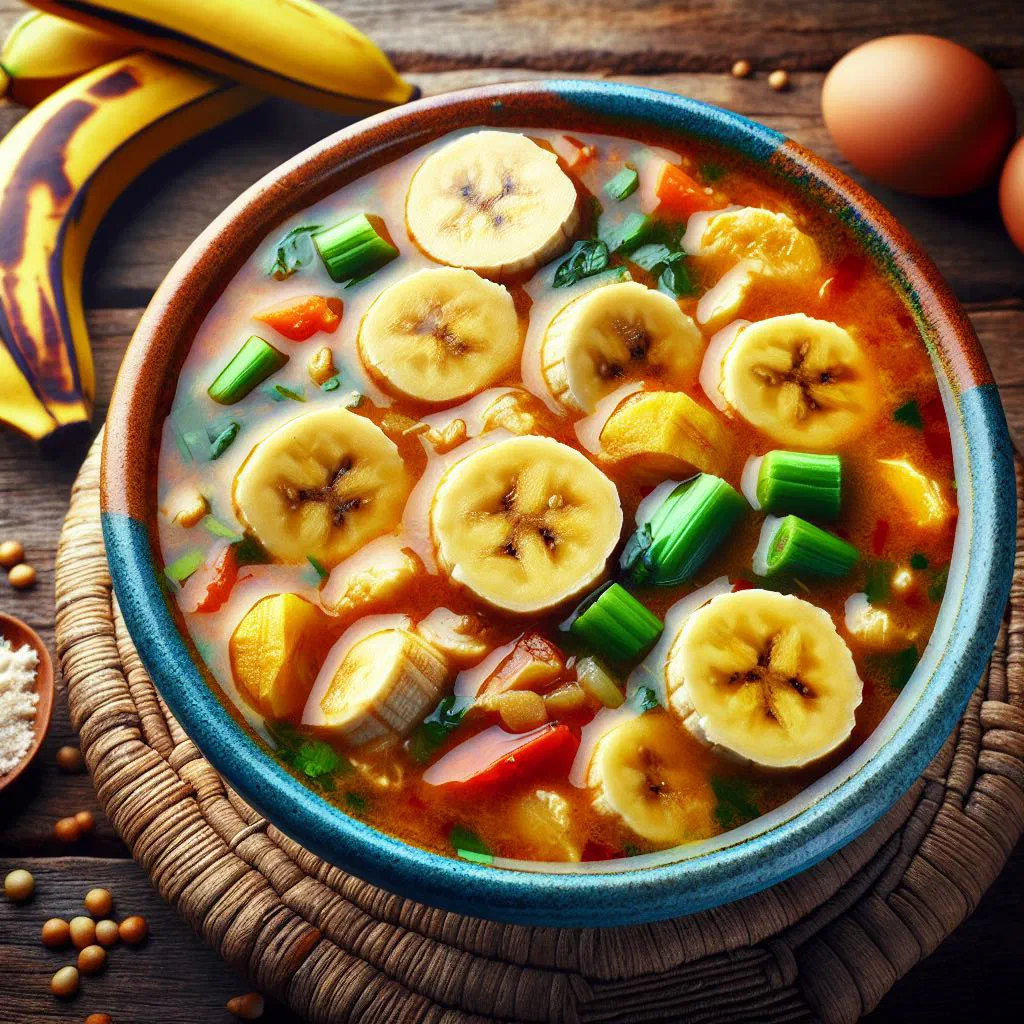
Meet Supu ya Ndizi, the fragrant plantain soup that warms kitchens across Tanzania. Sweet, ripe plantains simmer with carrots, peppers and garlic in a light vegetable broth until everything turns soft and golden. It is the sort of bowl that appears at family gatherings and quiet weeknight suppers alike, nourishing, gently sweet and deeply savoury all at once.
About Supu ya Ndizi
Supu ya Ndizi is a traditional dish from Tanzania that carries all the warmth of the country’s home cooking. With its balance of savoury and sweet notes it is very much a celebration dish, often served at family occasions and special gatherings. The combination of ripe plantains and fresh vegetables creates a harmonious flavour that speaks to the senses and the soul alike. It is delicious and nourishing and filling, which makes it an ideal choice for any meal of the day.
Ingredients (serves 1–2)
- 2 ripe plantains
- 1 onion, diced
- 2 carrots, diced
- 1 green pepper, diced
- 2 cloves of garlic, chopped
- 500 ml vegetable stock
- 2 tablespoons oil (olive or coconut)
- Salt and pepper to taste
- Fresh herbs to garnish (coriander, for example)
Shopping for the ingredients
To make Supu ya Ndizi properly, it is worth seeking out fresh, good-quality ingredients. Local markets and greengrocers with a decent fruit and vegetable counter are the best starting point. Pay particular attention to the ripeness of the plantains, as this has a decisive effect on how sweet and rounded the finished soup tastes. Seasonal and regional produce brings extra freshness and nutrients to the pot.
Preparing the dish
Preparation for this soup is quick and straightforward. Begin by washing and cutting the vegetables thoroughly. The onion, carrots and pepper should be diced to a similar size so that everything cooks evenly. The plantains also need peeling and slicing so they mingle nicely with the other ingredients. Have everything laid out and ready before you start cooking, much like you would for a pot of Mchemsho.
Step-by-step instructions
- Heat the oil in a large pan over a medium heat.
- Add the onion and garlic and fry until softened.
- Stir in the carrots and the green pepper and cook for a further 5 minutes.
- Add the plantains and the vegetable stock and bring everything to the boil.
- Lower the heat and let the soup simmer for about 20 minutes, until the plantain is tender.
- Season with salt and pepper and garnish with fresh herbs to taste.
- Serve the soup piping hot and enjoy its distinctive Tanzanian flavour.
Gluten-free / lactose-free version
Supu ya Ndizi is naturally gluten-free and lactose-free, which makes it an excellent choice for anyone with food intolerances. Just check that none of the ingredients you use contain hidden allergens, particularly stock cubes and ready-made seasonings. Fresh, unprocessed produce keeps the nutrient content high and the allergy risk low, so every guest at the table can tuck in without worry.
Tips for vegans and vegetarians
This soup is already a vegan and vegetarian dish that needs no animal products at all. To make it more substantial, add red lentils or quinoa to boost the protein content. Both work beautifully with the other vegetables and give the soup a fuller texture. Experiment with different vegetables to discover new flavours and variations of your own.
More tips and tricks
It pays to borrow a few tricks from local cooks. In Tanzania, spices such as ginger, cumin and turmeric are popular additions that lend the soup extra depth. A squeeze of lemon juice or a pinch of chilli just before serving lifts the aromas and adds a welcome brightness. Enjoy the freedom this dish offers and adjust it to suit your own palate.
Adapting the recipe to your taste
The versatility of Supu ya Ndizi means you can shape it around your own preferences. Feel free to add other vegetables such as broccoli, spinach or tomatoes for extra nutrients and colour, the same greens that make Mchicha so appealing. You can also adjust the consistency by using more or less stock, depending on whether you prefer a brothy soup or a thicker, stew-like bowl. Whatever changes you make, the underlying flavours remain satisfying.
Ingredient substitutions
If certain ingredients are hard to come by, there are plenty of alternatives. The vegetable stock can be replaced with a light vegetable fond or simply water, though the flavour will be a little gentler. Instead of plantains you can use other banana varieties, but they should be properly ripe to achieve that characteristic sweetness.
Drink pairing ideas
The right drink rounds off a bowl of Supu ya Ndizi nicely. A refreshing non-alcoholic option such as a tropical fruit smoothie or fresh coconut water works wonderfully and echoes the sweetness of the plantains. A cup of Chai ya Maziwa is another comforting match. If you prefer something alcoholic, a light lager or a white sangria makes an ideal companion. Just make sure the drink complements the dish rather than overwhelming it.
Serving and presentation ideas
Presentation can lift the whole experience considerably. Serve the soup in attractive deep bowls and garnish it with fresh herbs such as coriander or parsley. A few drops of olive oil on the surface give an appealing sheen. A piece of fresh bread or a warm Chapati is ideal for completing the meal and gives guests something to mop up every last spoonful of broth with.
A bit of history
Supu ya Ndizi has deep roots in Tanzanian culture and reflects the country’s culinary variety. In traditional cooking, plantains are a staple food and their natural sweetness is highly prized. The soup stands for the warm hospitality of Tanzania and is often prepared as a family dish to celebrate community and tradition. It has evolved over time, yet remains an essential part of Tanzanian cuisine and identity.
More recipe ideas
Summary: Supu ya Ndizi
Supu ya Ndizi is more than a simple soup. It is a symbol of Tanzanian culture and a celebration of flavour. The combination of ripe plantains and fresh vegetables makes it both nourishing and thoroughly satisfying. This soup brings the taste of Tanzania straight to your table. Experiment with the ingredients and adapt the recipe to create your own personal take on a Tanzanian classic.