National Dish Tanzania: Ugali (Recipe)
In this article
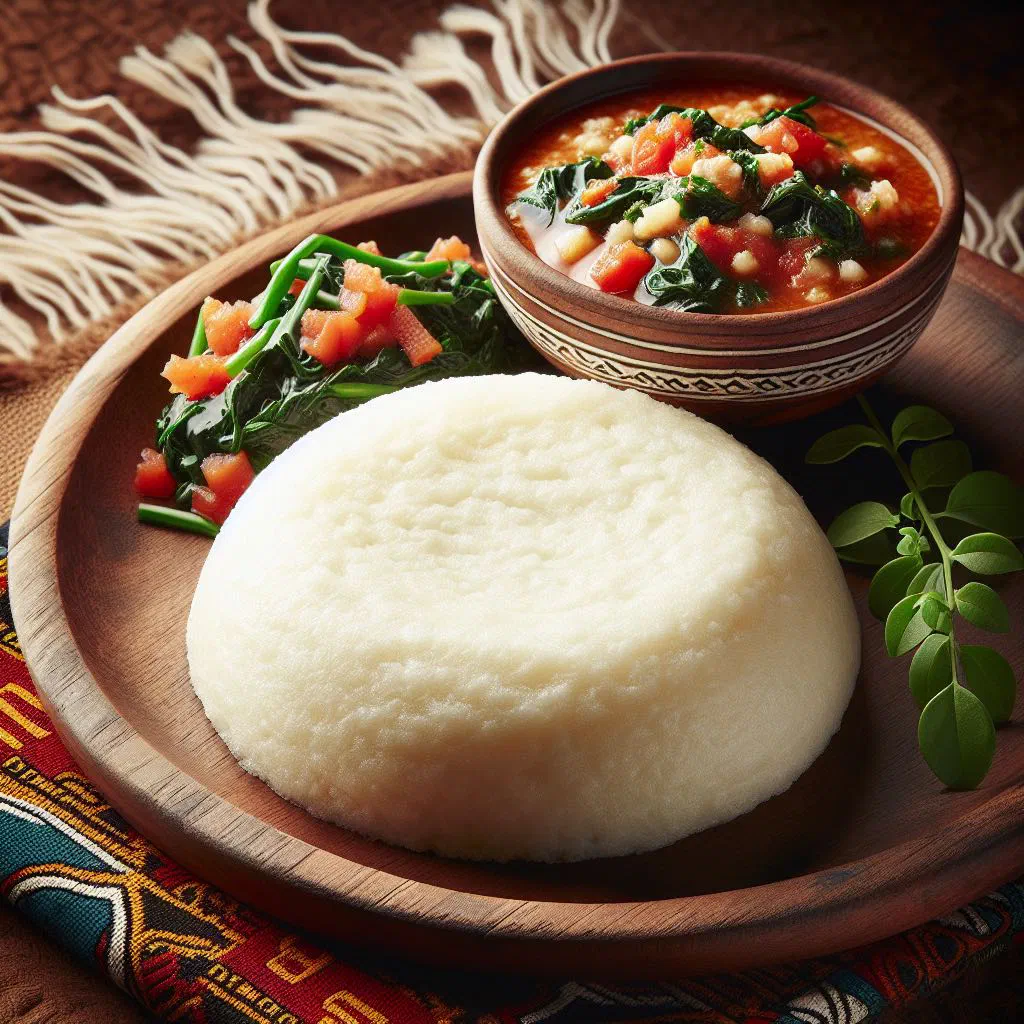
Ugali is maize flour cooked stiff in water, and it is the staple of Tanzania and most of East Africa. It is served with a relish and eaten with the right hand, and its texture is judged carefully: firm enough to hold a shape, soft enough to roll.
About Ugali
The technique is entirely in the stirring. Flour goes into boiling water gradually and is worked with a wooden spoon until it comes away from the pan clean. Under-stirred ugali is lumpy, undercooked ugali tastes raw.
It is never eaten alone. Mchicha, the amaranth greens, maharagwe, coconut beans, or nyama choma, grilled meat, go beside it.
Ingredients (serves 1–2)
- 2 cups maize meal (finely ground)
- 4 cups water
- A pinch of salt (optional)
Shopping for the ingredients
White maize flour, sold as unga wa sembe or mealie meal in African shops. Fine or medium grind. Yellow maize gives a sweeter porridge that East Africans regard as animal feed.
Preparing the dish
Use a heavy pan and a sturdy wooden spoon. Add a little flour first to make a thin porridge, let it cook, then work in the rest. That two-stage approach gives a better texture than tipping it all in.
Step-by-step instructions
- Bring the water to the boil in a medium-sized pan.
- Add a pinch of salt if you like.
- Whisk in about a quarter of the maize meal to make a thin porridge and let it cook 5 minutes.
- Add the remaining maize meal slowly, stirring constantly with a wooden spoon.
- Keep stirring until the mixture begins to pull away from the sides of the pan and thickens noticeably.
- Let the ugali cook for a further 10 minutes, pressing it against the pan as you stir.
- Take the pan off the heat and let it rest for a few minutes before turning it out.
Gluten-free / lactose-free version
Maize contains no gluten and ugali contains no dairy. It is naturally suitable for both restrictions and is one of the most useful gluten-free staples there is.
Tips for vegans and vegetarians
Ugali is flour and water. Mchicha, maharagwe ya nazi and muhogo wa nazi are all vegan relishes and all standard.
More tips and tricks
Cook it longer than seems necessary. Raw maize flour has a distinct chalky taste and it is the commonest failure. Press the mass against the side of the pan repeatedly, which is what develops the texture. And serve it hot; ugali sets hard.
Adapting the recipe to your taste
Cassava flour mixed in is common in some regions. A looser version is breakfast porridge, uji. Millet or sorghum flour makes a darker, more nutritious version.
Ingredient substitutions
Cassava, sorghum or millet flour all work. Polenta gives a coarser result. Water is all that is required.
Drink pairing ideas
Chai ya maziwa, spiced milk tea. Fresh passion fruit juice. Kilimanjaro or Safari lager with grilled meat.
Serving and presentation ideas
Turn it out as a smooth mound onto a shared plate with the relish beside it. Wash hands at the table first, then pinch off a piece, roll it into a ball, press a hollow with the thumb and scoop. Cutlery is unusual.
A bit of history
Maize came to East Africa with Portuguese traders and displaced sorghum and millet, a change largely completed within the last two centuries. The stiff porridge format is older than the crop. Ugali is so central to Tanzanian cuisine that a meal without it can be described as not really a meal.
More recipe ideas
Summary: Ugali
Ugali is maize flour stirred into boiling water until stiff and smooth. Make a thin porridge first, add the rest slowly, cook it through, and serve it hot with a relish.