National Dish Thailand: Bua Loy (Recipe)
In this article
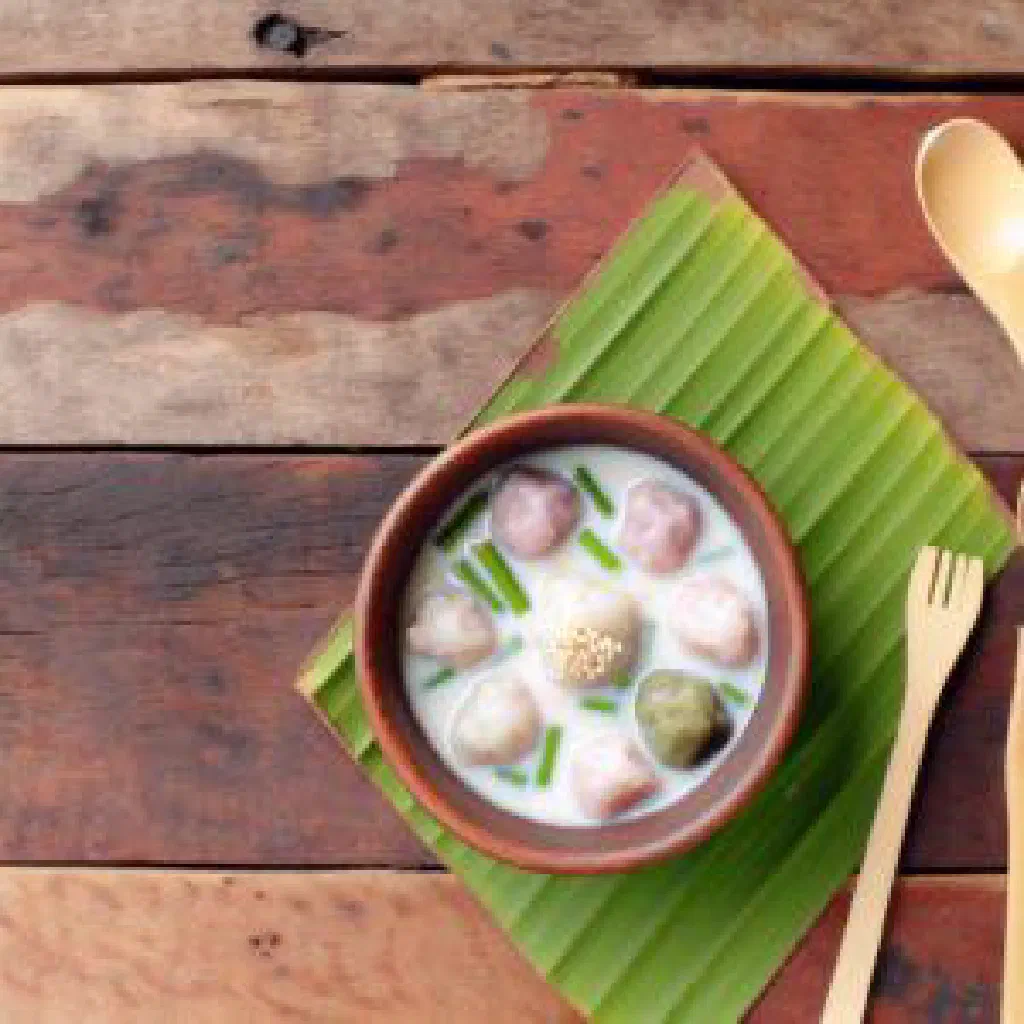
Dive into the sweeter side of Thailand with Bua Loy, a charming dessert of soft, colourful glutinous rice balls bobbing in warm, fragrant coconut milk. Loved by locals and visitors alike, it is as much a feast for the eyes as for the palate. With only a handful of ingredients and a few simple steps, you can conjure up a little taste of Thailand in your own kitchen. No plane ticket required.
About Bua Loy
Bua Loy is a traditional Thai dessert that appeals to the senses with its distinctive flavours and cheerful, colourful appearance. The dish is built around small rice balls served in sweet coconut milk, and it is beloved by Thais and tourists alike. With our straightforward recipe you can recreate this delicious treat at home with ease. Bring a burst of Thai flavour to your table without ever leaving your kitchen.
Ingredients (serves 1–2)
- 100 g glutinous rice flour
- 50 ml warm water
- 200 ml coconut milk
- 50 g sugar
- 1 pinch of salt
- 1–2 pandan leaves (optional)
- Food colouring in a few different shades
Shopping for the ingredients
To get the very best from your bua loy, it is worth choosing good-quality ingredients. Glutinous rice flour is easy to find in Asian supermarkets or online. Look out for a rich, full-flavoured coconut milk, too, as it shapes the taste of the whole dessert. Fresh pandan leaves are also available from most Asian grocers. A little food colouring is what gives the rice balls their signature, eye-catching look.
Preparing the dish
Before you start cooking, gather all of your ingredients and, if using, wash the pandan leaves and snip them into small pieces. Set out a clear work surface where you can roll the rice balls comfortably. It also helps to prepare a few small bowls for the different food colourings, so you can tint each batch of dough before shaping.
Step-by-step instructions
- Mix the glutinous rice flour with the warm water until you have a smooth, pliable dough.
- Divide the dough into small portions and tint each one with a different food colouring.
- Roll the coloured dough into small, even balls.
- Cook the balls in boiling water until they rise to the surface, which takes about 5 minutes.
- Refresh the cooked balls in cold water and set them aside.
- Heat the coconut milk in a saucepan, then stir in the sugar and the pinch of salt until dissolved.
- Add the pandan leaves and bring the coconut milk briefly to the boil.
- Remove the pandan leaves, add the rice balls to the coconut milk and serve.
Gluten-free / lactose-free version
Happily, bua loy is naturally gluten-free, as it is made with glutinous rice flour rather than wheat. You won’t need to make many changes for a lactose intolerance either, since coconut milk is dairy-free by nature. Do double-check that your food colourings are also free from gluten and lactose, so that everyone can enjoy this dessert without any worries.
Tips for vegans and vegetarians
This recipe for bua loy is completely vegan, as it contains no animal products at all. Coconut milk is a wonderful plant-based alternative to ordinary dairy, and glutinous rice flour is vegan too. Just take care that the food colourings you choose don’t contain any hidden animal-derived ingredients.
More tips and tricks
If you find the dough tricky to work with, add a little more warm water, a splash at a time, until it reaches the consistency you want. Let the shaped balls rest for a few minutes before cooking, which helps them hold their form. You can also vary the shape and size of the rice balls as you please, giving the dessert your own personal touch.
Adapting the recipe to your taste
You can easily tailor this recipe to suit your own preferences, for example by adding extra aromatics and spices. A hint of ginger or cinnamon can introduce intriguing new flavour notes. Fruit such as mango or banana also makes an exciting addition, lending the bua loy a fresh, fruity character, much like the tropical sweetness you’ll find in Khanom Mo Kaeng.
Ingredient substitutions
If glutinous rice flour is hard to come by, you can also use ordinary rice flour, though the texture will be a little different. There is sadly no true substitute for pandan leaves, but you can simply leave them out, or add a touch of vanilla essence for that extra something special.
Drink pairing ideas
A sweet dessert like bua loy goes beautifully with tea-style drinks such as jasmine tea or green tea, which offer a gently bitter counterpoint. A refreshing lime juice or a light coconut water also harmonises wonderfully with the dessert’s sweet, exotic flavours.
Serving and presentation ideas
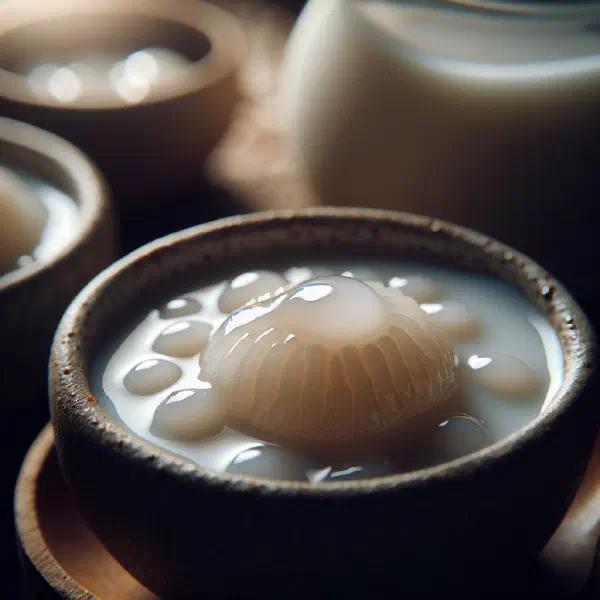
Be sure to serve bua loy in small, decorative bowls. The colourful rice balls really come into their own when they stand out against the white backdrop of the coconut milk. A few pandan leaves for decoration, or a scattering of coconut shavings, can make the dessert look even more inviting.
A bit of history
Bua loy looks back on a long tradition in Thai cuisine and is especially popular at festivals and special occasions. The dessert has its roots in simple, rural cooking and is now enjoyed right across Thailand. It is a symbol of good fortune and prosperity, and is often served as a gesture of hospitality, a hallmark of the country’s celebrated Thai cuisine.
More recipe ideas
Summary: Bua Loy
In short, bua loy is a good way to discover Thai dessert culture with very little effort. With just a few ingredients and a handful of simple steps, you can create a dish that is as pleasing to the eye as it is to the palate. Lactose-free or vegan, this dessert adapts with ease and always makes for a memorable treat. Enjoy making it, and savour every spoonful.