National Dish Thailand: Gaeng Daeng (Recipe)
In this article
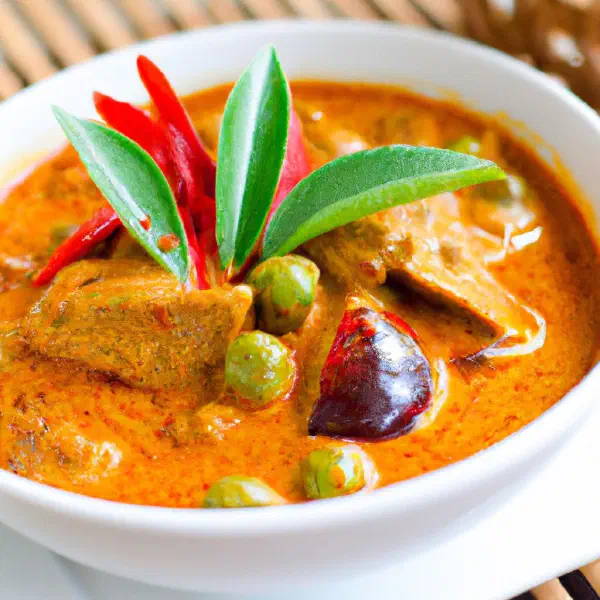
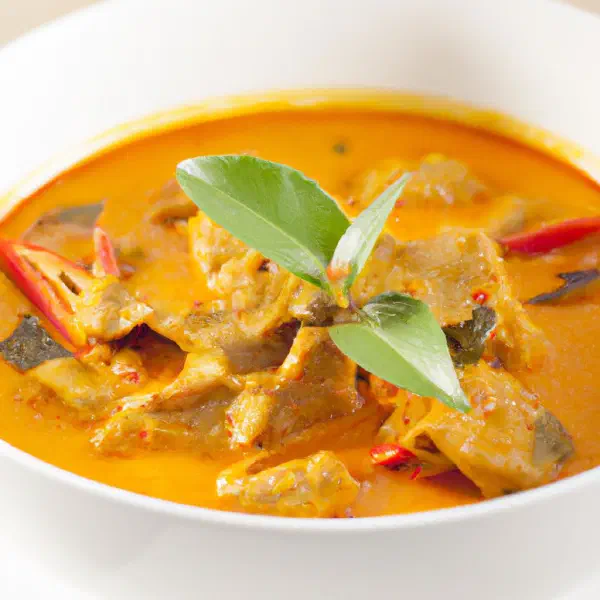
Discover Gaeng Daeng, one of Thailand’s most celebrated dishes. This bright red curry brings together the creamy mellowness of coconut milk and the fiery kick of red chillies, all balanced by fresh herbs and fragrant spices. Beef or tofu, it delivers an authentic taste of Thailand that has won admirers far beyond the country’s borders. Bring the warmth of a Bangkok kitchen straight to your own table.
About Gaeng Daeng
Gaeng Daeng, also known as red curry, is one of Thailand’s most famous and best-loved delicacies. This wonderfully versatile, colour-rich dish marries the creamy mildness of coconut milk with the bold heat of the red chillies that go into the curry paste. It is the interplay of fresh herbs, spices and protein additions such as chicken, beef or tofu that turns Gaeng Daeng into a truly memorable meal, one that has made a name for itself well beyond the borders of Thailand.
Ingredients (serves 1–2)
- 200g chicken breast fillet, cut into strips
- 2 tablespoons red curry paste
- 400ml coconut milk
- 100ml chicken or vegetable stock
- 1 tablespoon fish sauce
- 1 teaspoon palm sugar
- 2 kaffir lime leaves, shredded
- 100g bamboo shoots
- 1 pepper, cut into strips
- A handful of Thai basil
- 2 tablespoons vegetable oil
Shopping for the ingredients
For an authentic Gaeng Daeng, it is well worth visiting an Asian grocery, where you will find fresh ingredients such as kaffir lime leaves and Thai basil. When buying the red curry paste, keep an eye on its heat level, as this can vary considerably from brand to brand. For the coconut milk, choose one with a high coconut content and few additives to guarantee the fullest possible flavour.
Preparing the dish
Prepare all of your ingredients before you start cooking. Slice the meat into strips, trim and cut the vegetables, and have the herbs ready to hand. Doing this groundwork means the cooking itself comes together quickly, and you can add each component at exactly the right moment for the best result.
Step-by-step instructions
- Heat the vegetable oil in a wok or deep frying pan over medium heat.
- Add the red curry paste and fry for 1–2 minutes until fragrant.
- Add the chicken strips and brown them all over.
- Deglaze with the coconut milk and stock, stirring well to combine.
- Stir in the fish sauce, palm sugar and kaffir lime leaves, then leave to simmer for about 10 minutes.
- Add the bamboo shoots and pepper strips and cook for a further 5 minutes.
- Finally, fold through the Thai basil and let it warm briefly.
- Take the finished curry off the heat and serve.
Gluten-free / lactose-free version
Gaeng Daeng is naturally lactose-free, since its creaminess comes entirely from coconut milk rather than dairy. To keep it fully gluten-free, choose a fish sauce and curry paste that are certified free of wheat-based additives, as some commercial blends can contain hidden gluten. Served simply with steamed rice, this curry suits anyone with a gluten or lactose intolerance without any loss of flavour.
Tips for vegans and vegetarians
Gaeng Daeng is easy to make vegan or vegetarian. Simply use tofu in place of the meat or fish and swap the chicken stock for vegetable stock. Replace the fish sauce with soy sauce to keep the dish completely plant-based. Fresh vegetables and herbs are the key to a bright flavour, so reach for seasonal produce wherever you can, much as you would for a hearty Pad Pak Bung.
More tips and tricks
To adjust the heat of the curry, experiment with the amount of curry paste you use. Start with a little and add more until you reach the level of spice you are after. If you prefer it milder, you can replace a portion of the coconut milk with cream to soften the heat while keeping the dish rich and smooth.
Adapting the recipe to your taste
The beauty of Gaeng Daeng lies in its versatility. It can easily be made vegetarian by using tofu instead of meat or fish and vegetable stock in place of the chicken stock. The vegetables, too, can be varied however you like and adapted to whatever is in season, making it simple to create a curry that suits your own taste exactly.
Ingredient substitutions
If you cannot find certain ingredients, there are plenty of easy swaps. Where kaffir lime leaves are unavailable, a little grated lime zest makes a fine substitute. Brown sugar can stand in for palm sugar, and soy sauce is a ready alternative to fish sauce for a vegetarian version of the dish, the same plant-friendly approach that works beautifully in Kaeng Hoh.
Drink pairing ideas
A cold Thai beer or a glass of Riesling complements the spicy aromas of Gaeng Daeng perfectly. If you prefer something alcohol-free, a fresh lime juice or an ice-cold iced tea is an excellent choice, lifting the meal while cooling the heat of the curry.
Serving and presentation ideas
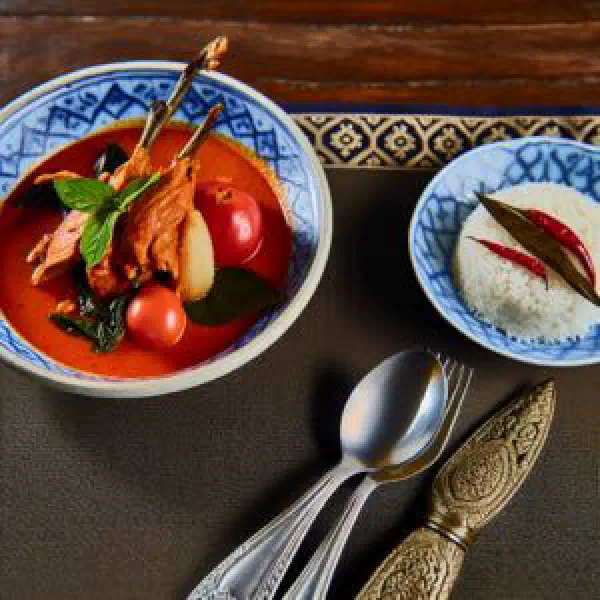
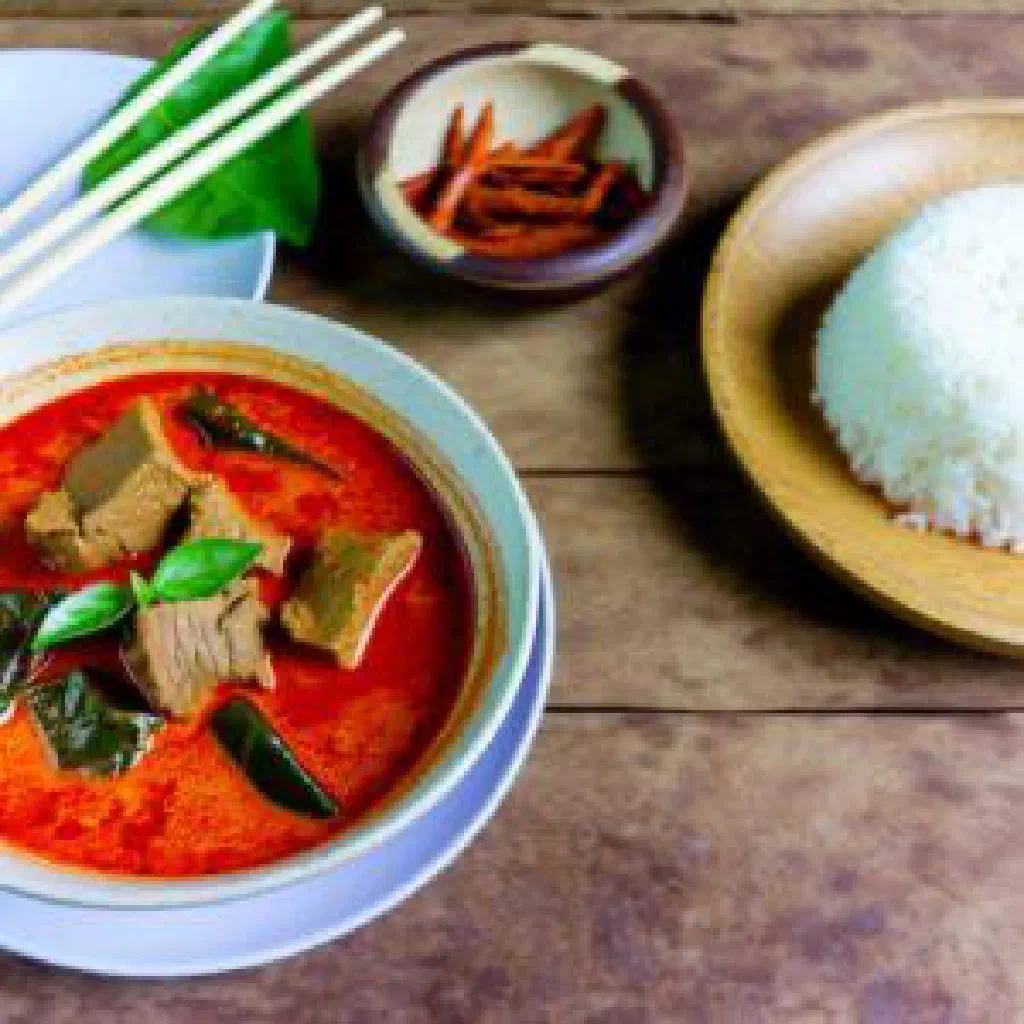
Serve the Gaeng Daeng in a deep bowl or on a shallow plate to show off the curry’s glowing colour. Garnish the dish with a sprig of fresh Thai basil and a slice of lime to add a touch of colour and freshness. A bowl of steaming jasmine rice alongside completes the spread and makes the meal feel truly inviting.
A bit of history
The origins of red curry reach far back into Thailand’s history. The preparation and use of curry pastes grew out of the need to preserve fresh spices and herbs. Over the years the dish has evolved and taken on countless variations, yet it has always kept its core of fragrant paste and creamy coconut milk, a hallmark of the wider tradition of Thai cuisine.
More recipe ideas
Summary: Gaeng Daeng
Gaeng Daeng is a many-sided dish defined by its balance of heat and creaminess. It adapts readily to different diets and tastes, and is easily made your own through the choice of ingredients. This Thai red curry is always a flavourful treat. Let this Thai classic inspire you and give it a try, your taste buds will thank you.