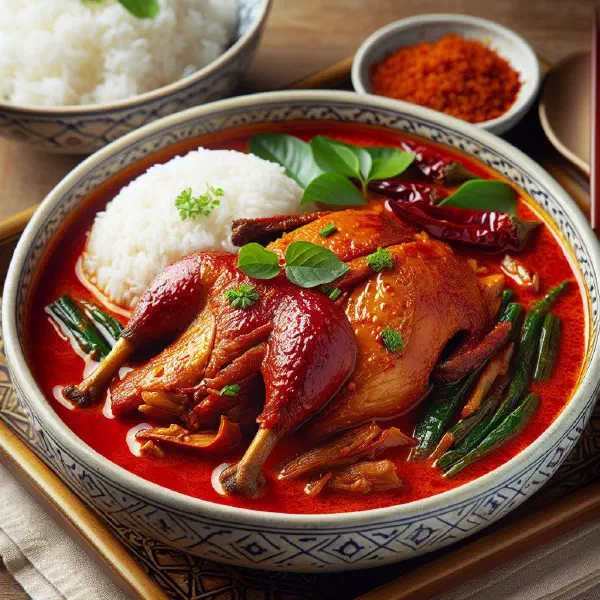
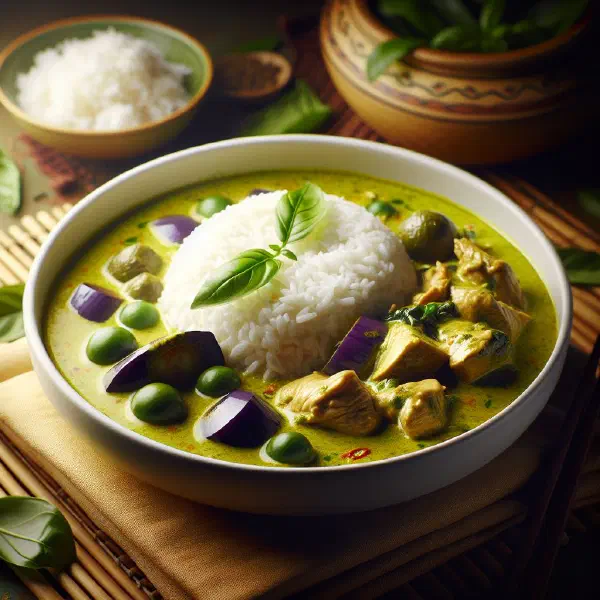
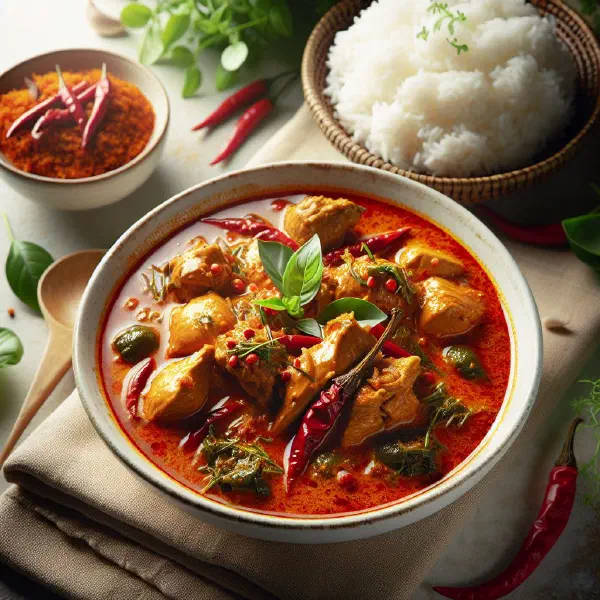
National Dish Thailand: Gaeng Phet (Recipe)
In this article
Meet Gaeng Phet, the fragrant red curry that has become one of Thailand’s most beloved exports. A rich, spiced coconut sauce wraps around tender chicken or tofu and a colourful tumble of crisp vegetables, all finished with the unmistakable aroma of Thai basil. It comes together in just a handful of steps, yet delivers the bold balance of sweet, salty, sour and hot that makes Thai cooking so addictive. Bring a taste of Bangkok straight to your own kitchen.
About Gaeng Phet
Gaeng Phet, better known to many as red Thai curry, is one of the best-known and most delicious dishes Thailand has to offer. Its appeal lies in a rich, spiced sauce and the sheer flexibility of its ingredients. Beef, pork or a vegetarian version, gaeng phet always tastes fantastic. The secret is the carefully balanced blend of aromatic spices and fresh ingredients that gives the curry its depth.
Ingredients (serves 1–2)
- 200g chicken breast or tofu
- 2 tablespoons red curry paste
- 200ml coconut milk
- 1 cup vegetables of your choice (e.g. peppers, courgette, carrots)
- 2 teaspoons fish sauce or soy sauce
- 1 teaspoon brown sugar
- Fresh Thai basil
- 1 lime
- Rice, to serve
Shopping for the ingredients
When shopping, it is worth choosing fresh, good-quality ingredients to get the best result. You will find curry paste in a well-stocked Asian grocery or in the international aisle of your supermarket. For the coconut milk, pick one without additives to guarantee the best flavour. Fresh Thai basil and limes lend the dish its characteristic bright, zesty note, much like the fresh herbs that lift a Pad Cha stir-fry.
Preparing the dish
Before you start cooking, make sure all the ingredients are prepped and ready to go. Cut the chicken or tofu into bite-sized pieces. Wash the vegetables and chop them into even pieces so they cook through at the same rate. Quarter the lime, then wash and roughly chop the Thai basil.
Step-by-step instructions
- Heat a little oil in a pan and add the red curry paste. Fry it briefly until it smells fragrant.
- Add the chicken breast or tofu and sauté until well coloured.
- Pour in the coconut milk and bring the mixture to a gentle boil.
- Add the vegetables and let everything simmer over medium heat until the veg is cooked but still has a little bite.
- Season the curry to taste with fish sauce or soy sauce, brown sugar and a squeeze of lime juice.
- Finally, fold through the Thai basil and serve the curry piping hot.
Gluten-free / lactose-free version
Gaeng phet is naturally gluten-free, as no gluten-containing ingredients are used. Just check that your curry paste contains no hidden gluten-based additives. Coconut milk is naturally lactose-free, which makes this dish ideal for anyone with a lactose intolerance. With a couple of quick checks, everyone at the table can tuck in.
Tips for vegans and vegetarians
For a vegan or vegetarian version, simply swap the chicken for tofu or seitan. Use soy sauce or tamari in place of the fish sauce. You can also pile in more vegetables, aubergine, baby corn and broccoli all work beautifully, to make the dish even more colourful and packed with nutrients. The same plant-forward approach shines in a Pad Pak Bung.
More tips and tricks
To deepen the flavour of your gaeng phet, let the coconut milk reduce until it reaches a thicker, glossier consistency. A little fresh ginger or garlic adds extra depth and warmth. For a fierier kick, stir in fresh chillies or a pinch of chilli flakes. Small tweaks like these let you tune the curry to exactly the intensity you fancy.
Adapting the recipe to your taste
Gaeng phet is a wonderfully versatile dish that is easy to tailor to personal preference. Experiment with different vegetables or protein sources such as prawns or beef. For a milder bowl, use less curry paste or thin the coconut milk a touch. This way you can create a curry that is perfectly suited to your own palate, in the same adaptable spirit as a Gaeng Massaman.
Ingredient substitutions
If certain ingredients are not to hand, there are plenty of alternatives. Peanut butter, for example, can stand in for some of the coconut milk to give you a thicker sauce. In place of Thai basil, use fresh coriander or parsley. And if you have no brown sugar, another sweetener such as honey or maple syrup will do the job nicely.
Drink pairing ideas
Refreshing drinks that offset the spice work best alongside gaeng phet. A chilled Thai beer or a light white wine such as Riesling make excellent partners. For alcohol-free options, try coconut water or a zingy lime soda. Green tea is another good choice, as it draws out and complements the aromas of the food.
Serving and presentation ideas
Thoughtful presentation can lift the whole gaeng phet experience. Serve the curry in a rustic earthenware bowl or an elegant porcelain dish. Garnish with fresh herbs and lime wedges, and finish with a swirl of coconut cream and a final squeeze of lime juice to make the curry look as good as it tastes.
A bit of history
Gaeng phet has a long history in Thai cuisine. It reflects the Indian and Chinese spice influences that made their way to Thailand over the centuries. Originally the recipe was reserved for the royal Thai kitchens, but today it is loved right across the country and around the world. It is a textbook example of the balance of sweet, sour, hot and salty flavours that defines Thai cuisine, a balance you will also taste in a Kaeng Ped.
More recipe ideas
Summary: Gaeng Phet
Gaeng phet is a versatile, aromatic and genuinely easy-to-make Thai curry that feels at home in both traditional and modern kitchens. With fresh ingredients and just a few storecupboard basics, it adapts effortlessly to different tastes and dietary needs. Gaeng phet is more than just a dish; it is a culinary expression of Thailand’s rich culture and history, and a brilliant way to bring the country’s flavours to your own table.