National Dish Thailand: Kaeng Ped (Recipe)
In this article
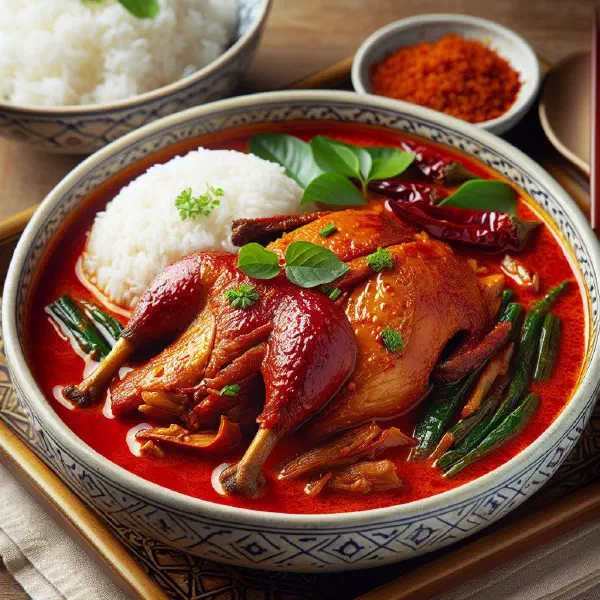
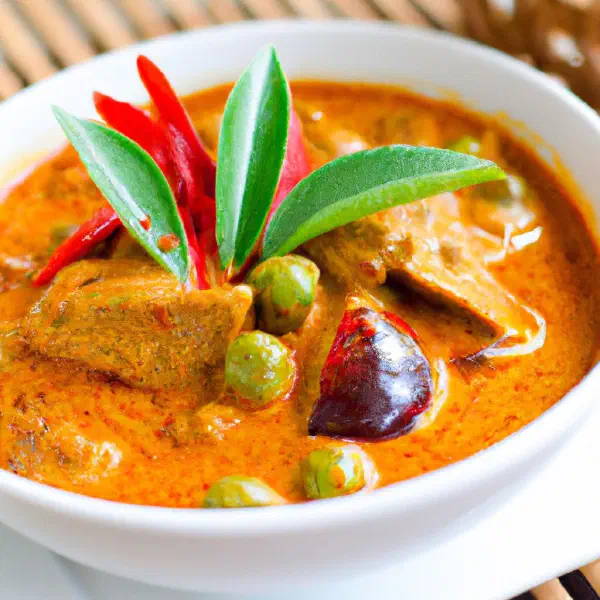
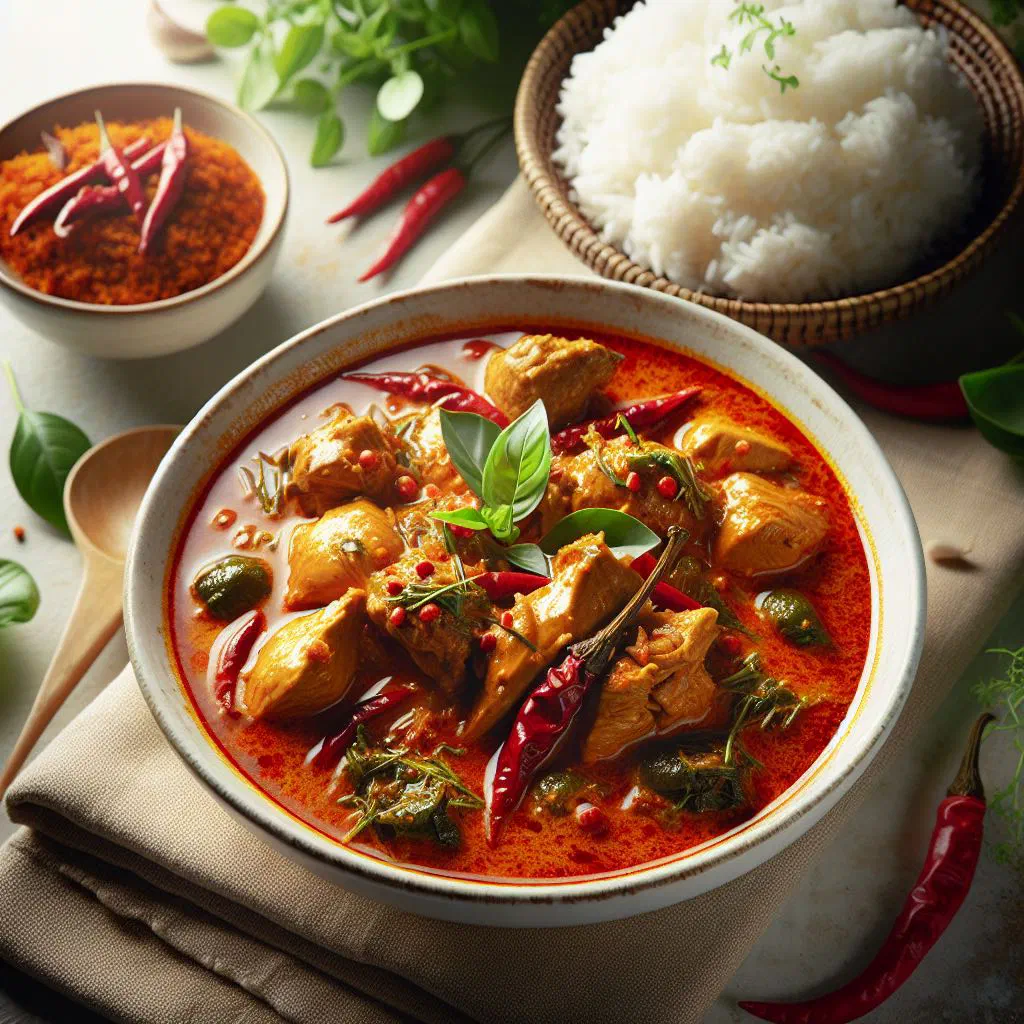
Say hello to Kaeng Ped, the fragrant red curry that sits at the very heart of Thai cooking. Tender pieces of meat or tofu simmer in silky coconut milk stirred through with a bold red curry paste, while crisp vegetables and a flurry of fresh basil keep every spoonful lively. Sweet, sour and gently fiery all at once, it is a dish that rewards a little improvisation. Bring the warmth of Thailand to your own kitchen with this approachable, deeply satisfying classic.
About Kaeng Ped
Kaeng Ped is a traditional Thai red curry, prized for its remarkable depth of flavour and its sheer versatility. The combination of tender pieces of meat, fresh vegetables and an exquisite curry paste gives the dish a special place on any menu. One of its defining features is the balance between sweet, sour and spicy, which together create a harmonious explosion of flavour. With its long list of possible ingredients, this curry is ideal for culinary experiments and adapts happily to all sorts of preferences.
Ingredients (serves 1–2)
- 300 g chicken breast or tofu
- 1 cup coconut milk
- 2–3 tablespoons red curry paste
- 1 red pepper, cut into strips
- 1 courgette, sliced
- 1 tablespoon fish sauce (or soy sauce for vegetarians)
- 1 teaspoon brown sugar
- Fresh basil, to garnish
Shopping for the ingredients
When shopping for kaeng ped, you will find the ingredients easy to source in many supermarkets and Asian grocery shops. It is especially worth choosing good-quality coconut milk and red curry paste, as these are decisive for the flavour of the finished dish. Look for fresh vegetables and good meat to guarantee the best possible eating experience. If you would rather cook a vegetarian or vegan version, tofu or tempeh make an excellent source of protein.
Preparing the dish
Before you start cooking, it is important to prepare all the ingredients properly. Cut the vegetables into even pieces so they cook at the same rate, and if you are using chicken breast, slice it into bite-sized chunks. A little groundwork like this makes sure the cooking process runs smoothly, leaving you free to focus entirely on building the flavours of this delicious curry.
Step-by-step instructions
- Heat a wok or large frying pan over medium heat and add the red curry paste. Stir-fry for 1–2 minutes until fragrant.
- Pour in the coconut milk and bring the mixture to the boil.
- Add the chicken or tofu and let it simmer for 5–7 minutes until cooked through.
- Stir in the sliced vegetables (pepper and courgette) and cook for a further 5 minutes.
- Season the curry with fish sauce and brown sugar, then garnish with fresh basil just before serving.
Gluten-free / lactose-free version
Kaeng ped is easy to make gluten-free or lactose-free. Simply use a gluten-free fish sauce or soy sauce in place of the traditional version. With the coconut milk, check that it is free of any additives that might contain lactose. By swapping a few ingredients, people with food intolerances can enjoy the dish too, without giving up any of that wonderful flavour. The same gentle adjustments work beautifully in Gaeng Massaman.
Tips for vegans and vegetarians
For vegans and vegetarians, kaeng ped is an ideal candidate. Replace the chicken with tofu or tempeh and use a plant-based curry paste. There are plenty of varieties made entirely without animal products. Experiment with different vegetables and pulses to tailor the curry to your taste and to enjoy a healthy, plant-based meal. A similar approach makes a vegetable-forward Pad Pak Bung sing.
More tips and tricks
To make your kaeng ped even more exciting, try adding extra spices and herbs. Fresh ginger or galangal can lend the dish a lovely aromatic note, and for more heat you can drop in some fresh chillies. Remember, too, that experimenting with different vegetables varies both the flavour and the colours of your curry, which pleases the eye just as much as the palate.
Adapting the recipe to your taste
Another advantage of kaeng ped is its versatility. You can adjust the heat to your personal taste by using more or less curry paste, and you can choose the vegetables entirely according to your own preferences. Aubergine or even green beans, the choice is yours. In this way you create an individual dish that suits your taste perfectly.
Ingredient substitutions
If you do not have certain ingredients to hand, there are plenty of alternatives you can use. Instead of chicken breast, try beef, pork or seafood for a different eating experience. The red curry paste can in many cases be swapped for green or yellow curry paste if you prefer a milder result. For the coconut milk, you could even use a blend of plant-based milk and desiccated coconut if you cannot find any. For something with prawns instead, take a look at Goong Gratiem Prik Thai.
Drink pairing ideas
A refreshing drink that complements the aromas pairs perfectly with a flavourful dish like kaeng ped. A cold Thai beer or a glass of rosé wine make excellent companions. If you would rather stay alcohol-free, try iced jasmine tea, which balances the spices in the dish beautifully. A fruity lemonade also brings freshness and lightness to the meal.
Serving and presentation ideas
Presentation can considerably enhance the kaeng ped experience. Serve the curry in an attractive bowl and garnish it with fresh basil and chilli flakes for a touch of colour. A few slices of lime or some lemongrass beside the bowl add a fresh accent. Remember, too, to serve the curry with fragrant jasmine rice to round off the dish in style.
A bit of history
Kaeng ped has a long history in Thai cuisine and is prepared differently from region to region. The dish originally comes from the ethnic groups of northern Thailand and gradually spread across the whole country. It is a prime example of Thai cooking, which unites simplicity and refinement. Every Thai restaurant offers its own interpretation, which makes it a culinary adventure to keep discovering new variations.
More recipe ideas
Summary: Kaeng Ped
To sum up, kaeng ped is a varied and intensely flavoured dish that captures the aromas of Thailand perfectly. The balance between sweet, sour and spicy offers an incomparable eating experience that adapts easily to different diets. Bring the taste of Thailand into your kitchen with kaeng ped and enjoy a slice of this fascinating culture.