National Dish Thailand: Khanom Babin (Recipe)
In this article
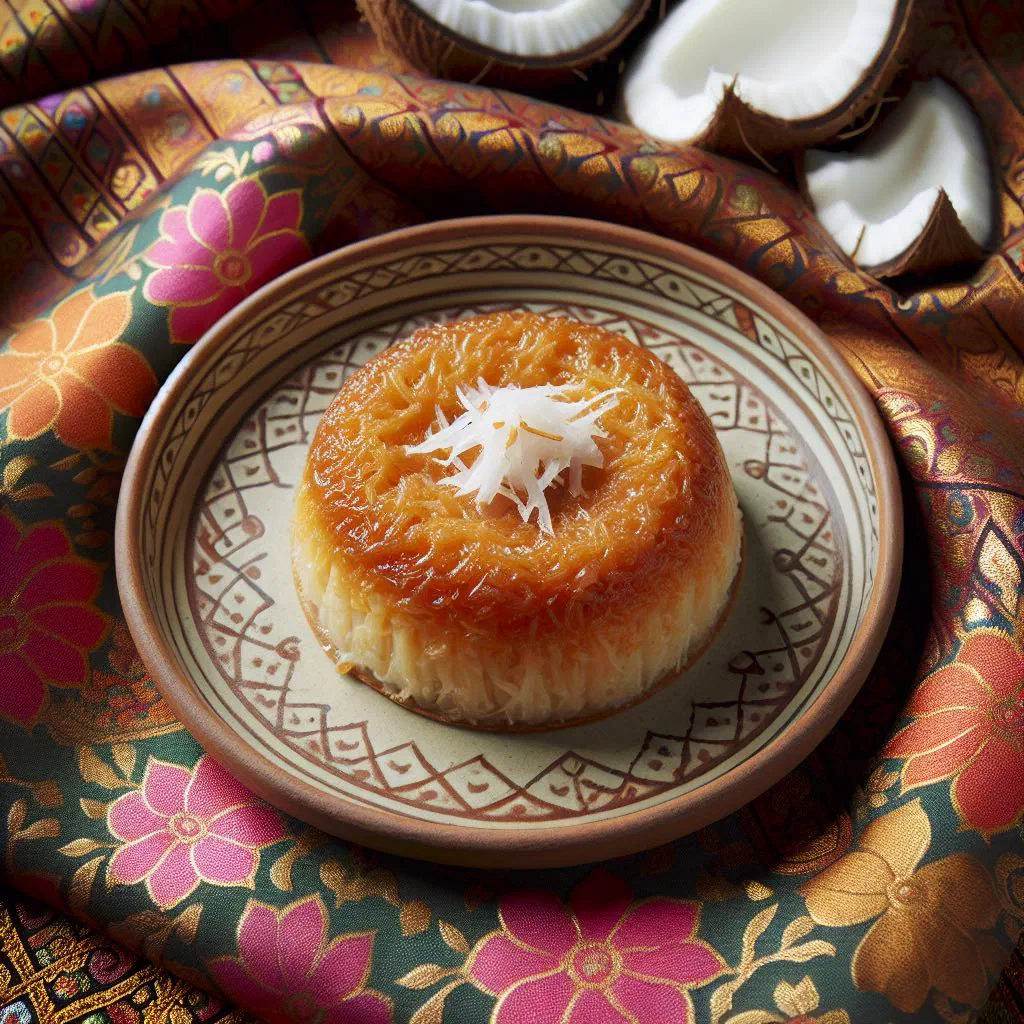
Say hello to Khanom Babin, a wonderfully fragrant coconut dessert from the south of Thailand. This tender little cake leans on the natural richness of coconut milk and the gentle caramel warmth of palm sugar, baked until the top turns golden and the centre stays soft and chewy. Often brought out for festivals and family celebrations, it is the kind of sweet treat that feels both comforting and a touch exotic. Bring a taste of the Thai south straight to your own kitchen.
About Khanom Babin
Khanom Babin is a much-loved Thai dessert, celebrated for its deep coconut flavour and its delicate caramel note. This sweet coconut cake is regularly served at festivities and special occasions, and it is a genuine treat for the senses. The pairing of coconut milk and rice flour gives it a distinctive texture that is at once soft and lightly fluffy. Anyone with a sweet tooth is bound to fall for it.
Ingredients (serves 1–2)
- 200 ml coconut milk
- 100 g rice flour
- 50 g palm sugar or brown sugar
- 1 pinch of salt
- 1 teaspoon vanilla extract (optional)
Shopping for the ingredients
The ingredients for Khanom Babin are easy to find in most Asian grocery shops or well-stocked supermarkets. Look for fresh coconut milk, as its quality has a big influence on the final flavour. Palm sugar can be a little trickier to track down, but its distinctive taste lends the dessert real authenticity. You can also try alternative sweeteners to emphasise or vary particular flavours, much as you might when making Khanom Mo Kaeng.
Preparing the dish
Khanom Babin comes together in just a few steps that are quick to master. Start by measuring out all of your ingredients so the recipe is followed accurately. Make sure your kitchen tools are within reach too, a bowl, a whisk and a baking tin. Ideally, grease the tin with a little oil to stop the dessert sticking once it is baked.
Step-by-step instructions
- Add the coconut milk, rice flour, palm sugar and a pinch of salt to a bowl and mix well.
- Heat the mixture over medium heat, stirring constantly, until it thickens slightly.
- Pour the mixture into the prepared baking tin and spread it out evenly.
- Bake in a preheated oven at 180°C for about 20–25 minutes, until the cake is set and golden brown.
- Once baked, leave to cool, then cut into small pieces. Serve and enjoy.
Gluten-free / lactose-free version
Khanom Babin is naturally gluten-free, since it is made with rice flour. For a lactose-free version, simply stick with coconut milk, which contains no dairy at all. This makes the dessert ideal for anyone with intolerances or particular dietary needs. Even guests with allergies can tuck into this delicious treat without a second thought.
Tips for vegans and vegetarians
Khanom Babin is already an excellent choice for vegans, as it contains no animal products. Just take care to use a plant-based sugar so there are no hidden animal ingredients lurking in the sweetener. A little vanilla extract is a nice option for an extra layer of flavour, too. With these simple tips you can be sure your dessert stays both delicious and fully plant-based.
More tips and tricks
To get the very best from your Khanom Babin, you can fold a few extras into the batter, such as toasted coconut flakes or a little silken tofu to play with the texture. Adjust the baking time slightly to reach your perfect colour and firmness. Be sure to let the cake cool completely before slicing, as it is much easier to handle once set. Experiment with the ingredients to create your own favourite version.
Adapting the recipe to your taste
If you would like to adapt the recipe to your personal taste, there are plenty of sweeteners to play with. Agave syrup or honey both make natural alternatives to sugar. You could also add extra flavours such as citrus or warming spices like cardamom to give the dessert a special twist. The consistency can be fine-tuned, too, by adjusting the amount of coconut milk or rice flour.
Ingredient substitutions
If certain ingredients for Khanom Babin are hard to come by, there are suitable swaps. Brown sugar can stand in for palm sugar, for instance, though the flavour will shift a little. Rice flour can be replaced with another gluten-free flour, but it is worth testing to get the texture just right, the same care that pays off with Khanom Pang. Experimenting with different ingredients can be rewarding and lead to new flavour discoveries.
Drink pairing ideas
To enjoy your Khanom Babin in style, a number of drinks pair beautifully with it. A glass of Thai iced tea or a coconut-based smoothie sits wonderfully alongside the sweetness of the dessert. For something refreshing, you could also offer mint tea or fresh fruit juices. These drinks bring out the exotic character of the dish and turn the whole occasion into something memorable.
Serving and presentation ideas
The way you present Khanom Babin can impress your guests and heighten the pleasure. Serve the pieces on a colourful plate or in small bowls, garnished with fresh fruit or mint leaves. Resting the dessert on banana leaves adds an authentic Thai touch. A scattering of edible flowers can also brighten the look and draw a few admiring glances.
A bit of history
Khanom Babin has a long tradition in Thai cuisine and is often linked with celebrations and festivals. Originally from the southern region of Thailand, it is traditionally prepared there for special occasions. Coconut holds a special place in Thailand, symbolising fertility and prosperity. So the dessert brings together not only its flavours but a real sense of cultural heritage, one of the many appeals to of Thai cuisine.
More recipe ideas
Summary: Khanom Babin
In short, Khanom Babin is a good way to bring a little Thai culture into your home. With its appealing combination of coconut milk, rice flour and a sweet caramel note, it is both simple to make and a joy for the senses. This lovely coconut cake delivers a piece of Thailand straight to your plate. Let it inspire you and give this wonderful recipe a try yourself.