National Dish Thailand: Moo Hong (Recipe)

In this article
Meet Moo Hong, a deeply comforting braise from the south of Thailand that turns humble pork belly into something quietly spectacular. Tender pieces of meat are simmered low and slow in a glossy, savoury-sweet sauce until they all but melt, soaked through with warming spices that echo the depth of caramelised pork. It is a dish made for slow afternoons and generous tables, rich, fragrant and well worth the wait.
About Moo Hong
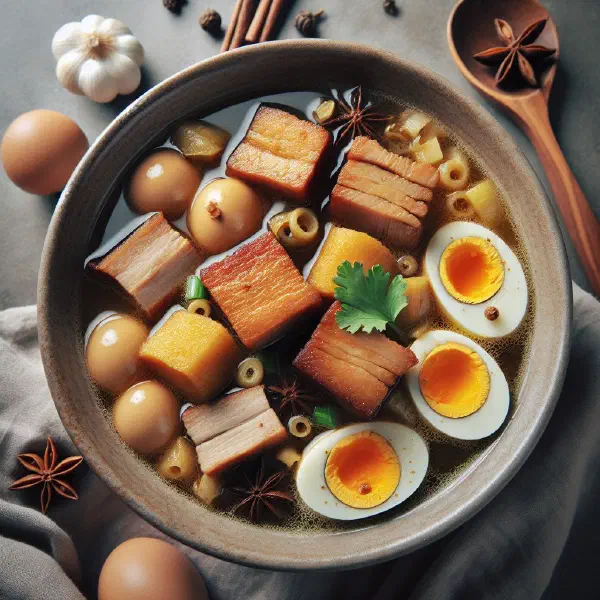
Moo Hong is a traditional Thai dish that is especially loved in the south of the country. This braised one-pot dish wins people over with its clever combination of warming spices and meltingly tender pork belly, cooked gently until it is soft and succulent. The spice blend gives the dish a character all of its own, a savoury depth reminiscent of caramelised pork that keeps you coming back for another spoonful. It is hearty, aromatic and the kind of food that feels like a treat.
Ingredients (serves 1–2)
- 300g pork belly
- 2 tablespoons soy sauce
- 1 tablespoon oyster sauce
- 2 cloves garlic, chopped
- 1 tablespoon sugar
- 1 tablespoon fish sauce
- 1 cup water
- 1 stalk lemongrass, lightly bruised
- 1 piece of cinnamon stick
- 2 star anise
- Fresh coriander leaves, to garnish
Shopping for the ingredients
When shopping for the ingredients, look out for fresh, good-quality produce to get the very best flavour. The pork belly is best chosen with plenty of fatty marbling, as this keeps the dish juicy and rich throughout the slow braise. Spices such as cinnamon sticks and star anise can be found in the spice aisle of a larger supermarket or, even better, in a well-stocked Asian grocery where you will also find lemongrass and fish sauce.
Preparing the dish
Begin by cutting the pork belly into bite-sized pieces so it cooks evenly. The garlic should be finely chopped, and the lemongrass lightly bruised to release its fragrant oils. Have all your ingredients to hand before you start, as this makes the cooking far more relaxed. Make sure you have a large pot or a deep pan with a lid ready, since the dish needs room to simmer gently.
Step-by-step instructions
- Cut the pork belly into cubes and place it in a bowl.
- Add the soy sauce, oyster sauce, garlic, sugar and fish sauce, then leave the pork to marinate for at least 30 minutes.
- Heat a little oil in a large pot and brown the marinated pork until lightly golden.
- Add the lemongrass, cinnamon stick and star anise and fry everything together briefly.
- Pour in the water, bring to the boil, then reduce the heat and let it simmer for about 1 hour, until the pork belly is tender.
- Serve the Moo Hong with freshly chopped coriander leaves.
Gluten-free / lactose-free version
For a gluten-free version, simply swap in a gluten-free soy sauce. Most oyster sauces do not contain gluten, but it is always worth checking the label to be sure. As the recipe uses no dairy at all, it is already naturally lactose-free, which makes it an easy dish to share with guests who have those dietary needs.
Tips for vegans and vegetarians
For a vegan version of Moo Hong, you can replace the pork belly with tofu or seitan. The rest of the ingredients stay largely the same, though the fish sauce should be swapped for a plant-based alternative such as a vegan fish sauce or a splash of extra soy sauce. The braising method works just as well, giving the tofu time to soak up all the warming spices.
More tips and tricks
To make the flavour even deeper, leave the marinated pork belly in the fridge overnight before cooking. Remember to remove the lemongrass before serving, as it is too fibrous to eat. Like many braises, Moo Hong often tastes even better the next day, once the aromas have had time to settle and develop fully. It is the perfect dish to make ahead.
Adapting the recipe to your taste
Moo Hong is easy to tailor to your own preferences. If you like a bit of heat, add fresh chillies or a pinch of chilli flakes towards the end of cooking. For more variety and colour, you can stir in vegetables such as carrots or peppers, which also soak up the savoury sauce beautifully. A spoonful of this braise sits happily alongside a fragrant bowl of Gaeng Massaman for a generous Thai spread.
Ingredient substitutions
The oyster sauce can be replaced with hoisin sauce if you prefer a slightly different, sweeter umami note. If pork belly is not to your taste, chicken breast or beef both work well, with each cut lending the dish its own character. Those who enjoy a richer red-curry flavour might pair their meal with Kaeng Ped, or look to the garlicky punch of Moo Tod Gratiem for inspiration.
Drink pairing ideas
A hearty dish like Moo Hong calls for refreshing drinks such as a chilled Thai iced tea or a cold beer to cut through the richness. A glass of dry white wine or a lightly sparkling rosé also complements the warm, spiced flavours of the braise rather nicely. For something non-alcoholic, a cooling glass of iced jasmine tea rounds the meal off well.
Serving and presentation ideas
Serve the Moo Hong in an attractive, deep bowl and garnish it with fresh coriander leaves. A few lime wedges on the side, along with a dab of sriracha, can add a welcome lift to the dish. Colourful tableware helps too, making the meal look as inviting as it tastes. Perfect for sharing as part of a larger feast of Thai cuisine.
A bit of history
Moo Hong has its roots in the cooking of southern Thailand, where it has been prepared for generations. Originally the dish was reserved for special occasions and festivals, cooked to mark celebrations and gatherings. Today it counts among the classics of the Thai kitchen and is enjoyed both in restaurants and in many home kitchens, where it remains a cherished comfort food.
More recipe ideas
Summary: Moo Hong
Moo Hong is a delicious Thai braise of meltingly tender pork belly in a fragrant, savoury-sweet spice sauce. It is straightforward to make and can easily be adapted to suit different tastes and dietary needs. With the right ingredients and a few simple tips, this dish is sure to become a highlight on your table. Proof that a little patience at the stove pays off handsomely.