National Dish Thailand: Pad Kee Mao (Recipe)
In this article
Meet Pad Kee Mao, the fiery Thai stir-fry better known to many as drunken noodles. Built around broad, slippery rice noodles, fragrant Thai basil and a punchy hit of fresh chillies, it delivers all the smoky, savoury drama of a busy Bangkok wok in just a few minutes. Tender chicken or tofu, crisp pepper and a glossy soy-based sauce round it out into a bold, satisfying plateful you can throw together at home on any night of the week.
About Pad Kee Mao
Pad Kee Mao, also known as drunken noodles, is a much-loved Thai dish that stands out for its singular blend of flavours and spices. It is a fiery noodle stir-fry, typically made with broad rice noodles, vegetables and often chicken or tofu. The heat comes from sharp chillies, garlic and a handful of fragrant Thai basil leaves. Quick to cook and endlessly adaptable, it captures the bold, aromatic character that defines so much of Thai cooking, discover just how easy it is to recreate this delicious dish in your own kitchen.
Ingredients (serves 1–2)
- 200g broad rice noodles
- 2 tablespoons vegetable oil
- 3 cloves garlic, chopped
- 2–3 red chillies, finely chopped
- 150g chicken or tofu, cut into thin strips
- 1 red pepper, cut into strips
- 1 cup Thai basil leaves
- 2 tablespoons light soy sauce
- 1 tablespoon dark soy sauce
- 1 teaspoon fish sauce
- 1 teaspoon sugar
Shopping for the ingredients
Before you start cooking Pad Kee Mao, make sure you have all the fresh ingredients and the essential seasonings to hand. Thai staples such as Thai basil and certain soy sauces are often easiest to find in an Asian supermarket. It is well worth paying attention to the quality of your ingredients, especially the noodles and the chicken or tofu. Fresh chillies give the dish its signature heat and aroma, so choose the brightest, firmest ones you can find.
Preparing the dish
Putting together an authentic Pad Kee Mao takes a little groundwork. First, prepare the rice noodles according to the packet instructions and set them aside. While they soak, chop the vegetables and get the chicken or tofu ready. Thorough chopping of the garlic and chillies matters most of all, as these aromatics shape the whole flavour of the dish. Before long your kitchen will be filled with an appealing aroma.
Step-by-step instructions
- Heat the vegetable oil in a large frying pan or wok over a medium-high heat.
- Add the chopped garlic and chillies and fry until golden and fragrant.
- Add the chicken or tofu to the pan and stir-fry until cooked through.
- Toss in the strips of red pepper and fry briefly.
- Mix in the pre-cooked rice noodles and stir well to combine.
- Pour in the light soy sauce, dark soy sauce, fish sauce and sugar, then stir until everything is evenly coated.
- Finally, add the Thai basil leaves and toss everything together. Serve the Pad Kee Mao hot.
Gluten-free / lactose-free version
For a gluten-free version of Pad Kee Mao, simply use gluten-free soy sauce, which is stocked by most supermarkets and specialist food shops. As the dish is naturally lactose-free, no further changes are needed on that front. Just double-check that all your other ingredients are gluten-free too, to avoid any risk of cross-contamination.
Tips for vegans and vegetarians
To make a vegan or vegetarian Pad Kee Mao, swap the chicken for tofu or a mix of vegetables. The basil also contributes a deep, savoury flavour that stands in well for meat. Since fish sauce is not usually vegan, replace it with a vegan fish sauce or simply add a little more soy sauce. These swaps make the dish no less delicious. They offer an equally satisfying plant-based alternative.
More tips and tricks
For the perfect Pad Kee Mao, it pays to cook over a high heat, searing the ingredients quickly to achieve that distinctive smoky wok flavour. Take care not to overcook the rice noodles so they keep their shape rather than turning mushy. With a little practice you can fine-tune the seasonings and ingredients for exactly the taste you want. Experiment with different vegetables to give your Pad Kee Mao a personal touch, much as you might with a bright Pad Pak Bung.
Adapting the recipe to your taste
Pad Kee Mao adapts beautifully to personal preference. If you like things really fiery, add more chillies. If you prefer it milder, cut back on the chillies and perhaps stir in a little coconut milk to soften the heat. The choice of protein, beef, pork or prawns, or a meat-free option such as tofu or seitan can be varied to taste as well. With these tweaks, the dish becomes your own personal favourite.
Ingredient substitutions
If you do not have certain ingredients to hand, they are easy to swap out. In place of broad rice noodles you can use other types of noodle, such as glass noodles or egg noodles. If Thai basil is unavailable, ordinary basil or even spinach will do the job. Dark soy sauce can be replaced with a mix of regular soy sauce and a touch of sugar, the same kind of flexible substitution that suits a quick Kai Pad Khing. This adaptability makes Pad Kee Mao a wonderfully versatile dish.
Drink pairing ideas
While Pad Kee Mao is usually enjoyed with fresh water or a light tea, plenty of other drinks suit it well. A cold Thai beer such as Singha or Chang complements the heat of the dish perfectly. For an alcohol-free option, a Thai iced tea makes a wonderful choice. Made from black tea, spices and sweetened condensed milk, it offers a gloriously cooling counterpoint to all that spice.
Serving and presentation ideas
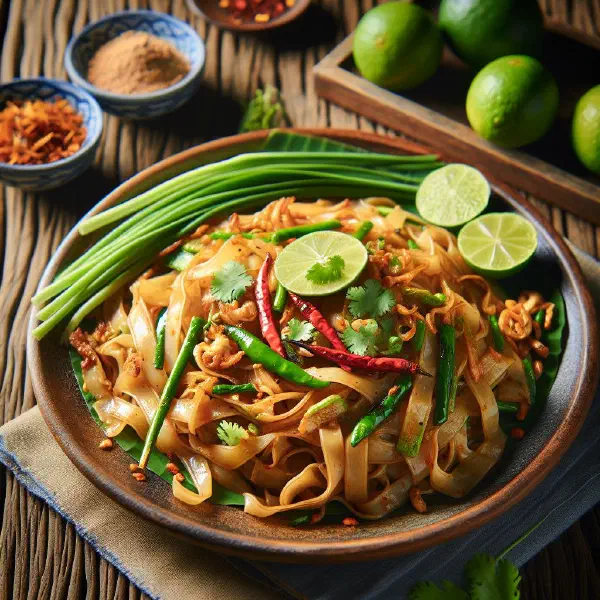
The right presentation makes Pad Kee Mao even more appealing. Serve the dish in an attractive bowl or on a plate, and garnish it with fresh Thai basil leaves and a few strips of red chilli. Alongside, offer small dishes of extra seasonings such as chilli flakes or fresh lime wedges. These little details go a long way towards making your dish a feast for the eyes as well as the palate.
A bit of history
Pad Kee Mao has an intriguing backstory and is often enjoyed as a late-night snack in Thailand. The name “drunken noodles” may come from the fact that the dish is frequently sold near bars, its bold heat making it the ideal treat after a few drinks. The use of fresh ingredients and rapid cooking in a searing wok are hallmarks of Thai cuisine. These very qualities have helped Pad Kee Mao become a favourite for people around the world.
More recipe ideas
Summary: Pad Kee Mao
Spicy Pad Kee Mao is a delicious and versatile Thai dish that impresses with its wide-ranging flavour combinations. With the right ingredients and a little preparation, you can easily recreate this fiery noodle stir-fry at home. Whether gluten-free, vegetarian or vegan, Pad Kee Mao adapts beautifully to all kinds of dietary needs. Follow our tips on cooking and presentation and you will turn out a dish that appeals to both the palate and the eye.