National Dish Thailand: Pad Prik Sod (Recipe)
In this article
Thai cooking is famous the world over for its bright, layered flavours and its love of fresh ingredients, and Pad Prik Sod is a brilliant example that deserves to be far better known. This quick chilli stir-fry balances fiery heat against a gentle sweetness, giving you a punchy, memorable plate of food in very little time. It is the perfect choice for anyone with a busy schedule who still wants something authentic and genuinely delicious on the table.
About Pad Prik Sod
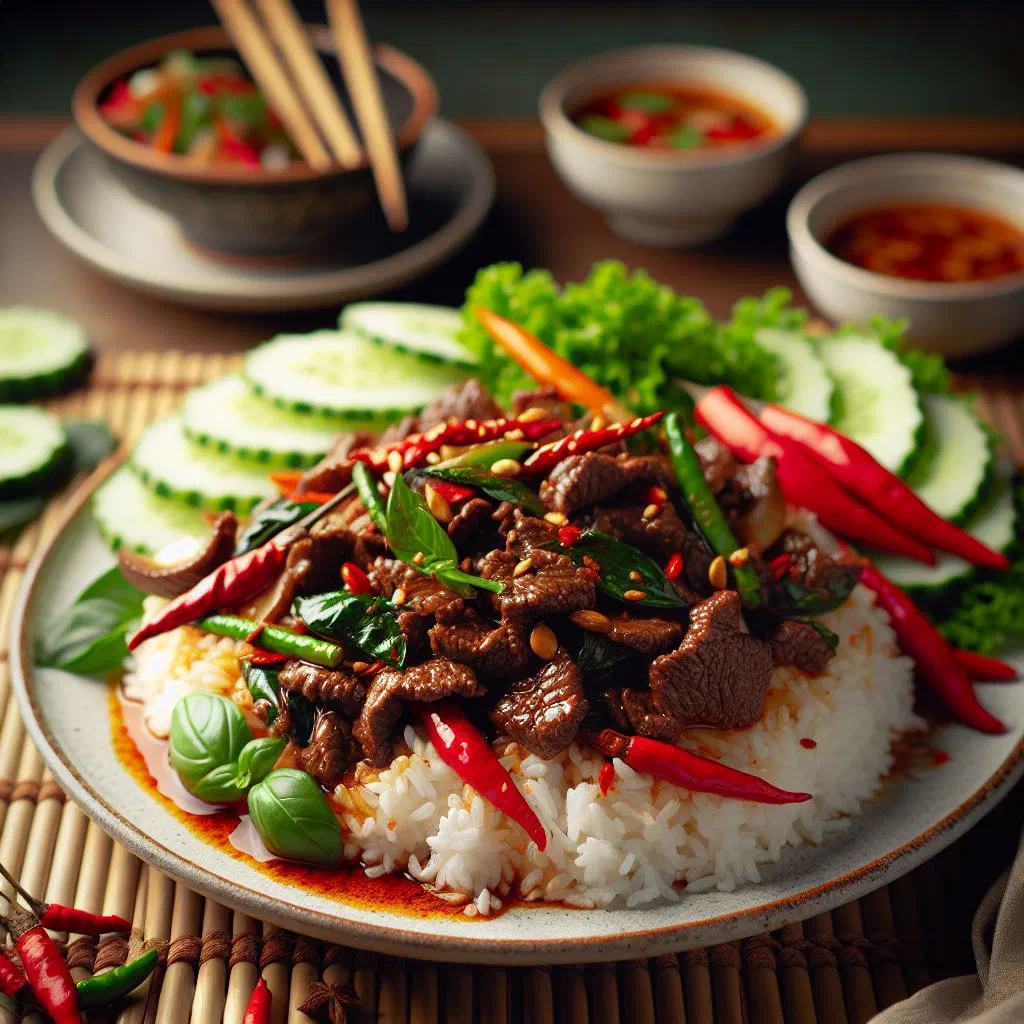
Pad Prik Sod is a lesser-known but wonderfully tasty speciality of Thailand, celebrated for the way it brings together heat and sweetness in a single dish. Built around tender pieces of chicken (or tofu for a meat-free version) and a generous handful of fresh red chillies, it delivers an unmistakable flavour that is typical of the country’s bright cooking. Because the method is so straightforward, it makes an ideal weeknight supper that still tastes like something special. Served with steamed jasmine rice, it captures the artistry of Thai cuisine in just a few simple steps.
Ingredients (serves 1–2)
- 200 g chicken breast, or an alternative protein (tofu for vegetarians)
- 2–3 fresh red chillies, sliced
- 1 pepper, cut into strips
- 2 cloves garlic, finely chopped
- 2 tbsp fish sauce
- 1 tbsp soy sauce
- 1 tsp sugar
- 2 tbsp vegetable oil
- Fresh coriander, to garnish
- Cooked jasmine rice, to serve
Shopping for the ingredients
A central part of Thai cooking is the use of fresh, good-quality ingredients. When shopping, try to pick the freshest chillies and peppers you can find, as they carry much of the dish’s character. Fish sauce and soy sauce are easy to source in Asian supermarkets and are essential for an authentic taste. Choose a good cut of chicken breast, or a quality vegetarian alternative such as tofu, so the dish can develop its very best flavours.
Preparing the dish
Getting ready to cook Pad Prik Sod is simple and stress-free. Begin by cutting the chicken breast or tofu into bite-sized pieces. Finely chop the chillies and garlic, then slice the pepper into strips. It is well worth having every ingredient prepared and laid out before you start, as this stir-fry comes together very quickly and a tidy work surface keeps the whole cooking process running smoothly.
Step-by-step instructions
- Heat the vegetable oil in a frying pan or wok.
- Add the garlic and fry briefly until fragrant.
- Add the chicken or tofu and fry until golden brown.
- Stir in the chillies and pepper and cook for a further 2–3 minutes.
- Stir in the fish sauce, soy sauce and sugar, mix well and let everything bubble for another 2 minutes.
- Garnish with fresh coriander and serve with cooked jasmine rice.
Gluten-free / lactose-free version
For a gluten-free version of Pad Prik Sod, simply swap the regular soy sauce for a gluten-free one. The dish contains no dairy to begin with, so it is naturally suited to a lactose-free diet. Do check that your fish sauce is gluten-free as well, the label will confirm this, so the whole meal stays safe for anyone avoiding gluten.
Tips for vegans and vegetarians
Vegans and vegetarians can adapt this dish without any trouble. Replace the chicken with tofu or tempeh, and use soy sauce or a vegan fish sauce in place of the traditional fish sauce. These swaps barely affect the taste and still deliver a thoroughly authentic eating experience, much like the plant-friendly approach that works so well in Pad Pak Bung.
More tips and tricks
For the best results, add the seasonings and sauces in the order given so the flavours build properly. Fresh herbs such as coriander or Thai basil lift the finished dish beautifully. If you like things extra fiery, add more chilli; if you prefer a milder plate, reduce the number of chillies or deseed them before cooking.
Adapting the recipe to your taste
Pad Prik Sod is easy to tailor to your own preferences. Add different vegetables such as broccoli or courgette to ring the changes, and adjust the sweetness by adding more or less sugar. You can fine-tune the saltiness too, simply by varying the amount of soy sauce you use, so the dish ends up exactly to your liking.
Ingredient substitutions
If certain ingredients are hard to find, there are plenty of alternatives. The chicken breast can be replaced with other proteins such as beef, pork or prawns, the same flexibility you’ll find in a dish like Goong Gratiem Prik Thai. Instead of fresh chillies, use dried chillies or chilli powder, and if no fish sauce is to hand, a mix of soy sauce and a little lime juice makes a good stand-in.
Drink pairing ideas
A refreshing drink rounds off the Pad Prik Sod experience perfectly. A chilled Thai jasmine tea or a crisp white wine both work wonderfully alongside it. Non-alcoholic options such as a homemade lime squash or a refreshing ginger and lemongrass tea also complement the dish beautifully, cooling the palate between fiery mouthfuls.
Serving and presentation ideas
The presentation of Pad Prik Sod can be lifted with a few simple touches. Serve it in an attractive bowl or on a plate whose colour sets off the food. A scattering of fresh coriander and perhaps a few extra chillies on top make it look especially appetising, while serving on a banana leaf gives the dish an authentic Thai flourish.
A bit of history
Pad Prik Sod is a traditional dish from Thailand defined by its simple ingredients and bold, vivid flavours. It is found across many regions of the country and is often prepared as a fast yet satisfying evening meal. The pairing of hot and sweet is typical of so much Thai food and showcases the skill and balance at the heart of the national kitchen.
More recipe ideas
Summary: Pad Prik Sod
Pad Prik Sod is a simple yet hugely flavourful Thai dish that wins you over with its fresh ingredients and its perfect balance of heat and sweetness. Thanks to its many easy variations, it can be adjusted to suit all kinds of dietary needs and personal tastes. Give this recipe a go and enjoy a little taste of Thailand in your own home.