National Dish Thailand: Panang Curry (Recipe)
In this article
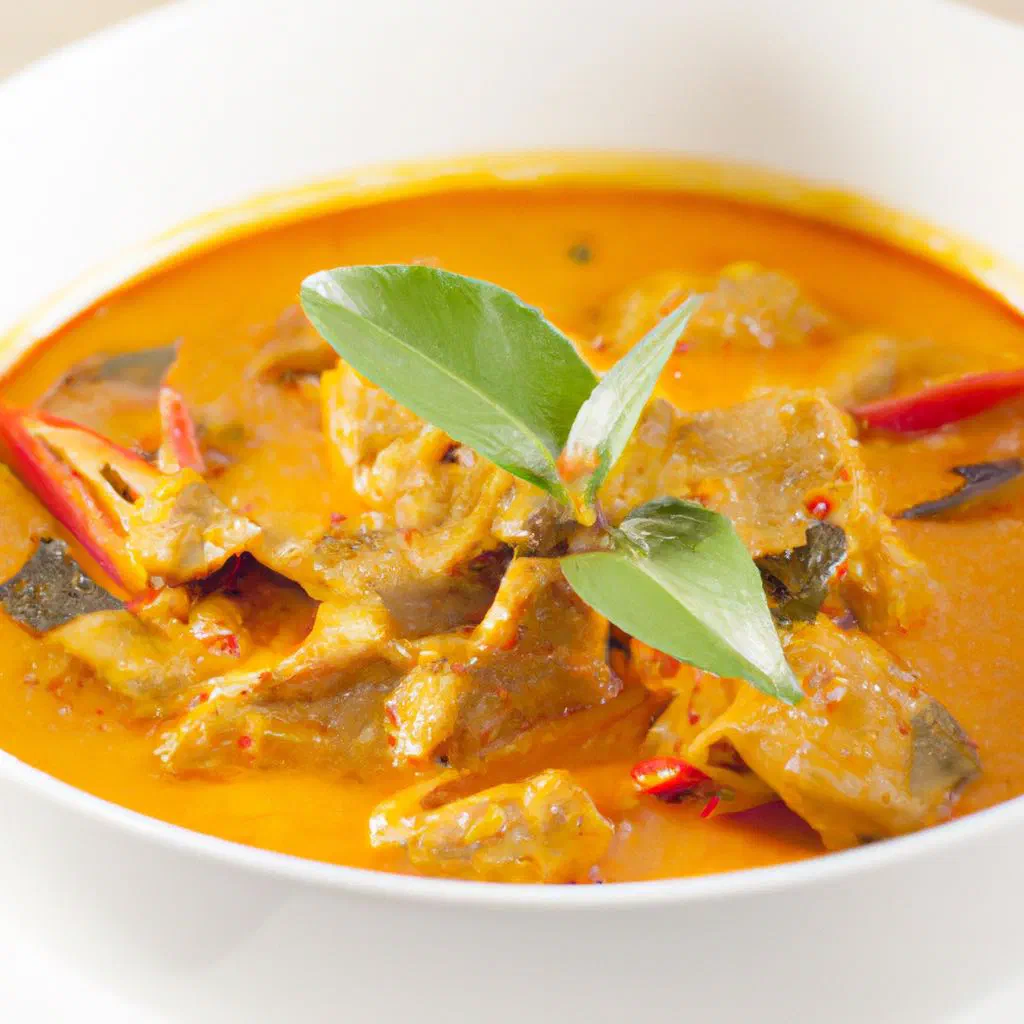
Treat yourself to Panang Curry, one of Thailand’s most beloved dishes. This rich, creamy curry brings together silky coconut milk, tender chicken and a fragrant blend of exotic spices. Mildly spicy yet beautifully balanced between sweet, salty and sour, it is the kind of comforting meal that feels both indulgent and effortless. With its signature thick sauce and the unmistakable aroma of kaffir lime leaves, this Thai classic brings a taste of Southeast Asia straight to your kitchen.
About Panang Curry
Panang Curry, also known as Phanaeng or Penang, is a creamy, rich and mildly spiced curry deeply rooted in Thai cuisine. The dish is defined by its thick, luxurious consistency and the use of kaffir lime leaves, which lend it a wonderfully distinctive aroma. It is regarded as one of the national dishes of Thailand, capturing both the culinary variety and the depth of flavour that the country is famous for. Its real character lies in the complex balance between sweetness, heat, sourness and saltiness, combined with the unmistakable taste of Panang curry paste that makes it truly incomparable.
Ingredients (serves 1–2)
- 200 ml coconut milk
- 150 g chicken breast fillet, cut into strips
- 2 tablespoons Panang curry paste
- 1 tablespoon fish sauce
- 1 teaspoon palm sugar
- 4 kaffir lime leaves, stalks removed and finely shredded
- 1 red chilli, thinly sliced
- Thai basil leaves, to garnish
- Optional: 100 g mixed vegetables (e.g. peppers, mangetout)
Shopping for the ingredients
For the most authentic flavour, an Asian supermarket is your best port of call. There you will find specialist products such as Panang curry paste, kaffir lime leaves and fish sauce. When choosing your coconut milk, look for a high-quality variety with a generous coconut content, as this gives a creamier, richer curry. For the chicken, it is well worth seeking out fresh, good-quality meat. Most other items are easy to source, and many of the specialist pastes can also be ordered online.
Preparing the dish
Start by getting all your ingredients ready to go: slice the chicken into strips, cut the chilli into thin rounds and finely shred the kaffir lime leaves. This little bit of groundwork makes the cooking far smoother and keeps things stress-free at the stove. If you are adding vegetables, prepare them now by cutting them into bite-sized pieces. A well-organised work surface lets the whole dish come together quickly and easily.
Step-by-step instructions
- Heat half of the coconut milk in a wok or deep pan over medium heat.
- Add the Panang curry paste and fry, stirring, for about 2 minutes until fragrant.
- Add the chicken and cook until it is browned on all sides.
- Pour in the remaining coconut milk, stir through the fish sauce and palm sugar, and let it simmer for around 5 minutes.
- Add the kaffir lime leaves and the optional vegetables, then cook the curry for a further 5 minutes.
- Taste the curry and adjust the seasoning if needed.
- Spoon the curry into bowls and garnish with red chilli and Thai basil leaves.
Gluten-free / lactose-free version
Panang curry is naturally lactose-free, as its creaminess comes entirely from coconut milk rather than dairy. To make it fully gluten-free, swap the fish sauce for a certified gluten-free version or tamari, and double-check that your curry paste contains no hidden wheat-based thickeners. Served with steamed jasmine rice rather than noodles, this is a dish that almost everyone can enjoy without compromise.
Tips for vegans and vegetarians
This curry adapts beautifully to a vegan or vegetarian table. Replace the chicken with firm tofu or a colourful mix of vegetables such as aubergine, peppers and mangetout. Swap the fish sauce for light soy sauce or tamari to keep all the savoury depth without any animal products, and make sure your curry paste is free of shrimp paste. The coconut milk does the heavy lifting on richness, so a plant-based version loses none of its luxurious texture.
More tips and tricks
To intensify the aroma, try stirring a handful of chopped peanuts into the curry before you add the chicken. They bring a lovely nutty depth that suits Panang especially well. It also helps to let the curry rest for a few hours, or even overnight, so the flavours have time to develop and mingle. A gentle simmer rather than a rapid boil keeps the coconut milk smooth and the sauce silky.
Adapting the recipe to your taste
The recipe is easy to tailor to your own preferences. Add more curry paste if you like things hotter, or stir in a little extra palm sugar for a sweeter, mellower finish. A squeeze of lime at the end sharpens everything up nicely, much as it does in a Gaeng Massaman.
Ingredient substitutions
If you cannot find Panang curry paste, red curry paste makes a good stand-in, giving a similar warmth if a touch more heat. Kaffir lime leaves are hard to replicate, but in a pinch a little lime zest with a squeeze of lime juice will do. Brown sugar can replace palm sugar, and soy sauce or tamari work in place of fish sauce for a vegetarian version. These swaps let you adapt the recipe to whatever you have to hand, just as you might when cooking a Kaeng Ped.
Drink pairing ideas
A light Riesling or Gewürztraminer pairs well with the rich, spiced flavours of Panang curry, their gentle sweetness echoing the curry’s own balance. For something non-alcoholic, fresh coconut water or a light iced tea keeps the palate refreshed without overwhelming the dish. A chilled, lightly sweetened Thai iced tea is another classic match that complements the curry’s warmth beautifully.
Serving and presentation ideas
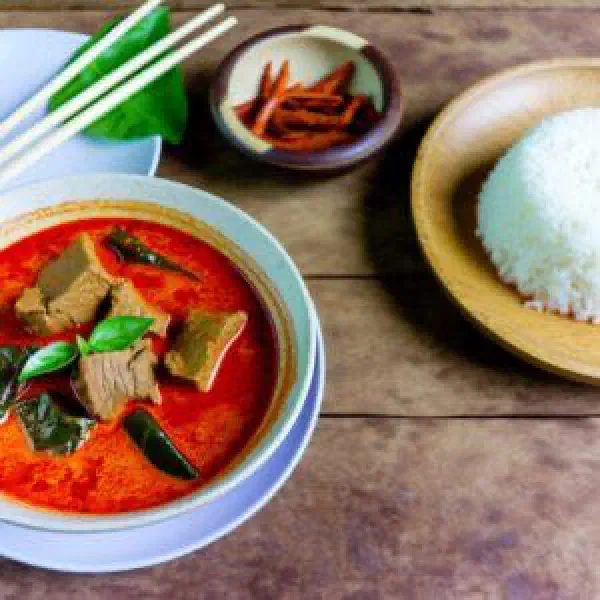
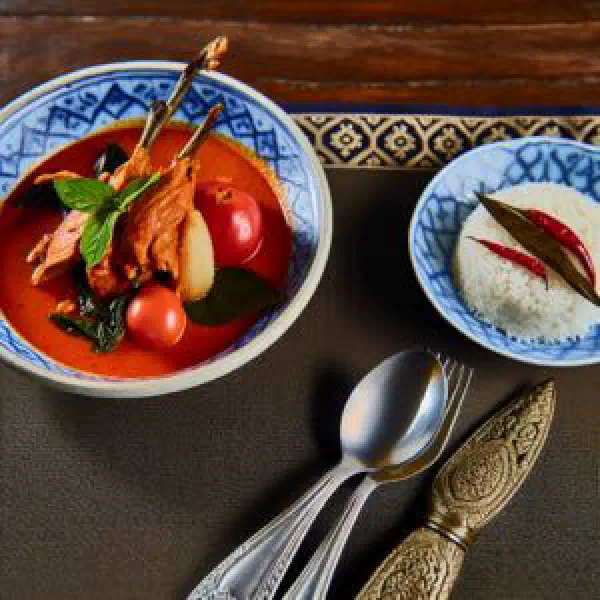
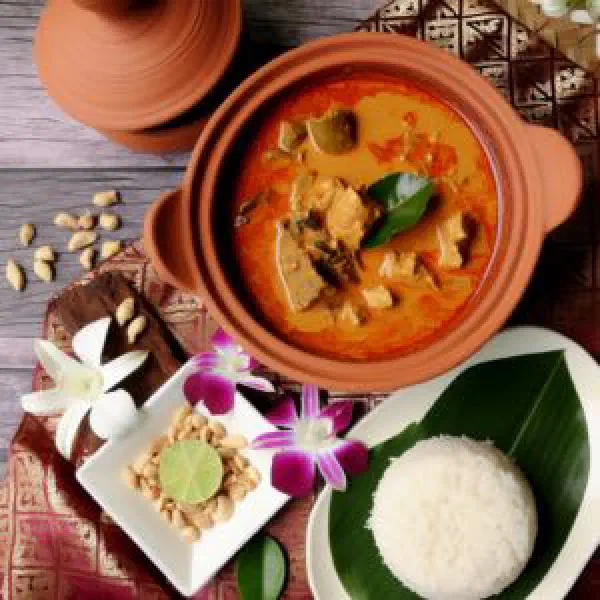
Serve your Panang curry in an attractive, deep bowl to show off its glossy sauce. Top it with Thai basil leaves and slices of red chilli to add colour and texture, and finish with a scattering of crushed peanuts if you like. Steamed jasmine rice is the ideal accompaniment, soaking up the aromatic sauce perfectly. Arranged with a few fresh herbs alongside, it makes for an inviting and elegant plate.
A bit of history
Panang curry takes its name from the historic ‘Penang’ region, today part of Malaysia. Over the years it was shaped by Thai influences and gradually became a firm part of Thailand’s culinary identity. Its distinctive use of kaffir lime leaves and its thick, creamy consistency set it apart, making it an unmistakable and much-loved highlight of Thai cuisine. A relative newcomer compared with some dishes, it has nonetheless earned a treasured place on tables across Southeast Asia.
More recipe ideas
Summary: Panang Curry
Panang curry is an exotic, aromatic dish that captures the spirit of Thai national cuisine. This recipe offers a balance of rich flavours and a creamy texture, achieved through the careful choice and preparation of quality ingredients. The instructions make it easy to adapt the dish to your own preferences while ensuring every bowl is both delicious and beautifully presented. Give this Thai classic a try, its warm, fragrant comfort is sure to win you over.