National Dish Thailand: Pu Pad Pong Karee (Recipe)
In this article
Discover Pu Pad Pong Karee, one of Thailand’s most loved seafood dishes. This wok-fried favourite brings together tender crab and a silky, golden curry sauce for a meal that is rich, comforting and full of warmth. With its gentle spice and mellow coconut notes, it captures the exotic side of Thai cooking while remaining surprisingly easy to recreate at home. Bring a touch of the Bangkok seafood houses straight to your own kitchen.
About Pu Pad Pong Karee
Pu Pad Pong Karee is a popular Thai dish that wins people over with its unique combination of spices and ingredients. It is known for its bold flavour and the gentle curry note that makes it a real highlight. Originally from Thailand, it now appears on the menus of Thai restaurants all over the world. The star ingredient, crab, is rich in protein and nutrients, offering plenty of health benefits alongside its delicate, sweet taste.
Ingredients (serves 1–2)
- 200g crab meat
- 1 tablespoon yellow curry powder
- 2 tablespoons soy sauce
- 1 tablespoon oyster sauce
- 2 eggs
- 1 onion, chopped
- 2 cloves garlic, chopped
- 1 pepper, cut into strips
- 100 ml coconut milk
- Spring onions, chopped
- Fresh coriander, to garnish
- Salt and pepper to taste
- Oil for frying
Shopping for the ingredients
When shopping for the ingredients, it is important to look out for freshness and quality. Choose fresh crab meat from sustainable farming or fishing wherever possible. The eggs should ideally be organic, and the vegetables crisp and fresh. Take care to buy your curry powder from a trusted producer to guarantee the best possible flavour.
Preparing the dish
Start by getting everything ready: wash and cut all the ingredients thoroughly so you lose no time once you begin cooking and the dish comes together quickly. Finely chop the onion and garlic, and set the other ingredients within easy reach. Prepare a pan with a little oil so that everything is ready to go for the cooking itself.
Step-by-step instructions
- Heat the oil in a large pan over medium heat.
- Add the chopped onion and garlic and fry until fragrant.
- Now add the pepper strips and the crab meat and stir-fry everything together.
- Mix the curry powder, soy sauce and oyster sauce together in a bowl.
- Beat the eggs in a separate bowl until well combined.
- Pour the beaten eggs over the crab mixture and stir everything together well.
- Add the coconut milk and let it simmer gently until the sauce thickens.
- Garnish with chopped spring onions and fresh coriander, then serve.
Gluten-free / lactose-free version
To make the dish gluten-free, you can swap the soy sauce for a gluten-free alternative, bear in mind that most soy sauces contain gluten. For a lactose-free version you can simply use the standard ingredients, as the dish contains no dairy in the first place. Just make sure that the curry powder also has no hidden gluten or milk components.
Tips for vegans and vegetarians
For a vegan version of this dish, you can replace the crab meat with tofu or jackfruit. These alternatives are rich in protein and are perfect for mimicking the texture and flavour of the original. The eggs can be swapped for aquafaba (chickpea water) or a plant-based egg replacer. Use a vegan oyster or soy sauce to keep the dish full and rounded in flavour. For another satisfying meat-free option, try the vegetable stir-fry Pad Pak Bung.
More tips and tricks
Use fresh ingredients to keep the authentic flavour intact. Take care to cook the crab meat only briefly so that it stays juicy and tender. Experiment with different vegetables such as courgette or carrots for extra colour and texture in the dish. To adjust the heat, simply use more or less curry powder to suit your own taste.
Adapting the recipe to your taste
The recipe is easy to adapt to personal preference. For a milder version, use less curry powder or try a mix of yellow and red curry. If you like it especially hot, add extra chilli flakes or fresh chillies. The dish can also be varied by adding more seafood or fish, much like the seafood medley in Yam Talay.
Ingredient substitutions
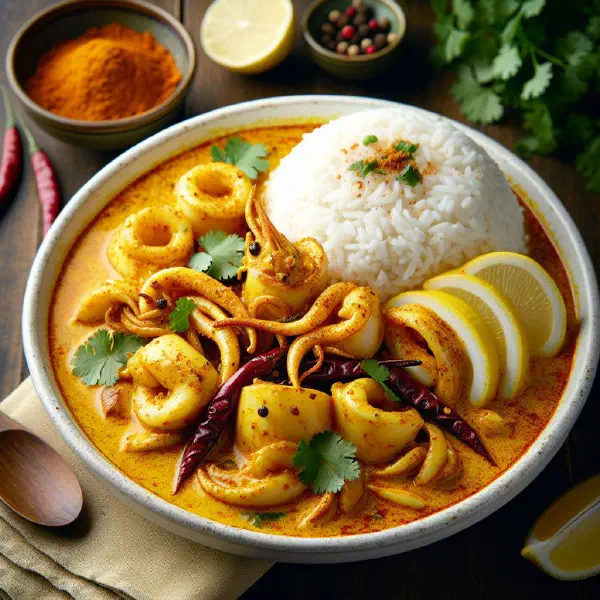
There are several alternatives that work brilliantly in this dish. Instead of crab meat, you can use chicken or beef strips. If you would rather skip the oyster sauce, a mix of soy sauce and hoisin sauce makes a good replacement. In place of coconut milk you could also use almond milk or another plant-based milk. The same curry base also shines with squid in the closely related Pla Muk Pad Pong Karee.
Drink pairing ideas
As the dish is fairly bold in flavour, lighter drinks pair particularly well. A refreshing white wine, such as a Riesling, goes nicely alongside it. Alternatively, serve a Thai beer like Singha or Chang. A cup of green tea or jasmine tea also harmonises beautifully with the aromas of the dish.
Serving and presentation ideas
Serve the dish on a large plate and garnish it with fresh coriander and lime wedges. Set out a small bowl of chilli flakes as well, so that everyone can add extra seasoning to taste. The dish takes on a decorative touch when presented on a banana leaf or in a traditional Thai bowl. This little detail lifts the look of the plate and gives the meal an authentic feel.
A bit of history
Pu Pad Pong Karee originally grew out of Sino-Thai cooking traditions, bringing together elements of both Chinese and Thai cuisine. The dish gained popularity in the 1960s and became a standard recipe in Thai homes and restaurants. It symbolises the culture and culinary diversity of Thai cuisine, harmoniously combining different flavours and ingredients. Today it is known worldwide and offered in many variations, all of which preserve the heart of the traditional preparation.
More recipe ideas
Summary: Pu Pad Pong Karee
Pu Pad Pong Karee is a culinary highlight of Thai cuisine. With fresh ingredients and a unique blend of spices, this dish offers an unmistakable flavour. It is easy to adapt to personal preference and suits meat lovers, vegans and vegetarians alike.