National Dish Thailand: Saku Sai Moo (Recipe)
In this article
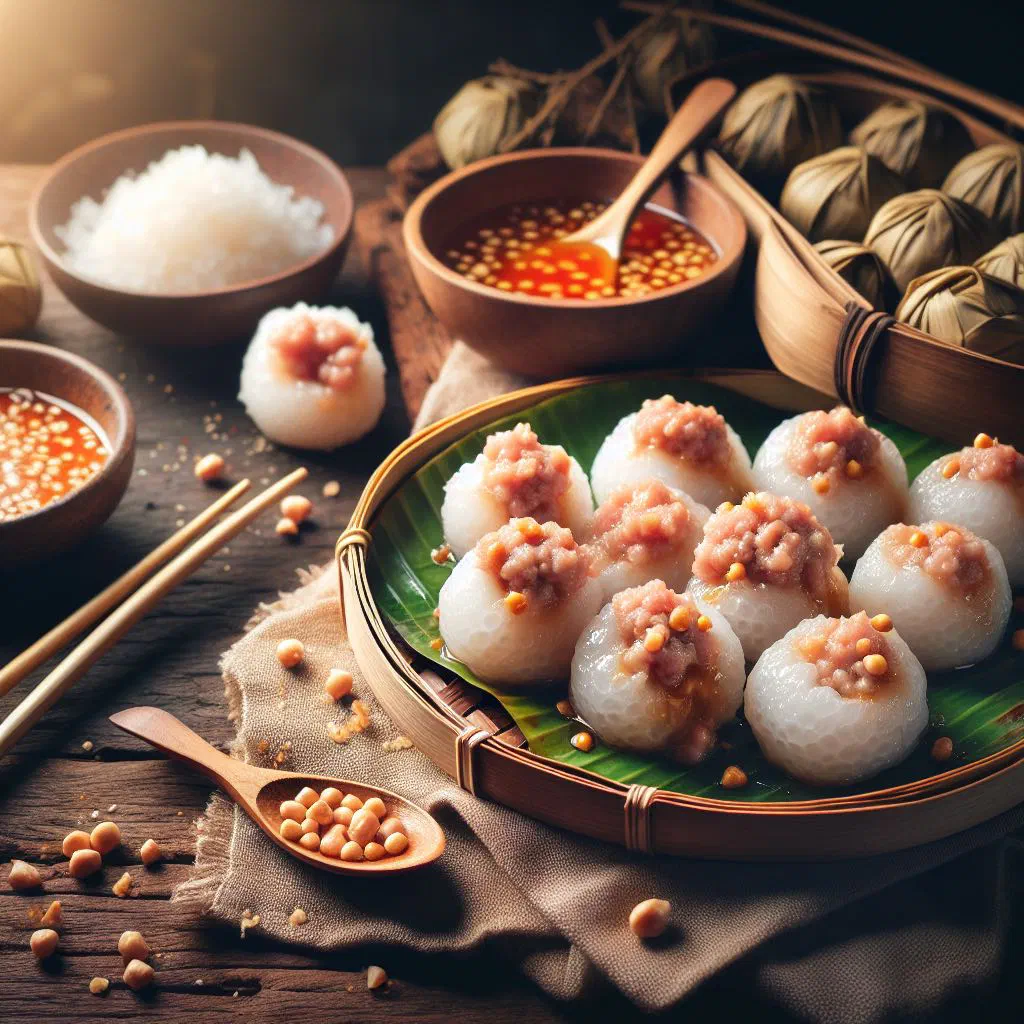
Meet Saku Sai Moo, one of Thailand’s most moreish little snacks. These soft, translucent steamed dumplings wrap a savoury pork filling in a glistening coat of tapioca, delivering a real burst of flavour in every bite. Seasoned with fragrant aromatics and served with a punchy dipping sauce, they make a brilliant appetiser or street-style nibble. Bring the lively spirit of a Thai market stall straight to your own kitchen.
About Saku Sai Moo
Saku Sai Moo is a much-loved snack found right across Thailand, and a wonderful way to enjoy traditional Thai cuisine. These small steamed parcels are delicious and endlessly satisfying, thanks to a filling of seasoned pork balanced with aromatic spices. Served with a tasty dipping sauce, they are often enjoyed as an appetiser or a light bite that shows off the bold, harmonious flavours of the country to perfection.
Ingredients (serves 1–2)
- 200 g rice flour
- 150 g minced pork
- 1 tsp soy sauce
- 1 tsp fish sauce
- 1 tsp sugar
- 1 tsp garlic, finely chopped
- Water, as needed
- Fresh coriander leaves, to garnish
Shopping for the ingredients
To make Saku Sai Moo, start by gathering all the ingredients you need. Most of them are easy to find in Asian grocery shops or a well-stocked supermarket. Rice flour is the main component, so be sure to choose the right type to achieve the texture you are after. The freshness of the aromatics matters too, as they are key to the flavour of the finished dish.
Preparing the dish
Preparing Saku Sai Moo is fairly straightforward, though it does call for a little patience. Begin by mixing all the filling ingredients together in a bowl and leaving them to mingle for a while. Meanwhile, make the dough by combining the rice flour with water until you have a smooth, pliable mixture. Aim for a consistency that is not too sticky, so the dumplings are easy to shape.
Step-by-step instructions
- In a bowl, mix the minced pork thoroughly with the soy sauce, fish sauce, sugar and garlic.
- In a separate bowl, stir the rice flour and water together into a smooth dough.
- Flatten small portions of dough and place a spoonful of the filling in the centre of each one.
- Fold the dumplings over and seal them carefully so the filling does not escape during cooking.
- Steam the dumplings for about 15–20 minutes, until they turn translucent.
- Garnish with fresh coriander before serving, alongside a sauce of your choice.
Gluten-free / lactose-free version
If you are sensitive to gluten, you can make Saku Sai Moo with a special gluten-free flour. Choose a blend that steams well so the texture stays right. For a lactose-free option the dish is ideal in any case, as it contains no dairy at all. Look into the available gluten-free alternatives to the traditional ingredients to be sure the recipe really suits your needs.
Tips for vegans and vegetarians
For anyone after a vegan or vegetarian version of Saku Sai Moo, there are plenty of options. Simply swap the pork for a mixture of chopped tofu, vegetables or soya mince. The same seasonings can be used so none of the flavour is lost. Mushrooms are an excellent choice too, keeping the filling juicy and full of savoury depth.
More tips and tricks
A handy trick for improving the texture of the dough is to let it rest for a little while after mixing. Adding a splash of sesame oil to the filling also intensifies the flavour beautifully. Experiment with different spices to adjust the dish to your own taste, a little chilli brings a fiery kick, while other herbs can lend extra freshness.
Adapting the recipe to your taste
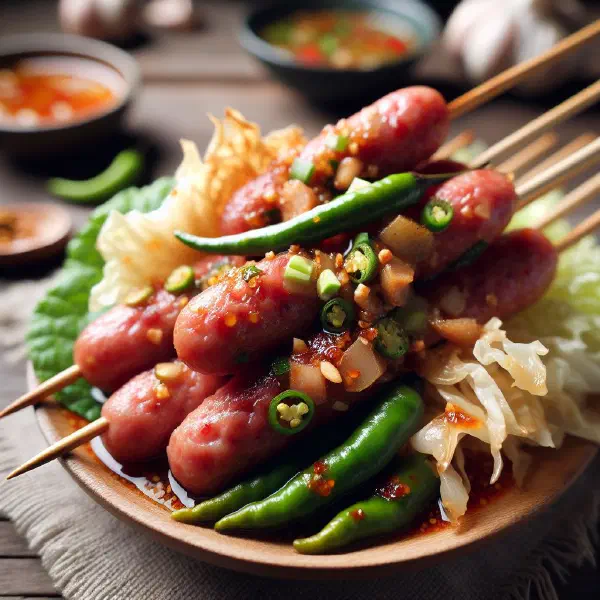
Depending on what you fancy, the recipe is easy to tweak. Prefer it spicier? Add more chilli or serve with a hot sauce on the side. For a sweet note, fold pieces of pineapple into the filling for a refreshing contrast to the savoury pork. The possibilities are endless, and the real secret is to have fun trying things out. If you enjoy that sweet-savoury balance, the Sai Krok Preow Wan sausages are well worth a look too.
Ingredient substitutions
There are some tasty alternatives for several of the ingredients. You could replace the pork with chicken or beef for a different flavour, much as you might in a hearty Gaeng Massaman. Vegans can use soya or lentil protein to mimic the texture and taste. Instead of fish sauce, a vegan version or a dash of Worcestershire sauce will give you that all-important umami depth.
Drink pairing ideas
A range of drinks goes wonderfully with Saku Sai Moo. A robust Asian-style beer is a great choice, as it complements the flavours nicely. If you would rather stay alcohol-free, try green tea or a refreshing lime water to balance the bold seasoning. Fruit juices make a lovely accompaniment too, especially mango or pineapple.
Serving and presentation ideas
Presentation is a key part of any dish. Serve the Saku Sai Moo on a decorative plate, garnished with fresh coriander leaves and slices of lime. Small bowls of different dipping sauces make an excellent focal point. Arrange everything attractively to impress your guests and make the experience truly memorable.
A bit of history
The origins of Saku Sai Moo lie deep in Thai culture, where cooking and preparing food play an important role in social life. The ingredients and methods have evolved over generations and reflect the country’s regional diversity. Every region of Thailand has its own variations, shaped by local flavours and produce, a richness you can taste throughout Thai cuisine. This dish is a part of Thai tradition and hospitality.
More recipe ideas
Summary: Saku Sai Moo
Saku Sai Moo is a delicious window into Thai cuisine, pleasing lovers of traditional flavours while offering plenty of scope for adaptation. With a few simple ingredients and the right preparation, you can bring a piece of Thailand straight into your kitchen and create truly memorable moments of enjoyment.