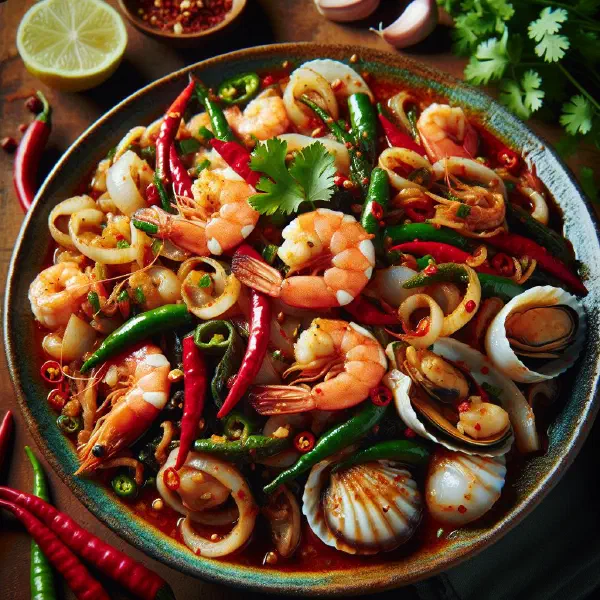
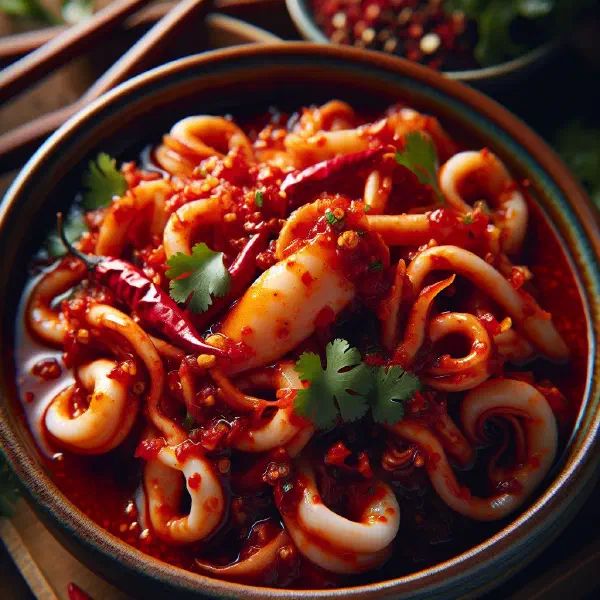
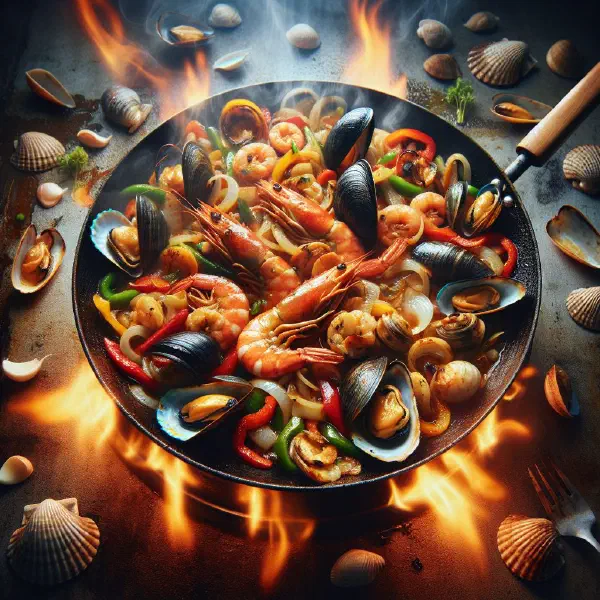
National Dish Thailand: Suki Haeng Talay (Recipe)
In this article
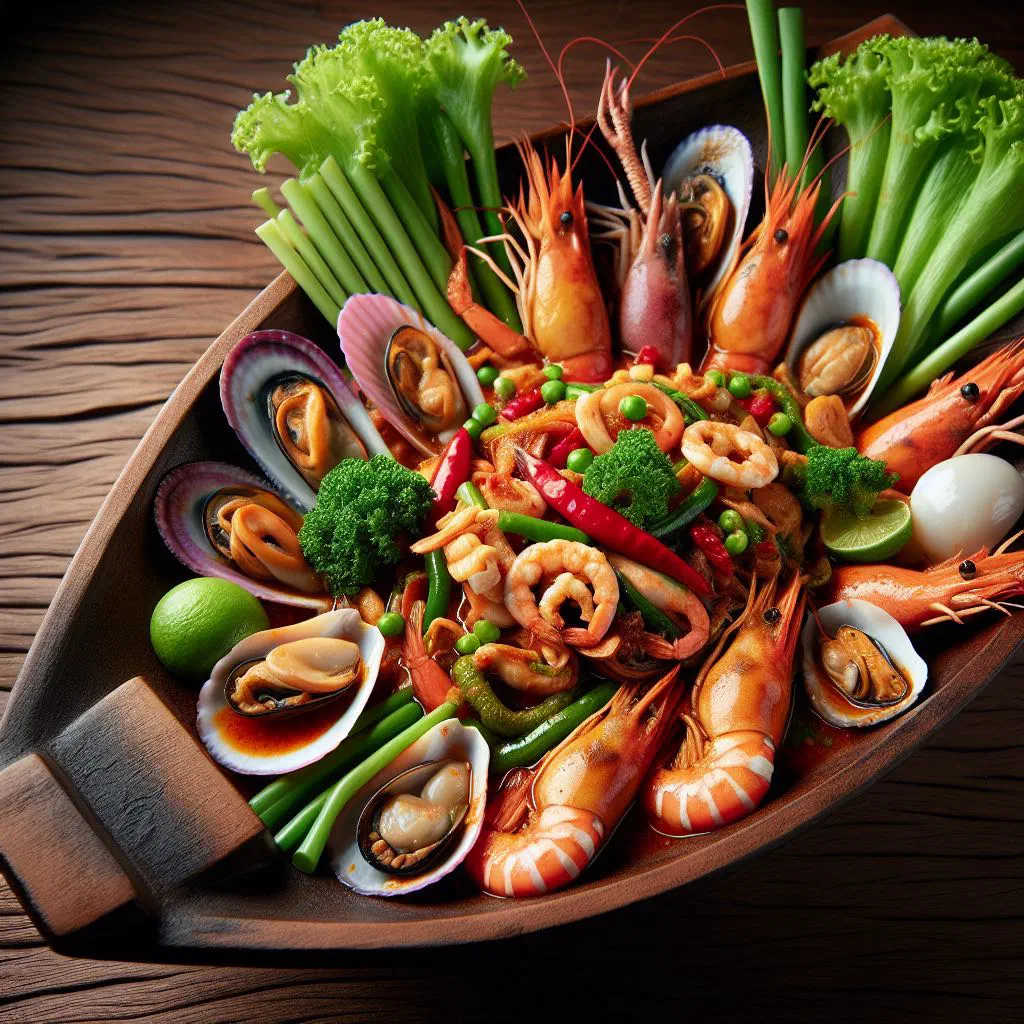
Say hello to Suki Haeng Talay, a bright Thai favourite that brings the buzz of a seaside food stall straight to your kitchen. This spicy seafood stir-fry tumbles together plump prawns, tender squid and crunchy vegetables in a fragrant, savoury sauce. It is a feast for the eyes as much as the palate, with bold colours and lively aromas that beg to be shared. Perfect for a sociable supper with friends or family, it delivers the warmth and zing of Thailand in every bite.
About Suki Haeng Talay
Suki Haeng Talay is one of Thailand’s most popular dishes and a firm favourite among lovers of Asian cooking. This delicious spicy seafood pan combines fresh ingredients such as prawns, squid and crisp vegetables with an aromatic, savoury broth. The dish is a treat not only for the palate but for all the senses, thrilling you with its lively colours and fragrant aromas. It is the perfect choice for a convivial dinner with friends or family, bringing a touch of Thai flair right to your table.
Ingredients (serves 1–2)
- 200 g fresh prawns
- 150 g squid, cut into rings
- 1 small carrot, thinly sliced
- 1 pepper, cut into strips
- 2 spring onions, sliced into rings
- 1 garlic clove, finely chopped
- 2 cups vegetable stock
- 2 tablespoons soy sauce
- 1 tablespoon fish sauce
- Chilli paste, to taste
- Oil, for frying
Shopping for the ingredients
When shopping for suki haeng talay, it is well worth choosing the freshest seafood you can find. Head to a good fishmonger or an Asian grocery to track down the best ingredients. Fresh vegetables such as peppers and carrots make a real difference to both the flavour and the look of the dish. Take care, too, to pick a good-quality soy sauce and fish sauce, as these form the backbone of the aromatic, savoury sauce.
Preparing the dish
Good preparation is key to bringing out every flavour in suki haeng talay. Cut the vegetables into even pieces so they cook in the same amount of time. The seafood should be thoroughly cleaned and prepped so it stays tender rather than turning rubbery during cooking. Marinate the prawns and squid in a little soy sauce for around 10 minutes to give them an extra layer of flavour.
Step-by-step instructions
- Heat a little oil in a pan or wok over medium heat.
- Add the chopped garlic and fry briefly until fragrant.
- Add the prepared seafood and fry for 2–3 minutes, until just cooked.
- Add the sliced vegetables and cook everything for a further 3–4 minutes.
- Pour in the stock and season with soy sauce, fish sauce and chilli paste. Let it simmer for 5 minutes.
- Taste the dish and adjust the seasoning to your liking.
- Serve suki haeng talay hot and garnish as you wish with fresh herbs such as coriander.
Gluten-free / lactose-free version
To make suki haeng talay gluten-free, swap the soy sauce for a gluten-free soy sauce or tamari. These alternatives offer the same umami depth that is so characteristic of the dish. No special tweaks are needed for a lactose-free version, since most of the ingredients are naturally free of dairy. That said, keep an eye out for hidden lactose in processed products and reach for fresh, unprocessed ingredients where you can.
Tips for vegans and vegetarians
For vegan and vegetarian versions of suki haeng talay, you can replace the seafood with tofu or seitan. These protein-rich alternatives sit happily in the sauce and soak up the aromas beautifully. You might also add more vegetables, such as broccoli or courgette, to make the dish even more varied. Use vegetable stock and a vegan-friendly soy sauce to be sure every ingredient is fully plant-based, much like the all-vegetable approach in Pad Pak Bung.
More tips and tricks
A few handy pointers can make cooking suki haeng talay much simpler. Prepare all your ingredients in advance so the cooking itself runs quickly and smoothly. Use a properly hot wok to sear the ingredients fast and intensify their flavour. Go gently with the seasoning; it is far easier to add more along the way than to rescue a dish that has turned out too spicy once it is done.
Adapting the recipe to your taste
Tailor suki haeng talay to your own palate by experimenting with different vegetables or proteins. Like it really fiery? Add more chilli paste or fresh chillies. If you prefer less salt, ease off on the soy sauce and add a squeeze of lemon instead to lift the freshness. The joy of cooking is that you can be creative and shape the dish entirely to your liking.
Ingredient substitutions
If you find yourself missing some of the ingredients listed here, there are plenty of alternatives. In place of squid, for example, you could use other seafood such as mussels, the same generous, shellfish-forward spirit you will find in Yam Talay. For the broth you can use chicken stock if you are not cooking vegetarian or vegan.
Drink pairing ideas
The right drink can greatly enhance the experience of eating suki haeng talay. Try it with an Asian beer, which sits nicely alongside the spicy flavours. A glass of chilled white wine, such as a Riesling, also complements the dish wonderfully. If you prefer alcohol-free options, ginger tea or freshly squeezed lime juice topped up with soda make excellent companions.
Serving and presentation ideas
Presentation plays a big part in serving suki haeng talay. Use colourful serving plates or bowls to show off the dish’s vivid hues. Garnish with fresh herbs such as coriander or basil to give it a fresh, lively look. A few squeezes of lime juice just before serving add extra brightness and an inviting finishing touch, the kind of zesty seafood flourish that also shines in Tod Mun Goong.
A bit of history
Suki haeng talay has its roots in Thai food culture and is a fine example of the skilful marriage of spices and fresh ingredients. The origins of suki dishes trace back to the Chinese hot pot, which became hugely popular in Thailand. Over the years the dish evolved into a firm fixture of Thai dining. It reflects the sheer variety of Thai flavours and is loved by locals and visitors alike, sitting comfortably within the broader world of Thai cuisine.
More recipe ideas
Summary: Suki Haeng Talay
In short, suki haeng talay is a delicious and versatile dish that brings the flavours of Thailand into your kitchen. With fresh seafood, crisp vegetables and a spicy, savoury broth, it is an ideal choice for anyone who loves Asian cooking. There is plenty of room for creativity. Let this Thai classic inspire you and enjoy the flavours that whisk you straight off to Thailand.