National Dish Tonga: Pele (Recipe)
In this article
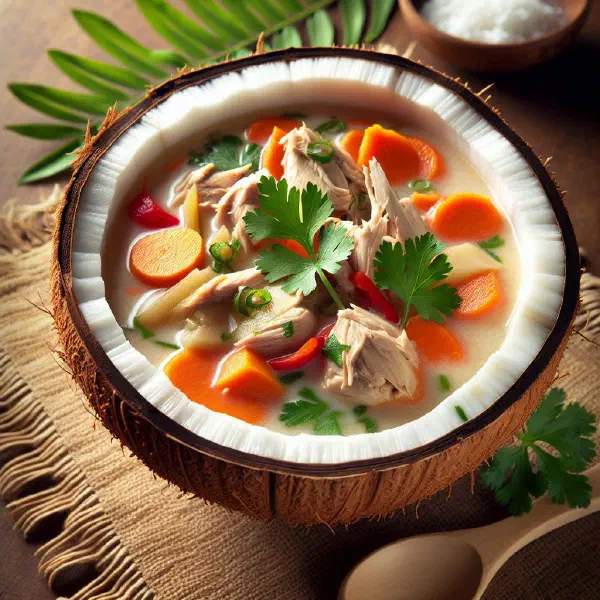
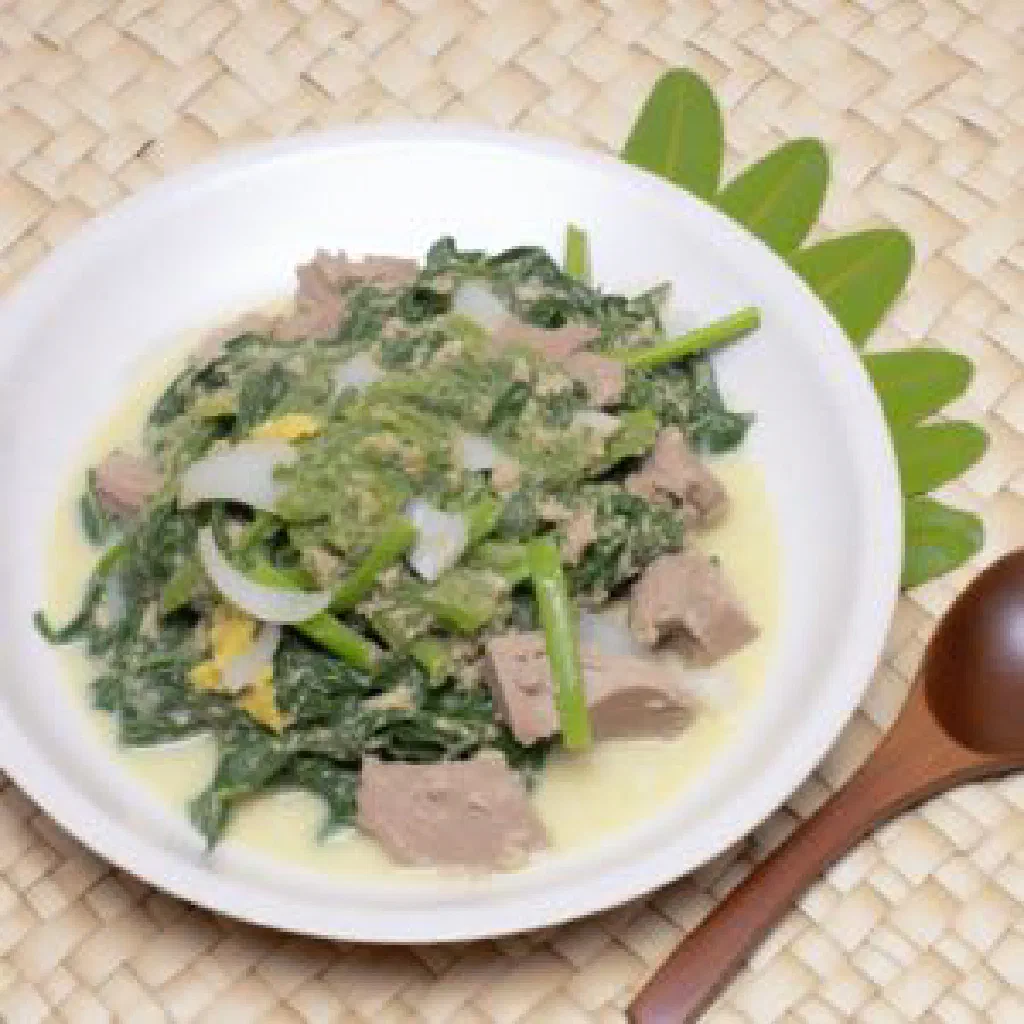
Pele is hibiscus spinach — a soft, slightly mucilaginous leaf grown in Tongan gardens — simmered gently in coconut milk with onion until it collapses into a mild, velvety side dish. It goes with fish, with roast pork, with yam and taro, and it is on the table at almost every Tongan meal.
About Pele
Pele is Tonga’s creamy leafy green dish. Tender green leaves simmer gently in coconut milk with onions until they become a velvety, mild side that suits fish, meat or root vegetables perfectly. A simple but characteristic dish of Pacific island cooking, it brings a piece of the South Seas to the plate, and it is one of the few Tongan vegetables eaten in quantity.
Ingredients (serves 1–2)
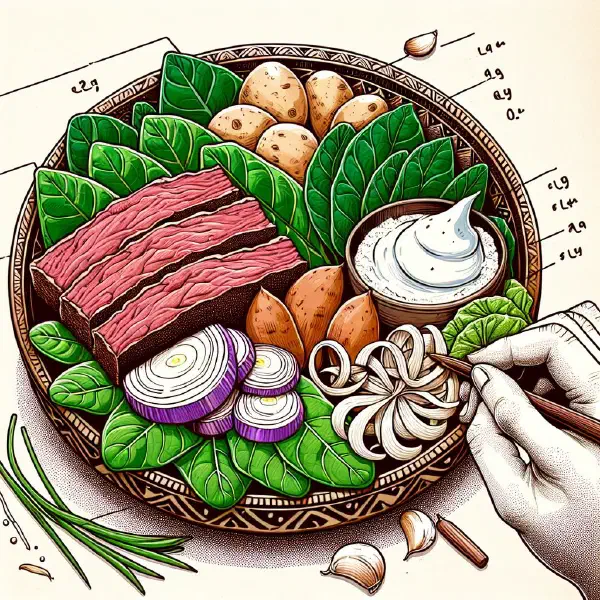
- 300 g pele leaves (chard, spinach or kale as substitutes)
- 1 onion, finely chopped
- 200 ml coconut milk
- 1 tablespoon oil
- Salt, to taste
- Optional: 50 g corned beef or smoked meat, for a heartier version
Shopping for the ingredients
Pele — also called bele or hibiscus spinach — is occasionally found in Pacific and Asian grocers; chard is the closest widely available substitute, with spinach a softer alternative. Full-fat coconut milk is essential; the light versions split and give a watery result.
Preparing the dish
Strip the leaves from any tough stems and wash them. Chop roughly. If using corned beef, genuinely popular across the Pacific, dice it and fry it with the onion at the start.
Step-by-step instructions
- Strip the leaves from tough stems, wash and chop roughly.
- Heat the oil and soften the onion for 5 minutes.
- Add the corned beef now, if using, and fry for 3 minutes.
- Add the leaves with a splash of water and wilt for 3 minutes.
- Pour in the coconut milk.
- Simmer gently for 10 minutes — do not let it boil hard.
- Season with salt.
- Serve hot alongside fish, meat or root vegetables.
Gluten-free / lactose-free version
Pele is naturally gluten-free and lactose-free, coconut milk replaces dairy entirely, as throughout Pacific cooking. Only the optional corned beef needs checking for additives.
Tips for vegans and vegetarians
Without the corned beef, pele is fully vegan and is eaten that way as a matter of course. Greens in coconut milk is the standard Pacific vegetable preparation and needs nothing added.
More tips and tricks
Keep the coconut milk at a gentle simmer, since a hard boil splits it. Do not overcook the leaves, ten minutes is plenty. And season at the end, after the coconut has reduced slightly.
Adapting the recipe to your taste
Onion and garlic can be increased freely. Tinned fish stirred in makes it a fuller meal. Wrapped in taro leaves and baked in an earth oven, the same idea becomes lu, the Tongan classic.
Ingredient substitutions
Taro leaves make lu pulu and must be cooked thoroughly. Chard, kale or spinach all substitute for pele. Coconut cream gives a richer result.
Drink pairing ideas
Fresh coconut water is the natural island pairing. Otai, the Tongan fruit and coconut drink, suits a meal. Cold beer works with the richer version.
Serving and presentation ideas
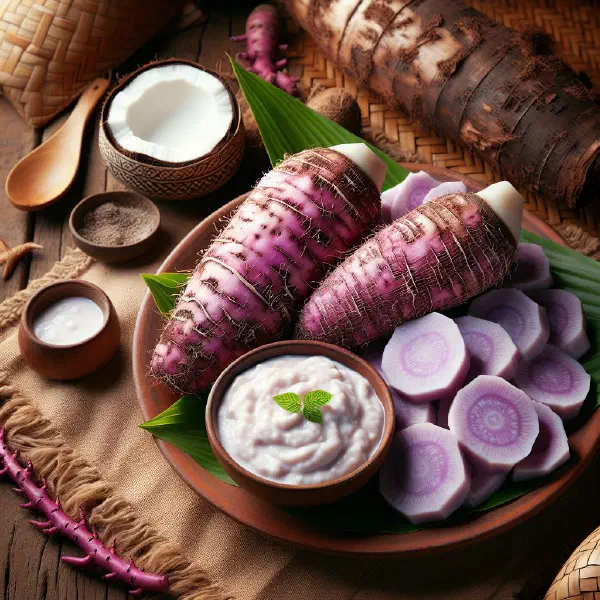
Serve pele hot in a bowl beside grilled fish, roast pork or boiled taro and yam. It is one dish among several at a Tongan meal, all set out together and shared, often at a ‘umu feast cooked in the earth oven.
A bit of history
Tongan cooking rests on root crops, coconut, fish and pork, cooked most traditionally in the ‘umu, an underground oven of hot stones. Leafy greens like pele grow readily in household gardens and provide what the starches do not. It offers a genuine window onto Tongan cuisine.
More recipe ideas
Summary: Pele
Pele is soft green leaves simmered in coconut milk with onion into a mild, velvety side dish. Keep the coconut milk below a boil, cook the greens briefly, and serve it with fish or taro.