National Dish Tunisia: Chakhchoukha (Recipe)
In this article
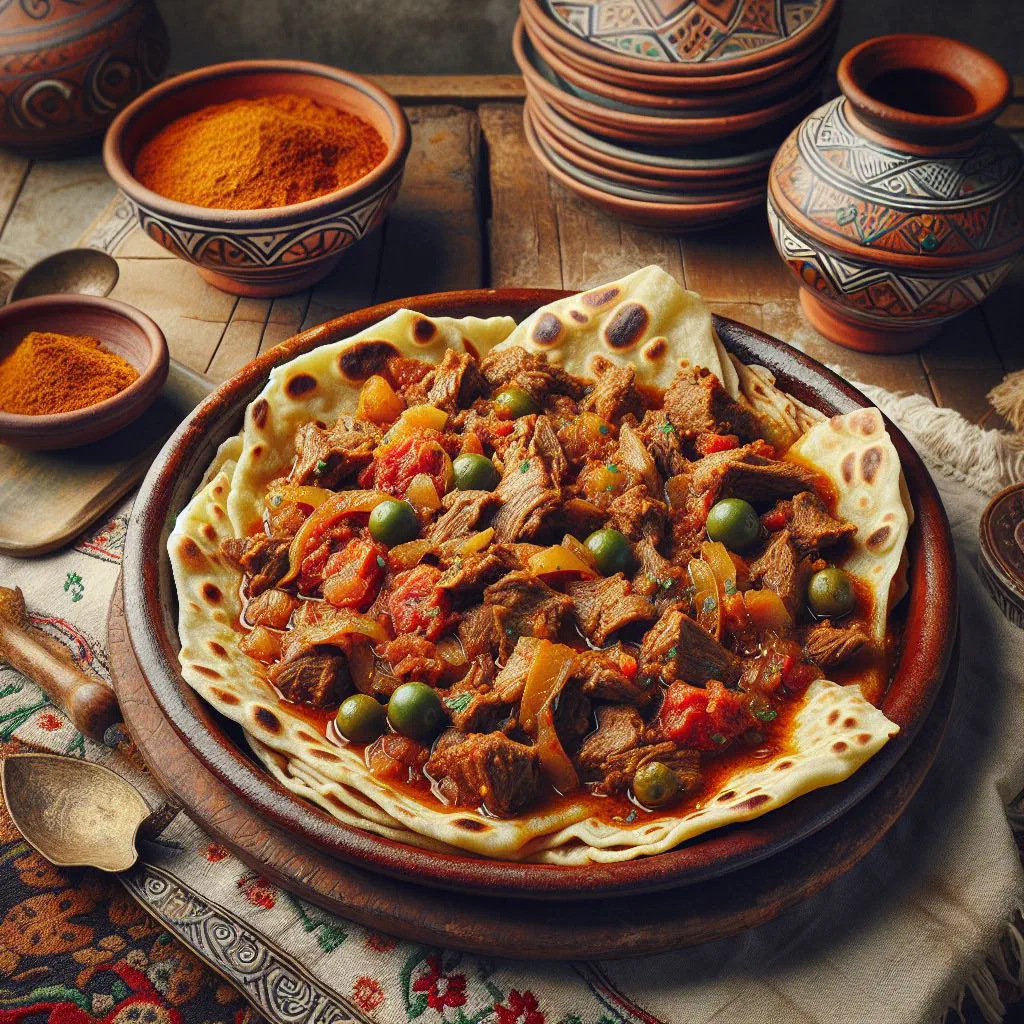
Meet Chakhchoukha, a heart-warming Tunisian classic built around torn pieces of thin flatbread bathed in a rich, spiced sauce. Traditionally shared at family gatherings and celebrations, it brings together tender lamb and colourful vegetables in a fragrant broth scented with cumin and paprika. It is generous, sociable food that turns any meal into an occasion, and a wonderful way to get to know the warmth of the Tunisian table.
About Chakhchoukha
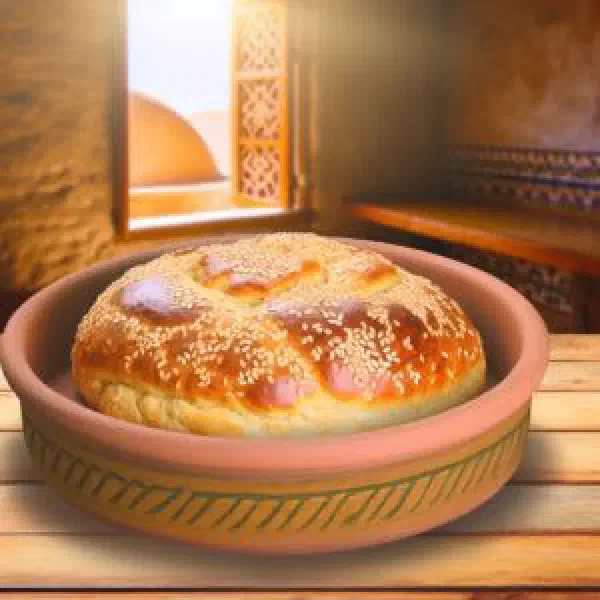
Chakhchoukha is a traditional Tunisian dish that wins people over with both its delicious flavours and its wonderfully varied ingredients. At its heart are fine pieces of flatbread, enjoyed in a convivial atmosphere and often prepared for festive occasions. The combination of spiced meat and fresh vegetables makes for a memorable taste experience. If you want to get to know Tunisian cuisine, Chakhchoukha is an absolute must.
Ingredients (serves 1–2)
- 250 g flour
- 125 ml water
- 200 g lamb or beef
- 1 onion
- 2 carrots
- 1 pepper
- 2 tomatoes
- 2 tbsp olive oil
- 1 tsp cumin
- 1 tsp paprika
- Salt and pepper to taste
Shopping for the ingredients
For an authentic Chakhchoukha, it is worth choosing your ingredients fresh. Visit local markets to track down the best vegetables and meat. Pay particular attention to the quality of the spices, as they are decisive for the flavour of the dish. Many of the spices you need can be found in Asian or North African grocery shops, which usually carry a broad selection.
Preparing the dish
Preparing Chakhchoukha takes a little time and some attention to detail. Begin by peeling and chopping the vegetables. The meat should be cut into small pieces or cubed to shorten the cooking time. It is also important to knead the dough for the flatbread pieces thoroughly, so that it reaches the perfect consistency in the end. Let the dough rest while you attend to the sauce, so it does not become too firm.
Step-by-step instructions
- In a bowl, combine the flour with water and knead well until you have a smooth dough.
- Divide the dough into small pieces and roll them out thinly.
- Heat the olive oil in a large pot and sauté the onion until translucent.
- Add the meat and brown it well until golden, then stir in the spices.
- Add the vegetables and fry for a further 10 minutes.
- Pour in a little water to create a sauce and let everything simmer gently over low heat.
- Add the flatbread pieces to the broth and cook for a few minutes until soft.
- Mix everything together well and serve hot.
Gluten-free / lactose-free version
To prepare Chakhchoukha gluten-free, you can use a gluten-free flour blend in place of ordinary flour. There are plenty of good alternatives on the market that work especially well for making doughs. For a lactose-free version you only need lactose-free milk alternatives where the recipe calls for them. The dish keeps its full aroma either way.
Tips for vegans and vegetarians
For a vegan version of Chakhchoukha, swap the meat for plant-based proteins such as tofu or seitan. You can also vary the vegetables and use whatever is in season. To achieve a distinctive seasoning, be generous with spices like ras el hanout or cumin. Here too the rule is to experiment with the consistency and the aromas until you have created your own personal vegan Chakhchoukha.
More tips and tricks
When making Chakhchoukha, it is important to keep an eye on the temperature while the sauce cooks. Too much heat can cause the sauce to catch and develop an unpleasant taste. You should also make sure the flatbread pieces cook evenly, so the finished dish has a consistent texture throughout. One more tip: let the dish rest briefly after cooking, so the flavours can fully develop.
Adapting the recipe to your taste
Chakhchoukha offers plenty of scope for adaptation. Depending on your personal taste, you can use different kinds of vegetables or types of meat. A popular variation uses chicken instead of lamb. For an extra fiery note you can also add chilli, or a spoonful of Tunisia’s beloved Harissa. Make the most of this flexibility to create a version of Chakhchoukha that suits your palate perfectly.
Ingredient substitutions
There are plenty of alternatives you can turn to when making Chakhchoukha. If you are not keen on lamb or beef, try fish or seafood instead. You can also replace the flatbread pieces with other pasta such as gnocchi to create interesting variations. That keeps the dish exciting and fresh without losing any of its flavourful variety.
Drink pairing ideas
A number of traditional Tunisian drinks go wonderfully with a delicious Chakhchoukha. A popular companion is mint tea, served warm and a perfect match for the spiced character of the dish. An equally suitable choice would be a light, fruity white wine or a refreshing mineral water.
Serving and presentation ideas
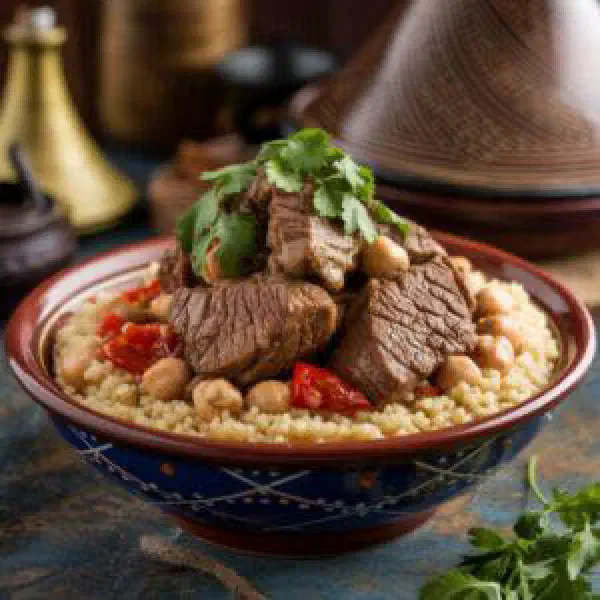
Presentation plays an important part in making Chakhchoukha look as good as it tastes. Serve it in a large bowl so that all your guests can help themselves. Decorate the dish with fresh herbs such as coriander or parsley for a splash of colour. Remember to set your table with colourful tablecloths or crockery to bring out that special Tunisian flair.
A bit of history
The roots of Chakhchoukha reach deep into Tunisian culture and reflect the many influences that have shaped the region over the centuries. The dish is often seen as a testament to the hospitality of the Tunisian people and has a place at every celebration. Historically it stands for the simple, homely cooking of the country, which brings together the best ingredients and aromas. One of the most cherished traditions in Tunisia is to invite family and friends to share a meal together, with Chakhchoukha frequently taking centre stage, much like the celebrated Couscous.
More recipe ideas
Summary: Chakhchoukha
Chakhchoukha is an astonishing Tunisian dish that appeals to with its variety of flavours and textures. The combination of tender flatbread pieces and a richly spiced sauce makes it a perfect meal for sociable occasions. The art of preparing it does take a little practice, but the delicious end result more than repays the effort. Let the Tunisian way of eating win you over, and enjoy this warm-hearted dish with friends and family.