National Dish Tunisia: Couscous (Recipe)
In this article
Couscous in Tunisia is hotter than anywhere else in the Maghreb, because harissa goes into the broth rather than sitting on the side. The fish version, from the coast, is the one Tunisians will name first.
About Couscous
Tunisian couscous is built on a red broth of tomato, harissa and tabil, the local spice blend of coriander, caraway, garlic and chilli. Vegetables and meat or fish cook in it, and the grain is steamed over the top.
UNESCO listed couscous in 2020 jointly for Tunisia, Algeria, Morocco and Mauritania, which avoided a fight.
Ingredients (serves 1–2)
- 1 cup couscous
- 1 cup vegetable stock
- 1 tablespoon olive oil
- 1 teaspoon cumin
- 1 teaspoon paprika
- 1/2 teaspoon salt
- 1/4 teaspoon pepper
- 1 teaspoon lemon juice (optional)
- 1 teaspoon harissa
Shopping for the ingredients
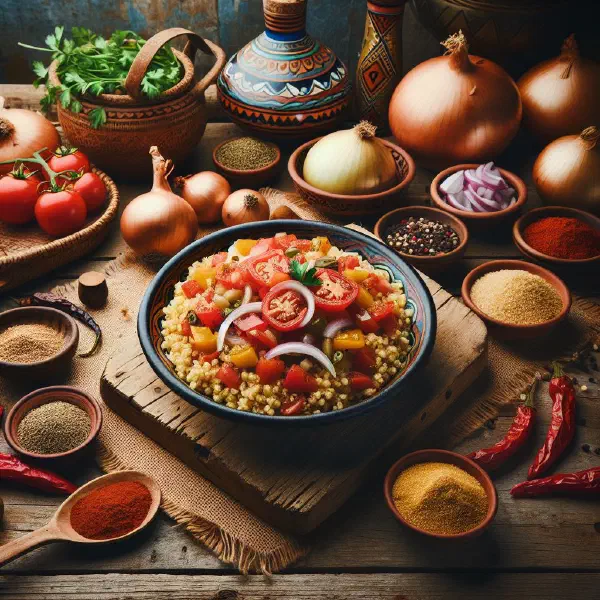
Medium-grain couscous, pre-steamed. Tunisian harissa in a tube or tin is a different and better product than most generic chilli pastes. Tabil is worth buying from a North African shop; caraway is its distinguishing note.
Preparing the dish
For the quick version, measure the liquid at roughly 1.25 parts to 1 part couscous. For the proper version, steam the grain over the broth in a couscoussier, rubbing it with oil and water between steamings.
Step-by-step instructions
- Heat the vegetable stock in a saucepan with the harissa stirred in.
- Add the olive oil, cumin, paprika, salt and pepper and stir to combine.
- Add the couscous to a bowl and toast it briefly in a dry pan if you like.
- Pour the hot stock over the couscous, cover and leave to stand for 5 minutes.
- Fluff up the grains with a fork, working from the outside in.
- If you like, stir through a little lemon juice.
- Serve with harissa on the side for anyone who wants more heat.
Gluten-free / lactose-free version
Couscous is wheat semolina and contains gluten. Millet, sorghum or maize couscous are the alternatives and are steamed identically. There is no dairy in the dish.
Tips for vegans and vegetarians
Vegetable couscous is a standard Tunisian dish, not a substitution, made with chickpeas, pumpkin, turnip and carrot in the same harissa broth. It is what is eaten in poorer households and during fasting.
More tips and tricks
Fluff with a fork or your fingers, never a spoon. Serve extra broth in a jug, since the grain drinks it. And put harissa on the table: Tunisians add more, and how much is a matter of personal preference rather than a fixed recipe.
Adapting the recipe to your taste
Fish couscous is the coastal version and arguably the best. Masfouf is the sweet version with dates and nuts, eaten at Ramadan. More harissa is the usual direction.
Ingredient substitutions
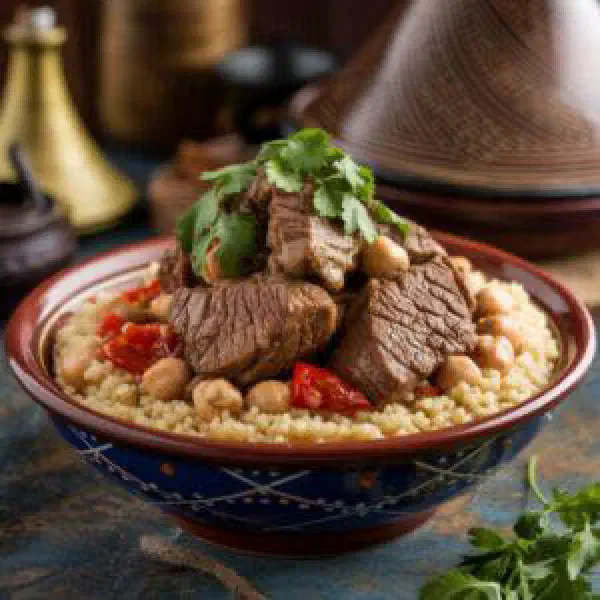
Barley couscous is the older Berber grain. Any vegetable belongs: turnip, pumpkin, cabbage, chickpeas. Lamb, chicken or fish.
Drink pairing ideas
Mint tea with pine nuts after the meal. Leben, the fermented milk, with it. Tunisia makes decent wine and a robust red suits the harissa.
Serving and presentation ideas
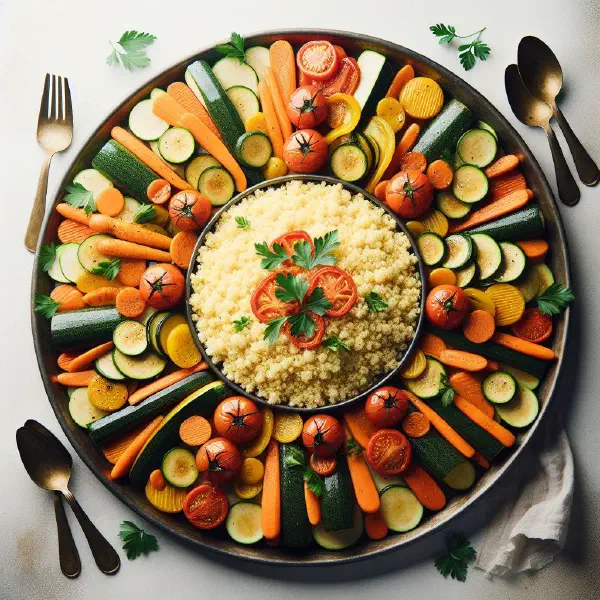
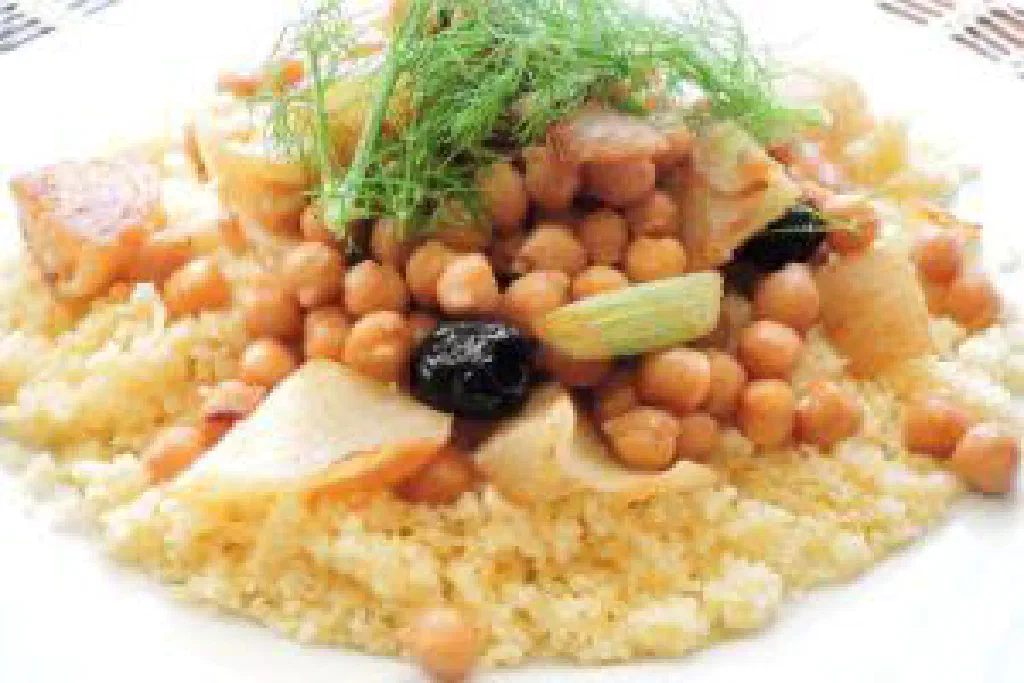
Pile the couscous in a wide shallow dish, make a well, arrange the vegetables and meat in it and pour broth over. Extra broth in a jug and harissa in a small bowl. Everyone eats from the shared dish.
A bit of history
Couscous is Berber and predates Arab arrival in North Africa by a long way. Tunisia’s version is distinguished by harissa, which itself only became possible after chillies reached the Mediterranean from the Americas in the sixteenth century. It anchors Tunisian cuisine.
More recipe ideas
Summary: Couscous
Tunisian couscous is steamed semolina served with a harissa-spiked broth and vegetables. Keep the liquid ratio honest, fluff with a fork, and put more harissa on the table.