National Dish Turkey: Hünkar Beğendi (Recipe)
In this article
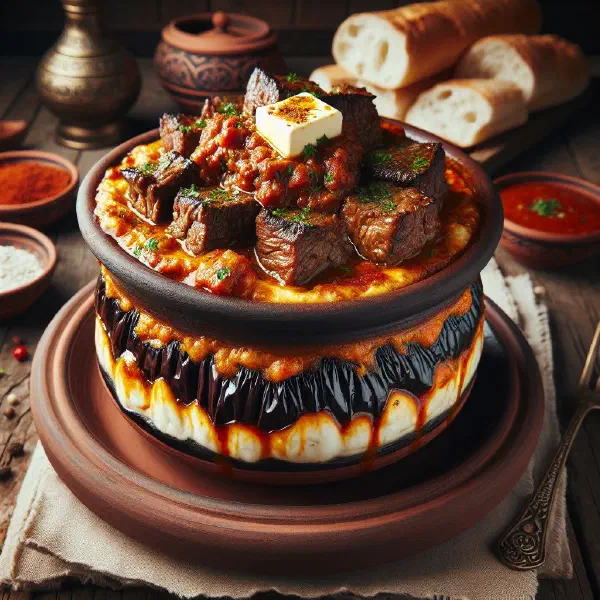
Few dishes carry their history quite as proudly as Hünkar Beğendi, whose name translates as “the Sultan liked it”. A jewel of the Ottoman kitchen, it brings together tender, slow-braised meat in a rich, aromatic sauce and a wonderfully creamy aubergine purée enriched with cheese. The silky smoothness of the purée against the deeply savoured meat makes for a contrast that feels both refined and comforting, a true centrepiece worthy of a palace table, recreated in your own home.
About Hünkar Beğendi
Hünkar Beğendi, meaning “the Sultan liked it”, is one of the most celebrated dishes of Ottoman cuisine and still holds a firm place in Turkish gastronomy today. It pairs tender lamb or beef, braised in a fragrant sauce, with an extraordinarily creamy aubergine purée that is finished with cheese. The velvety texture of the purée and its contrast with the spiced, savoury meat turn this dish into a remarkable culinary experience, at once homely and elegant, and a fine showcase of Turkish cuisine.
Ingredients (serves 1–2)
- 2 large aubergines
- 1 tablespoon lemon juice
- 2 tablespoons butter
- 2 tablespoons flour
- 250 ml milk
- 100 g grated cheese (traditionally Kasseri or Parmesan)
- Salt and pepper, to taste
- A little nutmeg
- 400 g lamb or beef, cut into cubes
- 1 onion, finely diced
- 1 garlic clove, crushed
- 2 tablespoons tomato purée
- 250 ml meat stock
- Olive oil
- Chopped parsley, to garnish
Shopping for the ingredients
It is well worth visiting a Turkish or Middle Eastern grocery to track down authentic ingredients such as Kasseri cheese. For the meat, ask your trusted butcher for fresh lamb or beef that is well suited to slow braising. Fresh, organic aubergines and a good-quality olive oil are key components for a full, rounded result, so choose them with care.
Preparing the dish
Wash the aubergines thoroughly and pat them dry. You can cut the meat into small cubes and, for even more flavour, marinate it beforehand in a little olive oil, salt and pepper. Prepare all your ingredients before you start cooking so that everything is to hand. This matters in particular when you make the aubergine purée, as it comes together quickly and needs your full attention at the right moment.
Step-by-step instructions
- Prick the aubergines all over with a fork and roast them over an open flame or in the oven at 200°C until the skin is charred and the inside is soft.
- While the aubergines roast, heat a little olive oil in a pan and brown the meat on all sides. Add the onion and garlic and sweat them until soft.
- Stir in the tomato purée and let it cook briefly, then deglaze with the meat stock and let it braise gently for about 1 hour, until the meat is tender.
- Halve the roasted aubergines, scrape out the soft flesh and leave it to drain in a sieve to remove excess liquid, then blend the flesh with the lemon juice.
- In a pan, melt the butter, add the flour and stir to a roux. Pour in the milk while stirring constantly to make a béchamel sauce, and season it generously with salt, pepper and nutmeg.
- Fold the aubergine purée and the grated cheese into the béchamel and let it simmer for a few minutes until it thickens.
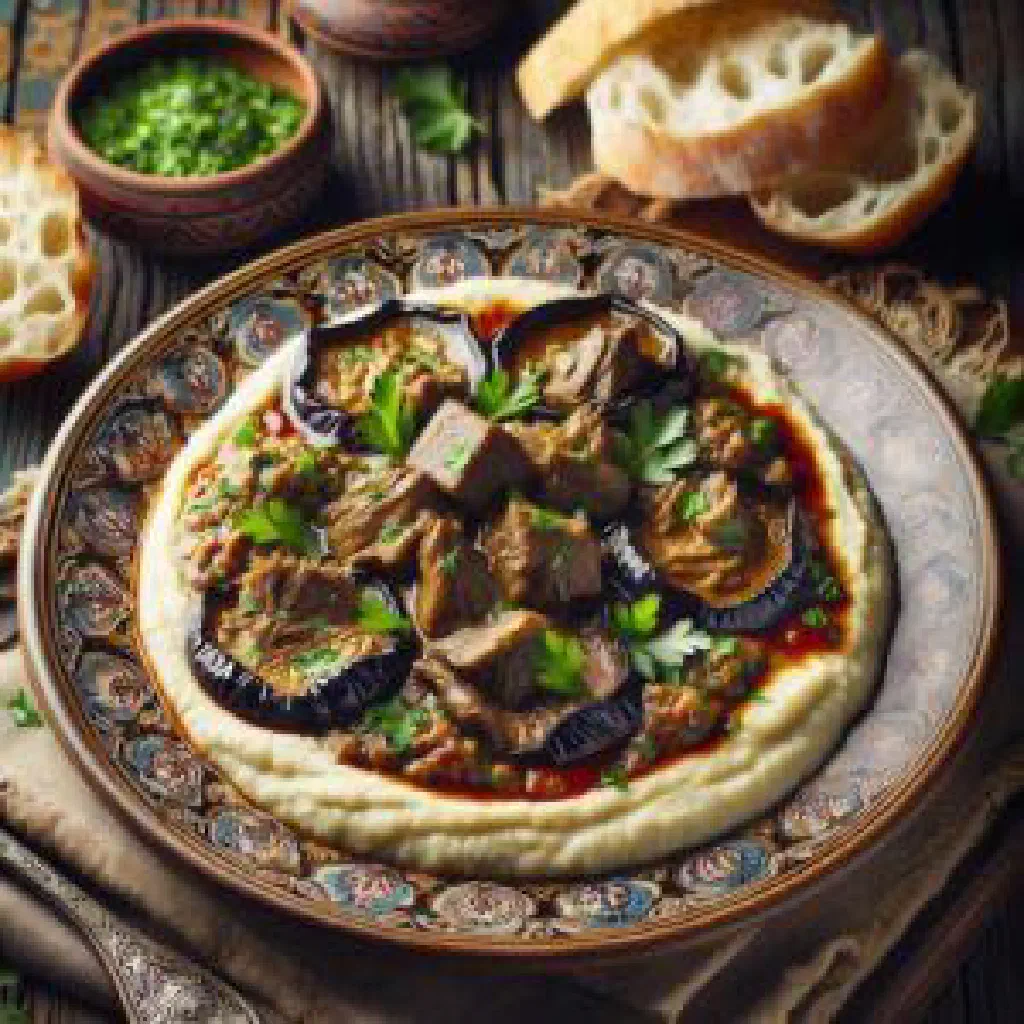
- Spoon the aubergine purée onto a plate, arrange the braised meat on top and garnish with chopped parsley.
Gluten-free / lactose-free version
Hünkar Beğendi adapts easily to a gluten-free and lactose-free table. Replace the wheat flour in the roux with a gluten-free blend or cornflour so the béchamel suits anyone with a gluten intolerance. For a lactose-free version, use plant-based margarine and a suitable milk alternative, and choose a lactose-free cheese. The dish keeps all its creamy richness while welcoming every guest.
Tips for vegans and vegetarians
For a vegan take, swap the meat for marinated tofu or tempeh, both of which soak up the spiced braising sauce beautifully. Use plant-based margarine and soya or almond milk in place of butter and milk, and replace the cheese with nutritional yeast or a vegan melting cheese. Those who prefer a vegetarian version can simply use mushrooms or seitan instead of meat for a hearty, satisfying result.
More tips and tricks
For a smokier note, lay the aubergines briefly on the grill after roasting to deepen that characteristic char. If you marinate the meat overnight in the fridge, it turns especially tender and aromatic. Letting the braise simmer slowly over low heat also gives the sauce time to develop its full depth before it meets the creamy purée.
Adapting the recipe to your taste
Not everyone is keen on lamb, so you can readily make the dish with beef, veal or even chicken breast instead. If you would rather keep it vegetarian, mushrooms or seitan step in happily for the meat. Much like the gentle braise behind Kuzu Kapama, the method is forgiving and lets you shape the dish around whatever you love most.
Ingredient substitutions
If certain ingredients are not to hand, there are plenty of options. Kasseri cheese can be exchanged for Parmesan or another firm, well-melting cheese without losing the savoury edge of the purée. Beef or veal stand in neatly for lamb, and a vegetable stock works fine in place of meat stock, the same flexible spirit that runs through stuffed classics like Sarma. Substitutions like these let you adapt the recipe to what is in season or to your own preferences.
Drink pairing ideas
A chilled Ayran, the traditional Turkish yoghurt drink, pairs especially well with Hünkar Beğendi and refreshes the palate between mouthfuls. A glass of pomegranate juice is another lovely choice, its bright tartness sitting nicely alongside the dish’s warm, oriental aromas. Both keep the meal alcohol-free while complementing the richness of the purée.
Serving and presentation ideas
Serve Hünkar Beğendi in a deep plate or shallow bowl to catch the sauce. A pretty garnish of fresh herbs such as parsley or mint lifts the look, and a scattering of toasted pine nuts adds that certain something along with a gentle crunch. Arranged with care, the contrast of golden purée and dark, glossy meat makes a striking centrepiece.
A bit of history
It is said that Hünkar Beğendi was created for an Ottoman sultan in the kitchens of the Topkapı Palace in Istanbul. It ranks among the most prestigious dishes of Turkish cooking and reflects the refined culinary artistry of the Ottoman Empire, a legacy you can still taste in dishes such as the delicate semolina cake Revani.
More recipe ideas
Summary: Hünkar Beğendi
Hünkar Beğendi is a traditional Turkish dish that appeals to as much in its preparation as in its range of flavour. With this guide you can achieve an authentic version, easily tailored to personal tastes and dietary needs alike, from the choice of meat to vegan and gluten-free adaptations. Tender, spiced meat resting on a cloud of smoky, creamy aubergine purée makes every bite a small taste of palace dining. Enjoy making it, and savour the results.