National Dish Turkey: Tarator (Recipe)
In this article
Tarator is the sauce Turkish cooks reach for when fried mussels or crisp-skinned fish come to the table. Stale white bread, ground walnuts and raw garlic are blended with olive oil and vinegar into something thick, nutty and pungent — a sauce that manages to be rich and sharp at the same time. It takes five minutes and transforms everything it touches.
About Tarator
Tarator is a much-loved Turkish sauce known for its nutty flavour and creamy texture. Classically it is made from soaked white bread, ground walnuts, garlic, olive oil and vinegar, and it is a dip or an accompanying sauce, most famously with fried mussels (midye tava) or pan-fried fish. Its three defining ingredients are walnuts, garlic and bread, which together produce a wonderfully balanced result. Beyond tasting good, it is exceptionally quick to make.
Ingredients (serves 1–2)
- 100 g stale white bread, crusts removed
- 100 g walnut kernels
- 2–3 garlic cloves
- 3 tablespoons olive oil
- 2 tablespoons vinegar or lemon juice
- Water, as needed
- Salt, to taste
Shopping for the ingredients
To make tarator, start with a well-stocked grocer. Choose fresh walnuts that are not the least bit rancid, since they carry the flavour of the whole sauce, buy them in shell if you can, or from a shop with quick turnover. Stale white bread is genuinely better than fresh here, as it absorbs liquid more readily. A good mild olive oil rounds everything off.
Preparing the dish
Preparing tarator is straightforward and takes only a few minutes. Soak the white bread in a little water, then squeeze it out firmly. You want it damp, not wet. Roughly chop the walnuts so the blender can process them more easily. Peel the garlic so its flavour distributes evenly through the sauce.
Step-by-step instructions
- Soak the bread briefly in water, then squeeze out thoroughly.
- Put the walnuts and garlic in a blender and process to a coarse paste.
- Add the squeezed bread and blend again.
- Pour in the olive oil and vinegar with the motor running.
- Add water a spoonful at a time until the sauce is thick but spoonable.
- Season with salt, and serve at room temperature.
Gluten-free / lactose-free version
Tarator is dairy-free by nature. For a gluten-free version, replace the white bread with gluten-free bread or, better still, with a few boiled and cooled potatoes, a common variation that gives the sauce a similar body. The walnuts and garlic do the flavour work either way.
Tips for vegans and vegetarians
The sauce is vegan as written, with no substitutions needed. Use a generous hand with the olive oil and be sure the walnuts are fresh, as those two ingredients carry everything. Serve it as part of a meze table alongside other plant-based dishes, where it holds its own beautifully.
More tips and tricks
Toast the walnuts briefly in a dry pan before blending if you want a deeper, rounder flavour, but watch them closely, as they burn fast. Let the sauce rest for half an hour before serving so the garlic mellows and the flavours settle. If it thickens too much in the fridge, loosen it with a spoonful of water.
Adapting the recipe to your taste
Tarator adapts easily: some cooks add a spoonful of yoghurt for a lighter, tangier version, others stir in a pinch of Aleppo pepper or a little cumin. Hazelnuts or almonds can replace some of the walnuts for a milder result. Adjust the garlic to taste, traditional versions are assertively pungent.
Ingredient substitutions
If walnuts are hard to come by, hazelnuts, almonds or even pine nuts all make convincing versions. White wine vinegar, apple cider vinegar and lemon juice are interchangeable here, each shifting the character slightly. Boiled potato in place of bread makes a naturally gluten-free sauce with an even silkier texture.
Drink pairing ideas
Tarator is usually eaten alongside seafood, and the classic Turkish pairing is a glass of chilled rakı with water. For something alcohol-free, ayran, salted yoghurt drink, matches the garlic beautifully, and sparkling water with lemon keeps the palate fresh between bites.
Serving and presentation ideas
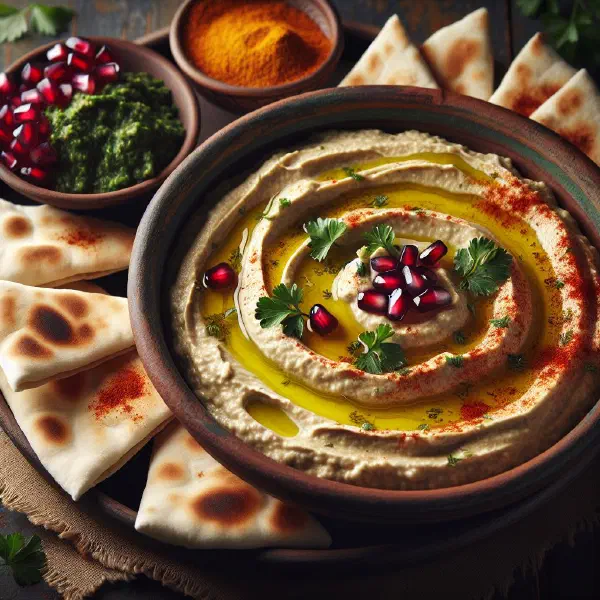
Spread tarator across a shallow plate rather than piling it in a bowl, then trail olive oil over the surface and scatter over a few chopped walnuts for texture. It is at its best at room temperature, surrounded by fried mussels, grilled fish or simply warm flatbread for dipping.
A bit of history
Sauces of this family are found right across the eastern Mediterranean and the Balkans, and the name tarator travels with them, shifting meaning as it goes: in Bulgaria it describes a cold cucumber-yoghurt soup, while in Turkey it stays firmly in the realm of the thick walnut-and-garlic sauce. Its roots lie in resourceful cooking, a way of turning stale bread and a handful of nuts into something worth serving, and a genuine window onto Turkish cuisine.
More recipe ideas
Summary: Tarator
Tarator is a thick, nutty walnut-and-garlic sauce that belongs beside anything fried or grilled from the sea. Built from stale bread, walnuts, garlic, oil and vinegar, it costs little, comes together in minutes and keeps for days in the fridge. Make it once and it becomes the thing you reach for whenever fish is on the menu.