National Dish Turkmenistan: Gurt (Recipe)
In this article
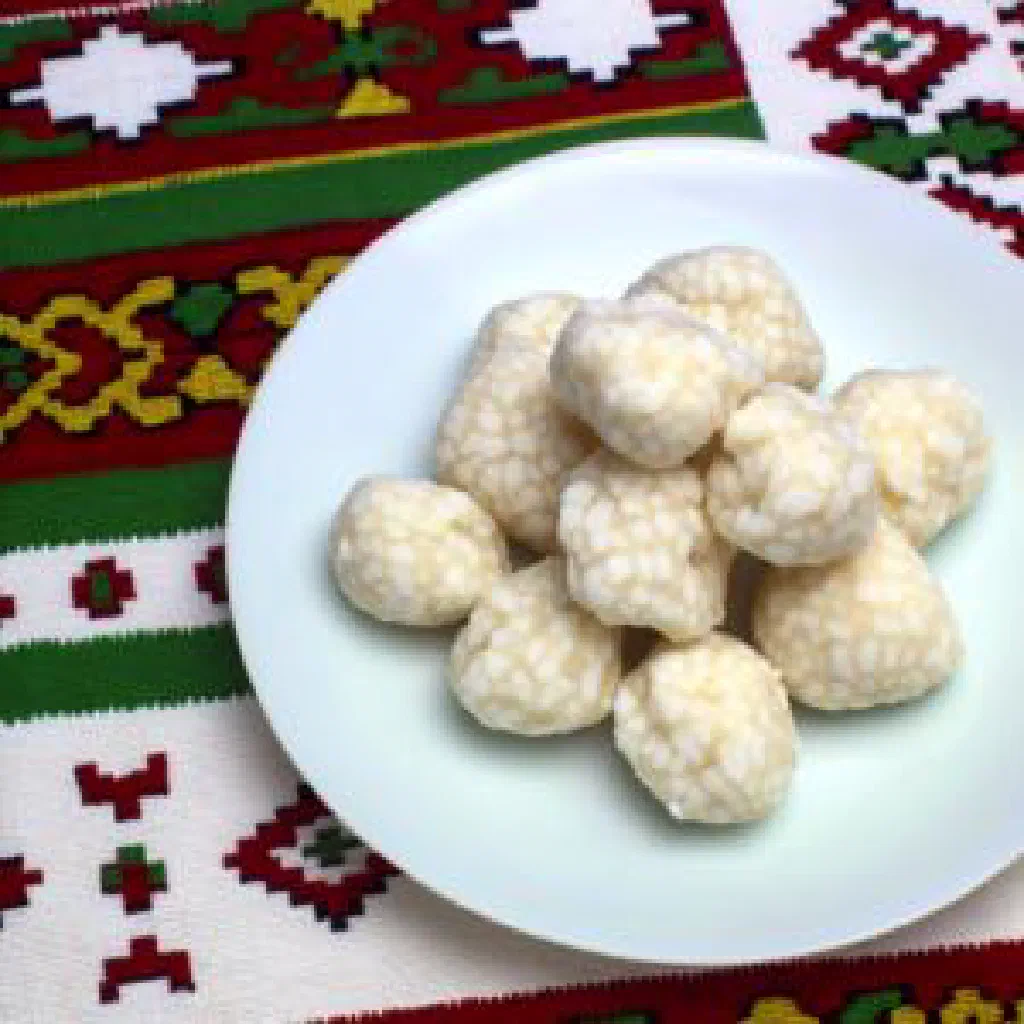
Gurt is dried yoghurt: strained until thick, salted heavily, rolled into balls and left in the sun until hard as stone. It keeps for months without refrigeration, tastes intensely sour and salty, and it is the original Central Asian trail food — carried by herders for as long as there have been herders on the steppe.
About Gurt
Gurt is Turkmenistan’s dried soured-milk snack, which has sustained nomads on long journeys for centuries. Small balls shaped from salted, drained yoghurt are air-dried until firm, sharply sour and keepable for weeks. Gurt is the original Central Asian trail snack, needing no refrigeration and packed with concentrated dairy flavour.
Ingredients (serves 1–2)
- 1 kg full-fat plain yoghurt (ideally cow’s or sheep’s milk)
- 1–2 teaspoons salt
- A clean muslin or cheesecloth
- A sieve
Shopping for the ingredients
Full-fat yoghurt is essential, low-fat versions give a chalky, crumbly result. Sheep’s milk yoghurt is closest to the original and is sold in Turkish and Middle Eastern shops. The salt is not seasoning but preservation, so do not reduce it.
Preparing the dish
Line a sieve with muslin, tip in the salted yoghurt and let it drain in the fridge for a day or two until it is very thick, thicker than Greek yoghurt, closer to a soft cheese. Then it is shaped and dried, which needs warm, dry, moving air.
Step-by-step instructions
- Stir the salt thoroughly into the yoghurt.
- Line a sieve with muslin and set it over a bowl.
- Tip in the yoghurt, gather the cloth and weight it lightly.
- Drain in the fridge for 24–48 hours until very thick.
- Roll the drained curd into balls about 3 cm across.
- Set them on a clean cloth or rack with air circulating freely.
- Dry in a warm, dry, airy place for 3–7 days, turning daily.
- They are ready when hard right through; store in a paper bag or jar for months.
Gluten-free / lactose-free version
Gurt is naturally gluten-free. It cannot be made lactose-free with dairy, though the fermentation and draining remove a great deal of the lactose, which is precisely why cultured dairy suited populations that do not tolerate fresh milk.
Tips for vegans and vegetarians
The snack is vegetarian, made with yoghurt cultures rather than rennet. A plant-based version from cultured cashew or coconut yoghurt works, though it dries less firmly.
More tips and tricks
Salt properly. This is preservation, and undersalted gurt spoils rather than dries. Keep the air moving; still, humid air breeds mould. And store the finished balls in paper or a loosely covered jar, never sealed plastic, which traps residual moisture.
Adapting the recipe to your taste
Dried herbs or chilli worked into the curd give flavoured versions. Smaller balls dry faster and more reliably. A shorter drying gives a soft, spreadable gurt eaten fresh.
Ingredient substitutions
Any full-fat yoghurt works; sheep’s or goat’s is more authentic. Labneh, already strained, cuts out the first stage. Feta approximates the flavour if you have no time at all.
Drink pairing ideas
Green tea is what gurt is eaten with across Central Asia. Black tea works equally well. It is genuinely salty, so water is welcome alongside.
Serving and presentation ideas
Serve gurt whole, to be gnawed or sucked slowly, it is far too hard to bite through, or crumbled into soups and yoghurt dishes. It appears on the table with tea when guests arrive, alongside nuts and dried fruit.
A bit of history
Drying soured milk is one of the oldest preservation methods in Central Asia, allowing summer milk to be carried through winter and across long distances. Versions exist from Turkey to Mongolia, kurut, qurut, aaruul, and all follow the same principle. It offers a genuine window onto Turkmen cuisine.
More recipe ideas
Summary: Gurt
Gurt is heavily salted yoghurt drained thick, rolled into balls and air-dried until rock hard. Salt it properly, keep the air moving, and store it in paper. It keeps for months.