National Dish Turkmenistan: Palaw (Recipe)
In this article
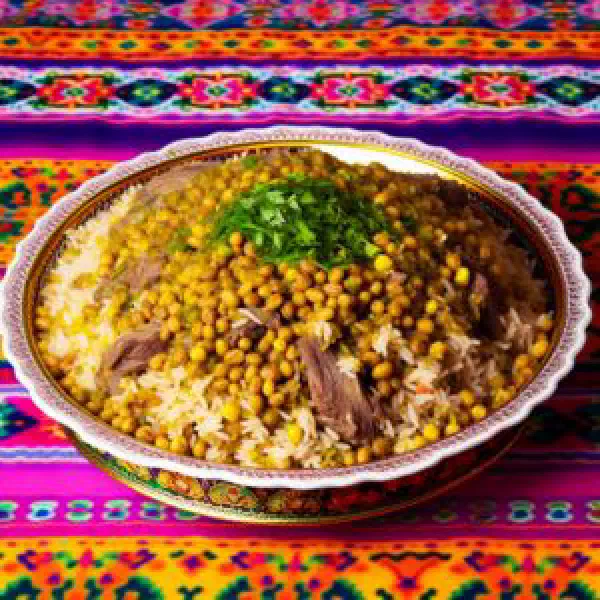
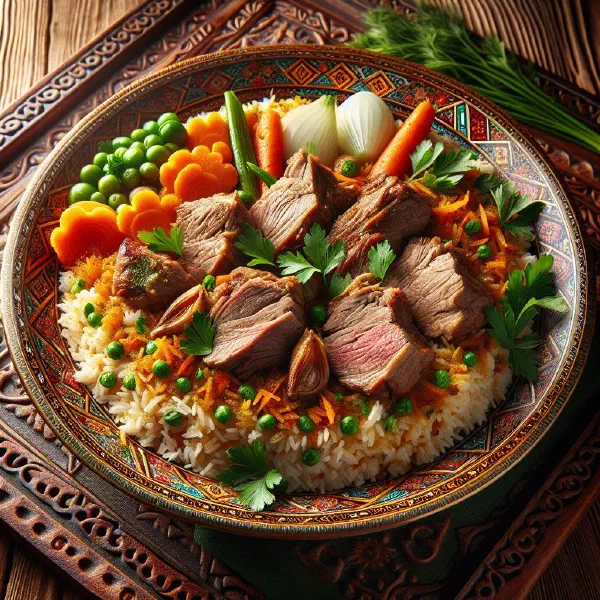
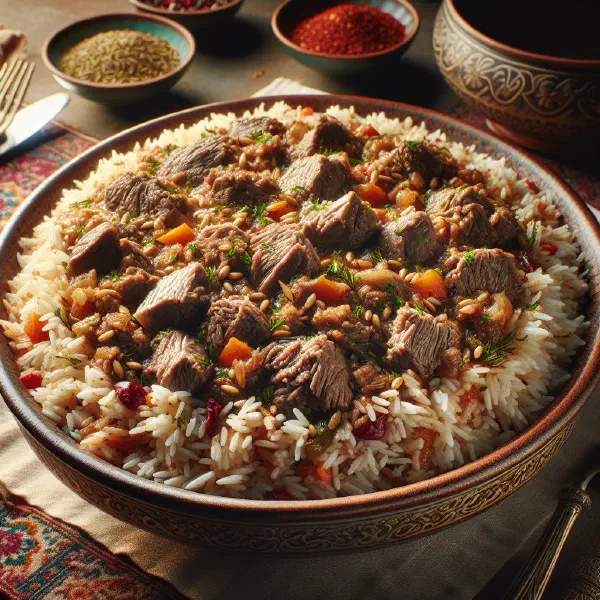
Palaw is Turkmen plov: rice, meat and carrots cooked in one pot, with the rice absorbing everything. Central Asia has a dozen national versions of this dish and each country insists its own is correct.
About Palaw
Cottonseed or sunflower oil, onion, mutton, and carrots cut into batons rather than diced. The rice goes on top and cooks in the liquid below without being stirred, which keeps the layers distinct.
Turkmenistan is largely desert, and its cooking is built on mutton, wheat, melons and dairy.
Ingredients (serves 1–2)
- 200 g long-grain rice
- 150 g beef or lamb
- 1 large onion
- 2 carrots
- 50 ml vegetable oil
- 1 tsp cumin
- 1 tsp coriander
- Salt and pepper, to taste
- Water (as needed)
Shopping for the ingredients
Mutton or lamb on the bone with some fat. Yellow carrots are traditional in Central Asia and sweeter than orange. Long-grain rice, rinsed until the water runs clear. Whole cumin seeds rather than ground.
Preparing the dish
Cut the carrots into batons, never dice. Rinse the rice thoroughly. Brown the onion and meat properly before anything else, which builds the zirvak, the base that the rice cooks in.
Step-by-step instructions
- Heat the vegetable oil in a large pot until it shimmers.
- Add the chopped onion and sauté until deep golden brown.
- Add the meat and fry until well browned all over.
- Stir in the carrot batons and the spices and cook for 10 minutes.
- Add water to cover and simmer 20 minutes to build the base.
- Spread the rinsed rice on top in an even layer without stirring, and add water to cover it by a centimetre.
- Cover the pot and cook over low heat until the water is absorbed and the rice is tender.
- Rest 10 minutes off the heat, then mix gently and serve.
Gluten-free / lactose-free version
Palaw contains no gluten and no dairy. It is naturally suitable for both restrictions.
Tips for vegans and vegetarians
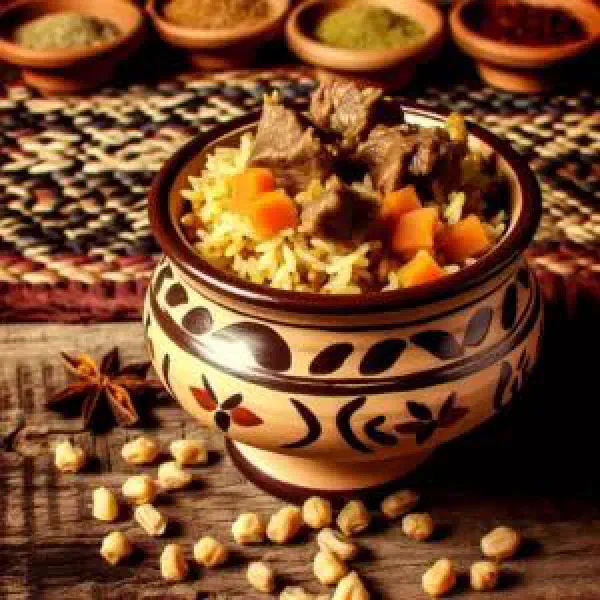
Chickpeas, raisins and extra carrot in place of the meat make a real Central Asian dish. Use oil and vegetable stock. Manty with pumpkin filling is the other traditional meat-free option.
More tips and tricks
Do not stir once the rice goes on. Cut the carrots into batons so they hold their shape through the cooking. And rest the pot covered for ten minutes off the heat before mixing, which is what separates the grains.
Adapting the recipe to your taste
Whole garlic bulbs pushed into the rice are standard. Raisins and dried apricots are used in the festive version. Garaköli palaw and kovurma palaw are the regional variants.
Ingredient substitutions
Beef, lamb or chicken. Yellow carrots if you can find them. Any long-grain rice; short-grain will not work.
Drink pairing ideas
Green tea, drunk constantly and with every meal. Ayran alongside. Chal, fermented camel milk, is the traditional Turkmen drink.
Serving and presentation ideas
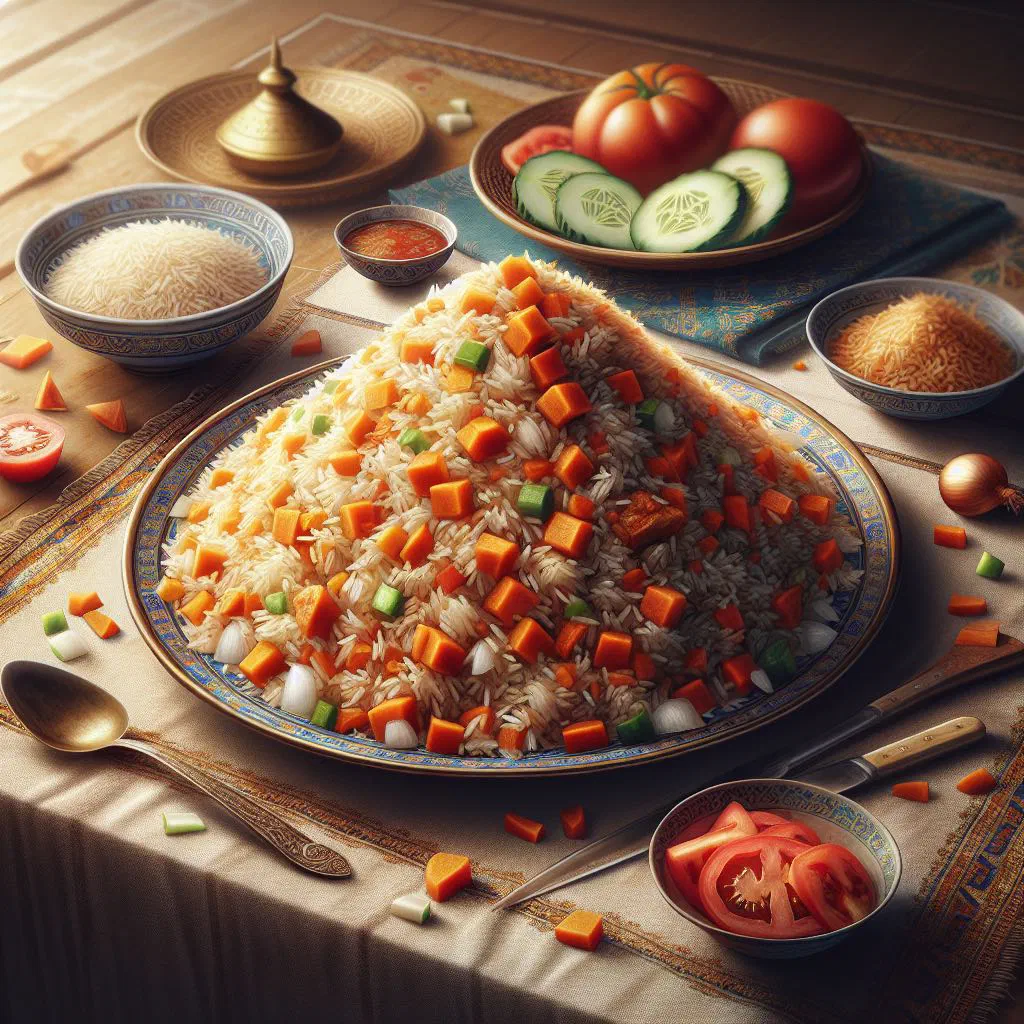
Serve it on a large shared platter, mixed gently so the meat and carrots come up through the rice. Salad and flatbread alongside. Everyone eats from the same dish.
A bit of history
Plov travelled the Silk Road and every country along it claims a version. Turkmenistan’s is closer to the Uzbek style, cooked in one pot with the rice absorbing the base, than to the Azerbaijani method of cooking rice separately. It anchors Turkmen cuisine.
More recipe ideas
Summary: Palaw
Palaw is rice cooked over browned mutton, onion and carrot batons in one pot. Cut the carrots into batons, never stir once the rice is on, and rest it before mixing.