National Dish Tuvalu: Pulaka (Recipe)
In this article
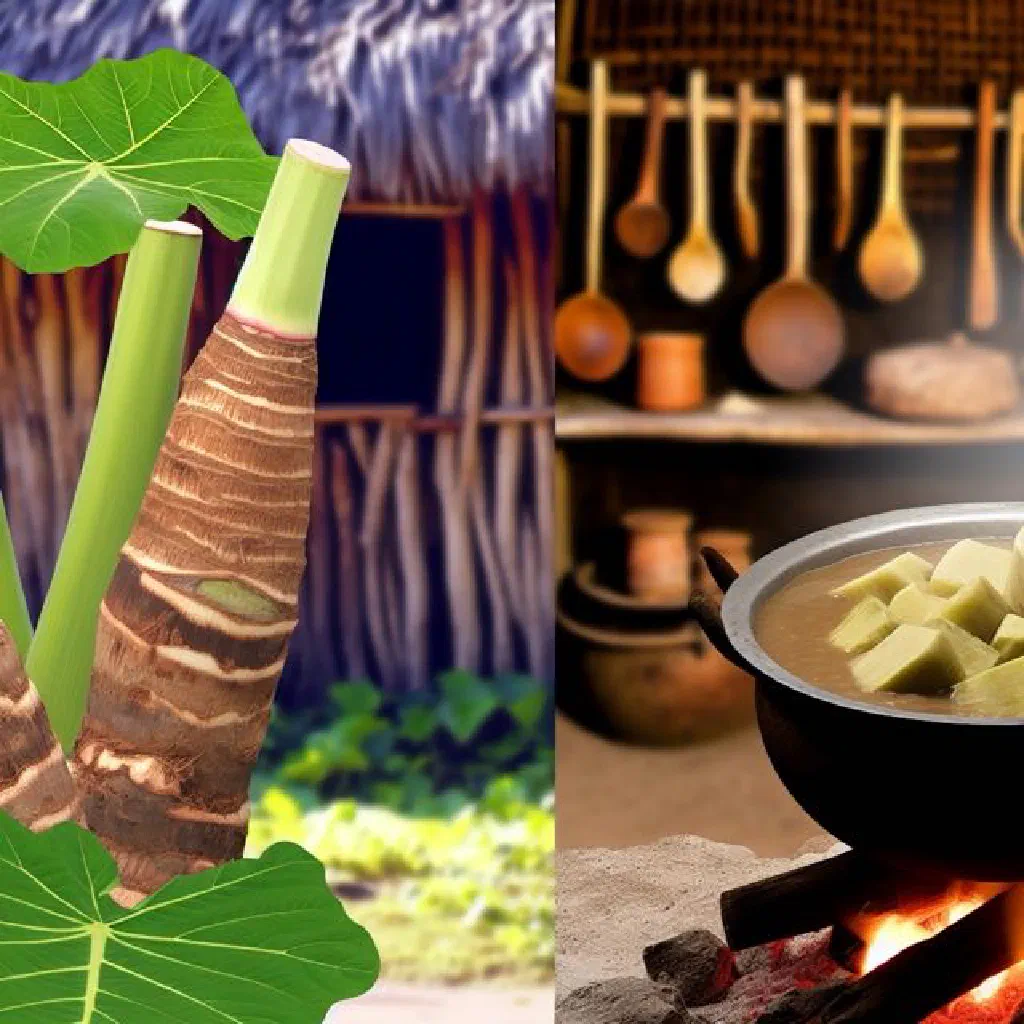
Pulaka is swamp taro, grown in pits dug down to the freshwater lens beneath a coral atoll. Tuvalu has almost no soil and no rivers, and the pits took generations to dig. Saltwater intrusion from rising seas is now killing them.
About Pulaka
Pulaka is a larger, coarser relative of taro with a firmer texture and a slightly bitter edge. It takes two to four years to mature and stores well, which is why an atoll society built its food security on it.
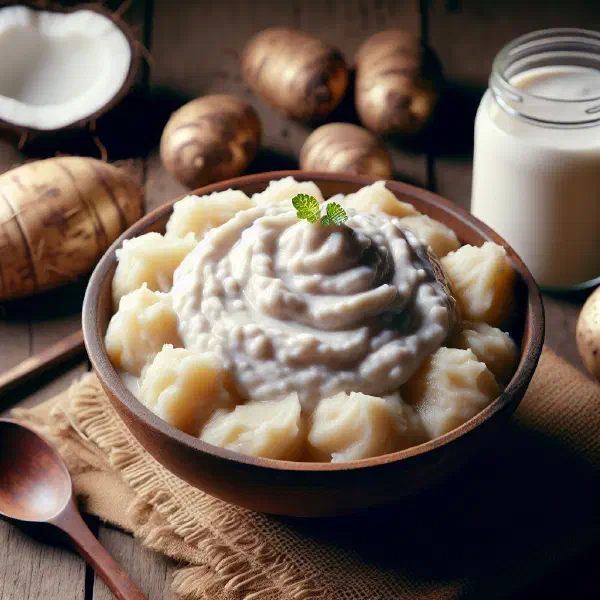
It is boiled and eaten with coconut cream, which is the other thing that grows on an atoll.
Ingredients (serves 1–2)
- 250 g pulaka (or taro as a substitute)
- 2 tablespoons coconut cream
- 1 garlic clove, finely chopped
- 1 small onion, diced
- A little fresh spinach (optional)
- Salt and pepper, to taste
Shopping for the ingredients
Pulaka is not exported and you will not find it outside the Pacific. Taro is the substitute and is close enough. Buy it firm with no soft spots. Coconut cream, not milk, and the tinned kind is fine.
Preparing the dish
Peel the taro under running water or wear gloves; the raw sap irritates skin. Cut it into even cubes so it cooks at the same rate. Boil it thoroughly, since raw taro is not edible.
Step-by-step instructions
- Peel and cube the pulaka, wearing gloves or working under running water.
- Cover the cubes with water in a pan, bring to the boil and simmer for about 20 minutes, until soft.
- Meanwhile, heat a little oil in a frying pan and gently sauté the garlic and onion until translucent.
- Drain the cooked pulaka and add it to the pan. Stir well and fry for a few minutes.
- Add the coconut cream and mix everything together thoroughly.
- If you like, stir through the fresh spinach and let it wilt.
- Season with salt and pepper and serve hot.
Gluten-free / lactose-free version
Taro and coconut contain no gluten and no dairy. The dish is naturally suitable for both restrictions.
Tips for vegans and vegetarians
Pulaka with coconut cream is vegan as written. Palusami, taro leaves baked in coconut cream, and taro leaf coconut stew are the other vegan staples.
More tips and tricks
Wear gloves when peeling, since raw taro sap causes an itch that lasts hours. Boil it fully; undercooked taro is unpleasant and can irritate the mouth. And use coconut cream rather than milk, which is the difference between a good version and a thin one.
Adapting the recipe to your taste
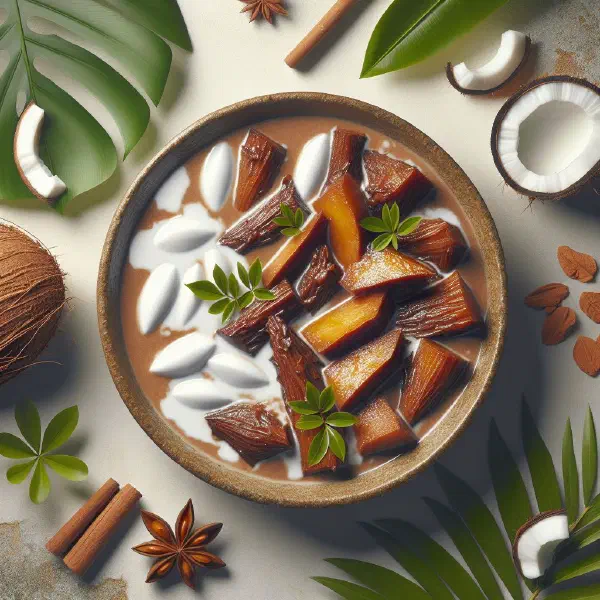
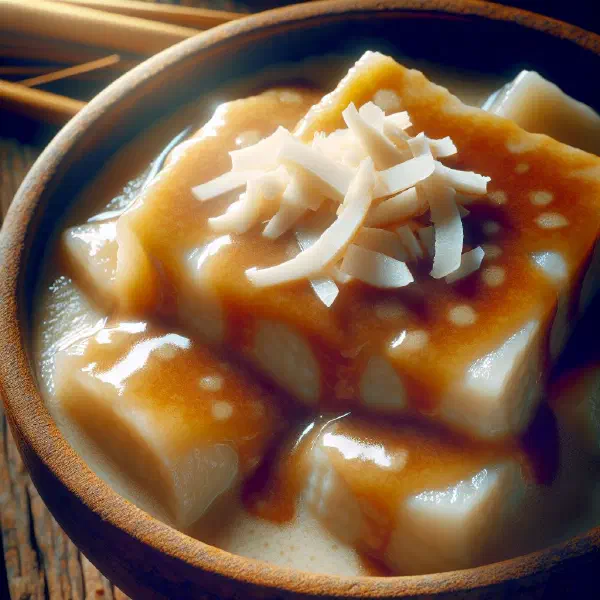
Pulaka chips, sliced thin and fried, are the modern version. Stewed pulaka with coconut is the wetter one. Tinned fish stirred in is common.
Ingredient substitutions
Taro, or eddoe. Sweet potato in a pinch, though the texture is wrong. Coconut cream is not substitutable here.
Drink pairing ideas
Fresh coconut water, straight from the nut. Toddy, the fermented coconut sap. Water is scarce on an atoll and rainwater is collected.
Serving and presentation ideas
Serve it hot in a bowl with grilled or tinned fish alongside. Tuna poke is the fresh option. It is plain food and is served plainly.
A bit of history
Tuvalu’s nine islands hold about 11,000 people on ten square kilometres, and the highest point is four metres above sea level. The pulaka pits are dug through coral to reach fresh groundwater, and salinity is rising in them. The dish anchors Tuvaluan cuisine and its future is uncertain in a literal sense.
More recipe ideas
Summary: Pulaka
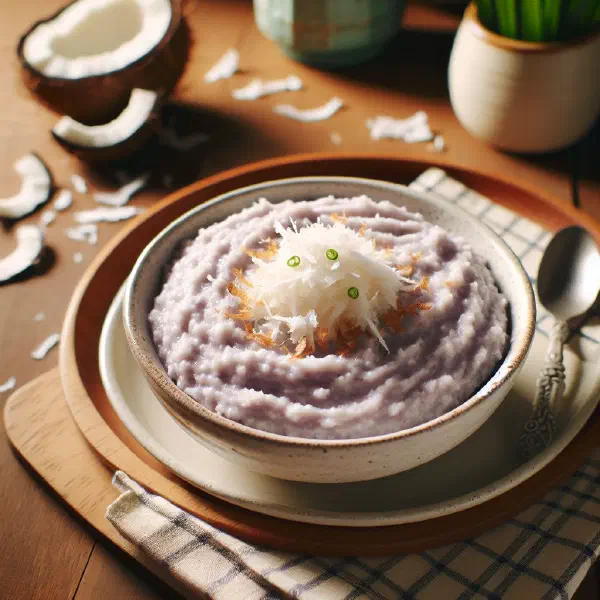
Pulaka is swamp taro boiled and finished with coconut cream, onion and garlic. Wear gloves peeling it, boil it fully, and use cream rather than milk.