National Dish Uganda: Eshabwe (Recipe)
In this article
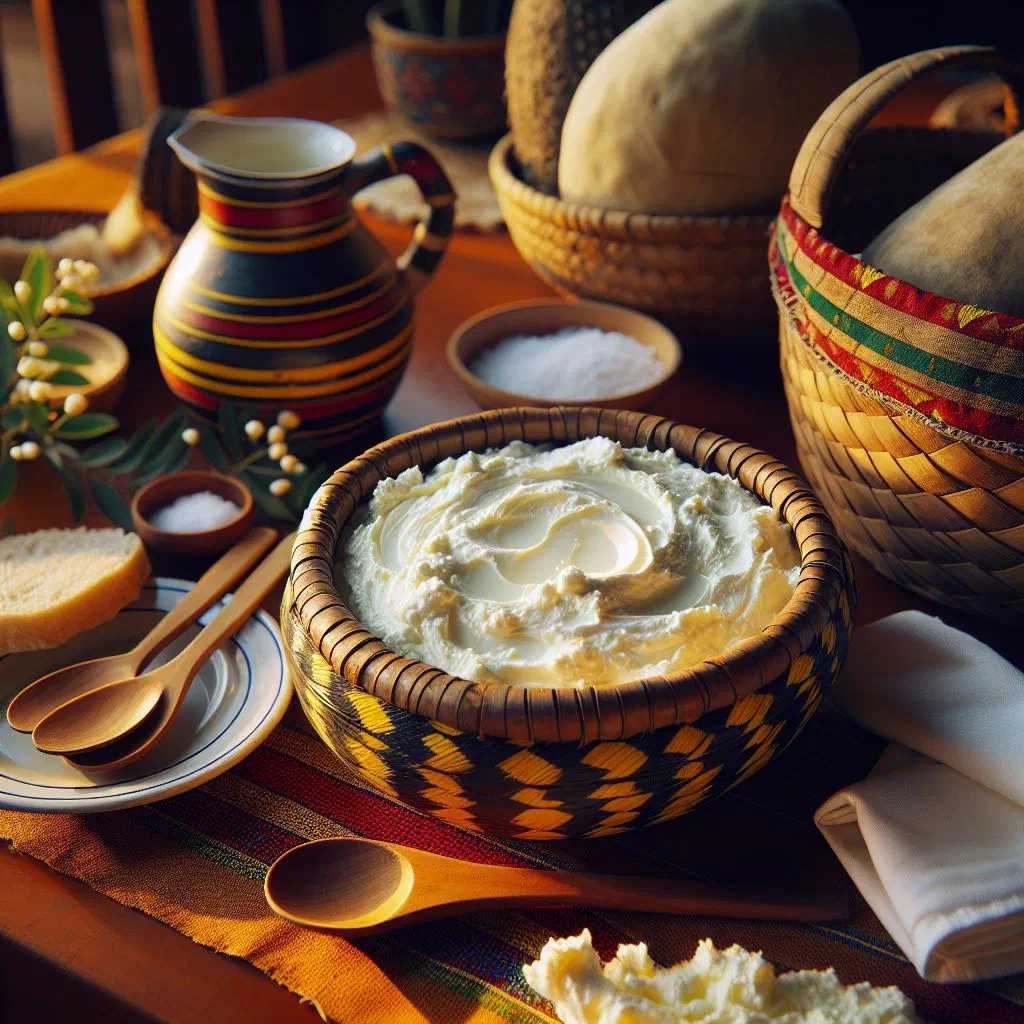
Discover Eshabwe, the creamy ceremonial ghee sauce that Ugandans treasure above almost any other dish. Whipped from little more than ghee, salt and a squeeze of lemon, it turns into a pale, silky cream with a gentle savoury tang. It is the sauce brought out for weddings, homecomings and family celebrations, and it takes only minutes to make. Spoon it over steamed bananas or maize meal and you have a taste of western Uganda on your own table.
About Eshabwe
Eshabwe is a creamy delicacy held in high regard across Uganda. It counts as a traditional dish that is served above all at ceremonies and festivities. Eshabwe consists mainly of ghee, clarified butter, beaten together with salt and sometimes a little lemon juice. Its distinctive flavour has made it a much-loved national dish, and it is served most often with boiled bananas such as Matooke or with Posho, a maize porridge. The creaminess of eshabwe, set against its restrained seasoning, offers a harmony of flavour that has no real equal in Ugandan cooking.
Ingredients (serves 1–2)
- 250 g ghee (clarified butter)
- 1 teaspoon salt
- 1 tablespoon freshly squeezed lemon juice (optional)
Shopping for the ingredients
When buying ghee it is important to pay attention to quality. It should be made from pure butter and contain no added oils or preservatives. You will find ghee in a well-stocked supermarket, in Asian grocery shops or in organic food stores. Look for a clean, golden colour and a nutty aroma. Those are the signs of ghee that will whip up properly.
Preparing the dish
For making eshabwe the ghee should be at room temperature, as this makes it far easier to work with. If it is too firm, the ghee can be warmed gently until it reaches a softer consistency. Take care not to melt it completely, though: liquid ghee will not hold the air you beat into it, and the finished sauce needs that lightness.
Step-by-step instructions
- Put the ghee into a medium-sized bowl.
- Add the salt and beat vigorously with a fork or a whisk until the mixture turns soft and creamy.
- If you are using it, add the lemon juice and keep beating to bring the flavours together.
- Taste and adjust the salt, then let the sauce rest briefly before serving.
Gluten-free / lactose-free version
Eshabwe is naturally gluten-free, since it contains no grain at all, which makes it a safe choice for anyone avoiding gluten, especially when served with cassava or maize meal rather than wheat bread. A lactose-free version takes a little more thought, as ghee is a dairy product, although the clarifying process removes most of the milk solids. For a fully dairy-free take, whip a good plant-based margarine with salt and lemon juice in exactly the same way.
Tips for vegans and vegetarians
Eshabwe is entirely vegetarian as it stands, which is part of why it appears at gatherings where guests eat all sorts of different ways. To make it vegan, replace the ghee with a firm coconut-oil-based or plant margarine and beat it just as vigorously. The texture will be slightly different but the principle holds. Pair it with plant-based sides such as Boiled Cassava for a meal that needs nothing else.
More tips and tricks
For an even more intense flavour, garlic or herbs such as coriander can be stirred into the eshabwe. It is worth letting the sauce rest for a few minutes before serving so that the aromas can develop fully. Beating by hand gives you the best feel for the texture, but a hand mixer on a low speed works well if you are making a larger batch. Serve it at room temperature, chilling firms it up and dulls the flavour.
Adapting the recipe to your taste
The recipe for eshabwe is easy to adjust to your own palate. If you prefer it less salty, simply reduce the amount of salt. For a sharper, more acidic note, increase the quantity of lemon juice. Some households whip in a spoonful of warm milk for an even lighter cream, while others keep it strictly to ghee and salt in the oldest style.
Ingredient substitutions
If ghee is not available, unsalted butter can be used instead and clarified at home: melt it slowly, skim off the foam and pour off the clear golden fat, leaving the milky solids behind. This takes twenty minutes or so and gives you ghee that is every bit as good as shop-bought. At a push, a neutral firm vegetable fat will stand in, though the nutty depth of proper ghee is hard to replicate.
Drink pairing ideas
A cool lager goes well with eshabwe, as does a fruity white wine, both of which balance the richness of the dish and refresh the palate. For something without alcohol, a tart hibiscus tea or a simple glass of cold milk works nicely. On celebration days many families serve Ugandan Banana Wine, whose sweetness plays off the salt beautifully.
Serving and presentation ideas
Eshabwe is traditionally served in a plain bowl, but it can also be presented in a decorative ceramic or wooden vessel to create a more authentic experience. Set it in the middle of the table so everyone can help themselves, and surround it with steamed bananas, millet bread or roasted meat. A scattering of chopped herbs across the pale surface makes for a striking finish.
A bit of history
The tradition of eshabwe reaches far back into Ugandan history. It was originally prepared by the Banyankole in the western region of Uganda, but it has since found its way across the whole nation and is valued for its simple yet rich character. Among cattle-keeping communities, ghee was a prized product of the herd, so a bowl of eshabwe carried real status, which is why it still belongs to the ceremonial heart of Ugandan cuisine.
More recipe ideas
Summary: Eshabwe
Eshabwe is an outstanding dish of Ugandan cuisine. Thanks to its straightforward preparation and how readily it adapts to personal taste, it is a dish anyone can easily recreate at home. Three ingredients, a bowl and a few minutes of energetic whisking are all it takes to produce something that Ugandan families reserve for their most important occasions. Give it a try alongside steamed bananas. You will understand at once why it has never been replaced.